Grownsy Baby Food Maker Review: Steam and Blend in One 300 ml Jug for Weaning from 6 Months
The Grownsy BFP-5800E combines a steaming basket, a 300 ml Tritan jug and a blender base in one countertop appliance for babies from six months. We check its specification against WHO complementary-feeding guidance and the published research on homemade infant food.
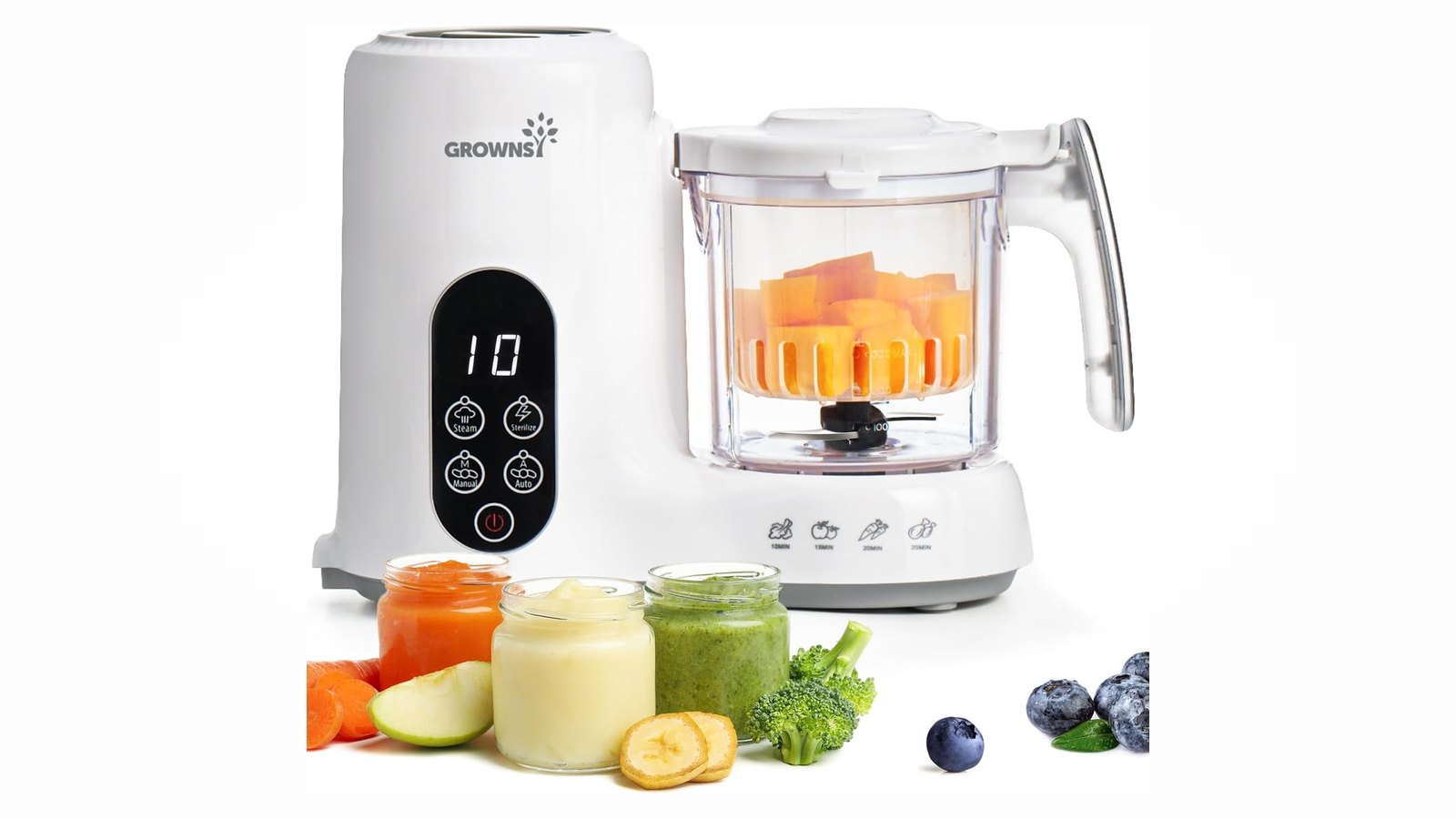
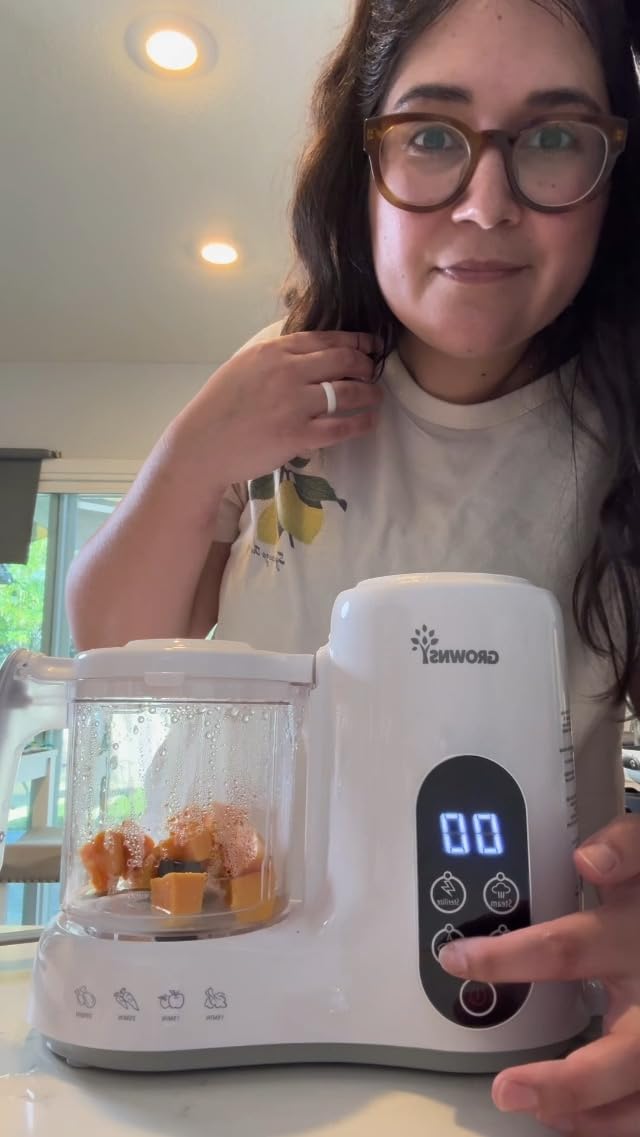
Homemade baby food has two problems, and they are opposites. The first is that it takes two vessels and two steps: steam or boil the vegetables in one pot, then move them to a blender or press and work the purée by hand. The second is that every step you add is a step where a baby can be waiting. The GROWNSY baby food maker is built around removing that second step — one jug where food is steamed above the water line and then blended in place, with a digital panel choosing between automatic and manual stirring.
This is a single-product review. It is based on the manufacturer’s published specifications, the aggregated verified-buyer ratings on the listing, and the clinical and public-health research on infant feeding and homemade baby food. We did not perform hands-on testing of this product. Our full method is on the Our Method page, and every source we relied on is listed at the bottom.
Unlike the two bottle washers, this product stands on its own. It has its own parent listing, its own rating pool of 4.6 stars from 2,908 ratings, and its own specification — nothing in this review is shared with the washers.
What the baby food maker actually is
- Type: Countertop baby food maker combining a steamer, blender and sterilizer
- Model: BFP-5800E, manufactured by GROWNSY
- Intended user: Babies from 6 months old, during the weaning stage
- Colour: White
- Bowl: 300 ml (10 oz) heat-resistant Tritan, described by the manufacturer as free of BPA, lead, phthalates, odours and latex
- Blender container dimensions: 4.13 inches high, 4.17 inches outer diameter
- Functions: Steam, blend and sterilize in one vessel
- Mixing modes: Automatic or manual, chosen from the digital control panel
- Sizing: A single 300 ml jug — one child’s portion, or one or two meals of batch prep
- In the box: The base unit, jug and steaming basket, plus a recipe book; the listing specifies a 1-year warranty, 24/7 customer service and lifetime technical support
- Rating: 4.6 out of 5 stars from 2,908 aggregated Amazon ratings
- Our score: 7.9/10
Two details in that list deserve a flag straight away.
The first is the 300 ml bowl. It is a single portion of purée — roughly a small jar of food, not a batch. That is a genuine limitation for a family that wants to cook once and eat three times, and it is the main reason this appliance is a daily tool rather than a weekend batch tool.
The second is the 1-year warranty, against the 3 years offered on the bottle washers. For a device whose heating element, steam path and blade assembly all live in the same housing, that difference is worth noticing.
The one-vessel idea, and why steaming above the water line matters
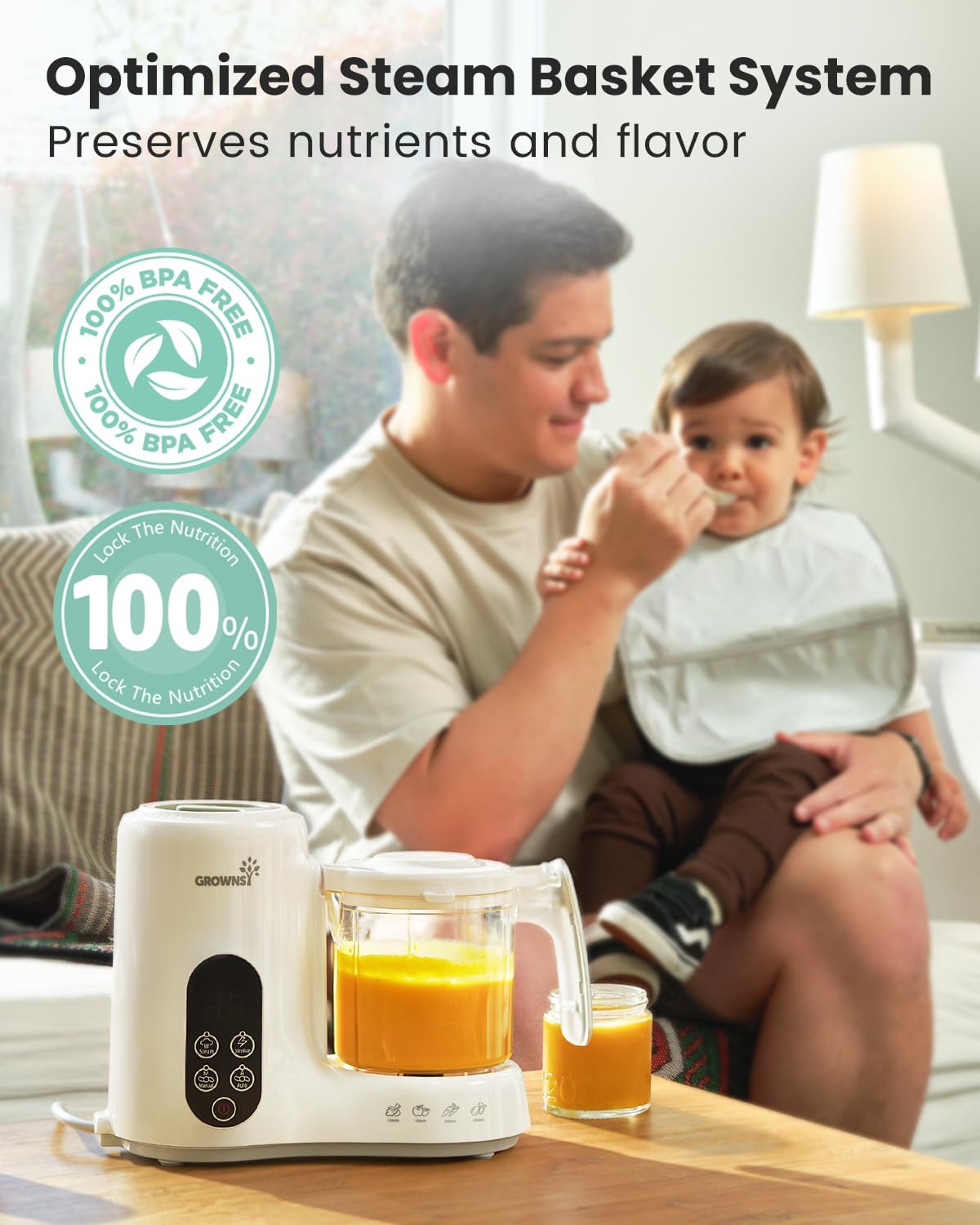
The design decision that defines this product is the elevated steaming basket. Food sits in a basket raised above the water, and steam rises around it, so the ingredients cook in vapour rather than sitting in boiling water.
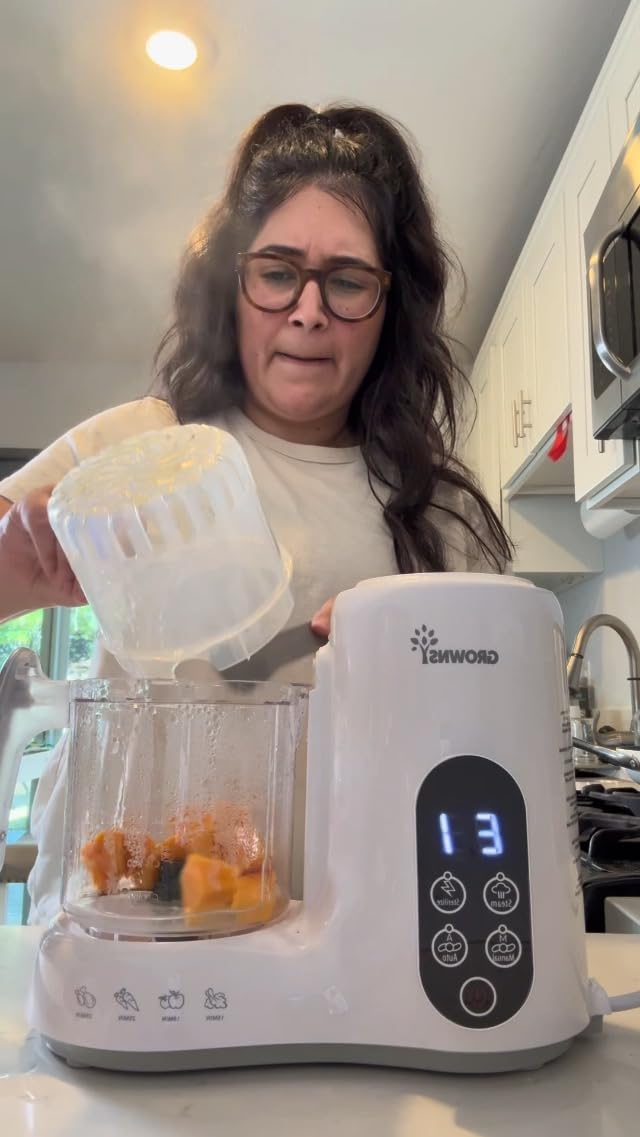
This is not a cosmetic difference in cooking method, and the manufacturer is explicit about why: the listing says the elevated design enables true steam cooking, minimising nutrient loss and protecting water-soluble vitamins B and C by avoiding boiling. The A+ graphic makes the same argument with a nutrition panel, showing vitamin C, protein, vitamin B, calcium, sodium, iron and magnesium retained in the steamed result.
That claim has a solid research backdrop, and it runs in the opposite direction to the usual “cook it thoroughly” instinct. A 2024 review in Foods of processing methods for infant and baby food notes that while thermal treatments are commonly used to ensure microbiological safety, excessive heating can adversely affect sensory quality, reduce thermosensitive nutrients and lead to chemical contaminant formation — the review specifically identifies furan and 5-hydroxymethyl-2-furfural as process-induced toxicants that conventional thermal processing can generate. The same review catalogues high-pressure processing, pulsed electric fields, radio frequency and ultrasound as the non-thermal alternatives manufacturers are developing precisely to reduce that damage while keeping the safety benefit.
Read carefully, the literature does not say “steam instead of boil and your baby will be healthier.” It says the opposite of what marketing usually claims: that how you cook matters to quality and to chemistry, and that the industry is actively trying to cook safely with less thermal damage. On that reading, a steam-based design is a defensible engineering choice for a product whose whole job is feeding a six-month-old, and it is more interesting than the usual “faster and easier” argument.
Texture control: the part that actually changes day to day
A blender that produces one fixed consistency is a blender that produces either food a baby refuses or food an adult finds pointless. This machine’s answer is a two-mode mixing control.
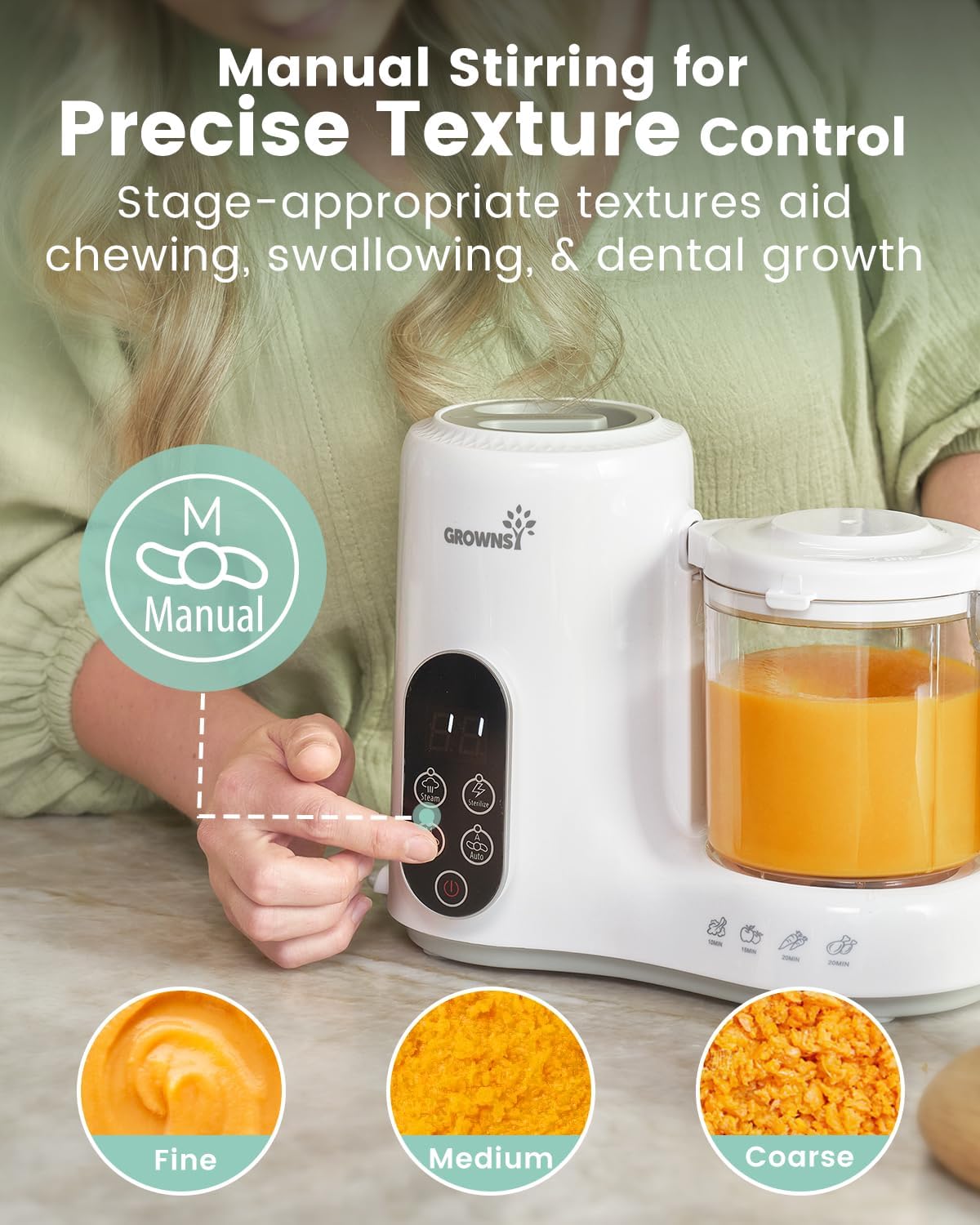
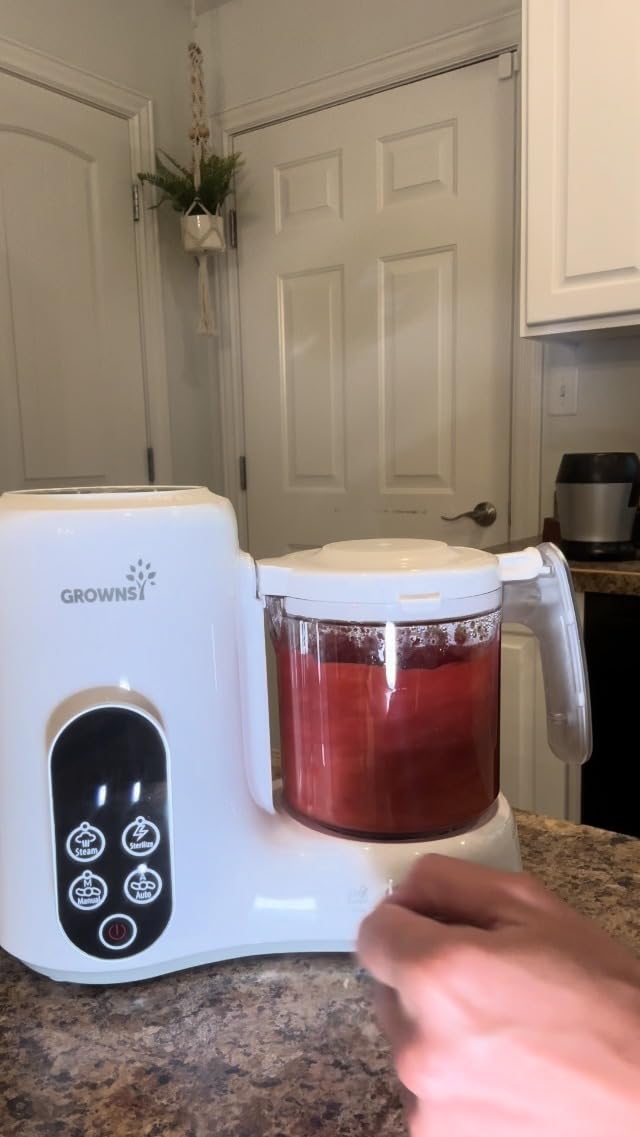
The A+ material shows a hand operating the manual mixing control on the touch panel, with three finished textures pictured underneath: a smooth purée, a granular texture, and a coarse textured mash. The manufacturer’s framing is that stage-appropriate textures aid chewing, swallowing and dental development — which is a reasonable reading of how texture progression is used in weaning, and one the published research supports in a more general way.
That support comes from a Spanish study of homemade versus commercial infant food that analysed 30 mothers’ three-day weighed food diaries. Its most useful finding for a buyer is not a nutritional ranking but a texture one: homemade and commercial meals were equally characterised by soft texture, and the study’s conclusion was that parents need clear guidance on preparing homemade food and on offering a wider variety of tastes and textures to suit an infant’s nutritional and developmental needs. Variety, not purity, was the finding.
The machine’s own age-stage graphic follows that logic.
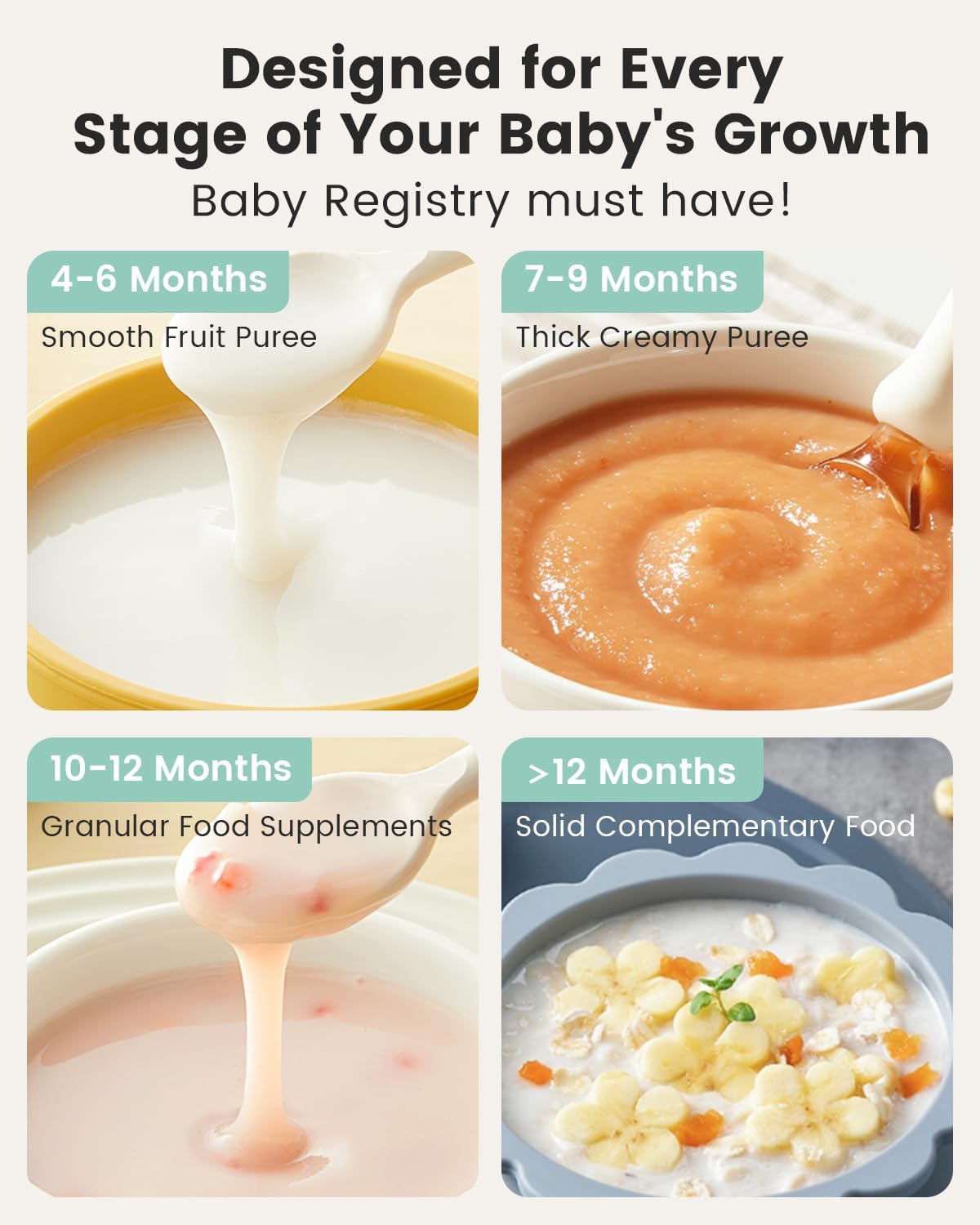
The listing presents smooth fruit purée at 4–6 months, thick creamy purée at 7–9 months, granular food supplements at 10–12 months and solid complementary food beyond 12 months. The product is specified for 6 months and up, so the first panel is context rather than an instruction — but the progression is a sensible one, and it is the reason a variable-speed blender is more useful here than a fixed one.
The sterilizer mode, and the blender question the CDC asks
The listing includes a built-in sterilizer mode, which allows the jug and its accessories to be sterilized in the same vessel after a cooking session. On paper that is tidy: one container, cleaned and sterilized where it cooked.
It is worth reading the CDC’s guidance on this particular appliance, because the CDC’s advice on formula preparation names blenders specifically. In its guidance on cleaning, sanitizing and storing infant feeding items, the CDC notes that the safest method of mixing formula is by shaking or swirling it in the feeding bottle, that blenders can be difficult to clean, and that blenders used to prepare infant formula have been linked to illnesses among babies.
That finding is about formula, not about purée, and a food maker is not a formula mixer. But it is a serious and general point: a device that has contact with a baby’s food, in a crevice-rich assembly of jug, blade, basket and seal, is a hygiene surface like any other. The CDC’s general rules apply — wash with soap and a brush, rinse, and air-dry thoroughly rather than wiping with a towel, because a towel can transfer germs.
Against that, the sterilizer mode is a genuine advantage, and one that a pot-and-hand-blender setup does not have. The listing’s claim is that the same machine can sterilize the bowl and basket after use, which means the sterilization happens in a defined cycle rather than as a boiling pot on the stove.
What the research says about homemade baby food itself
The honest question underneath all of this is whether making your own food for a six-month-old is a good idea at all. It is a fair question, and the evidence is more interesting than either side of the argument usually admits.
Complementary feeding starts at six months, and it is nutritionally significant. The World Health Organization and UNICEF recommend exclusive breastfeeding for the first six months of life, and continued breastfeeding to two years or beyond alongside nutritionally adequate, safe complementary foods introduced from six months. The WHO also notes that globally only 30.8% of children aged 6 to 23 months met minimum dietary diversity between 2018 and 2024, and that half were given as many meals as they need each day.
Homemade is not automatically better, and there is no consistent evidence that it is. The Spanish study found no consistent evidence favouring homemade foods on nutritional profile, and reported mixed results: homemade meals for infants provided significantly lower energy, higher protein and higher fibre than commercial meals, while homemade meals contained a significantly greater number of different vegetables (3.7 versus 3.3). The authors’ own conclusion was that clear preparation guidelines for homemade food are needed, and that variety of taste and texture matters in both homemade and commercial food.
That last point is the one worth holding on to. Homemade baby food’s problem is rarely the food itself — it is that it is repetitive. A parent who batches one purée on Sunday has fed that purée nine times by Wednesday. A machine that produces a different texture from the same ingredients, and that lets you cook a different vegetable in ten minutes rather than a Sunday afternoon, is addressing the variety problem directly.
Heat has real costs, and the food industry is trying to reduce them. The 2024 Foods review makes the case that conventional thermal processing of infant foods can reduce thermosensitive nutrients and generate process-induced chemical contaminants, and that non-thermal technologies are emerging to get the safety benefit with less quality damage. This is the strongest published backdrop for the elevated-steam design.
Freshness claims need their limits. The A+ graphic on the listing is headed “Locks in Freshness with Elevated Steam Basket”, and pairs that claim with the vitamin-retention argument.
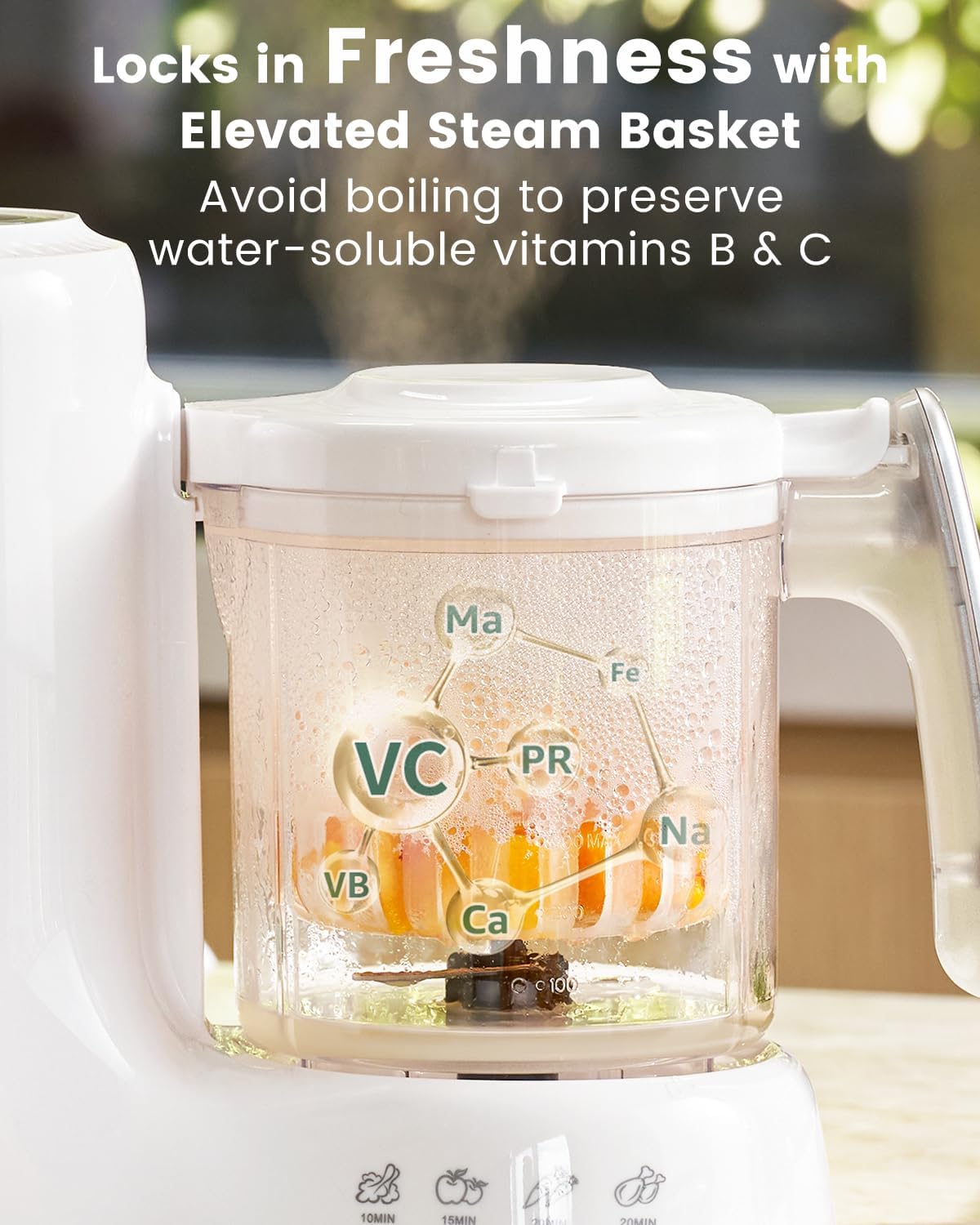
The mechanism behind the freshness claim is plausible — cooking in a smaller volume of water and in a closed jug reduces exposure to air and to the heat of a larger water bath — but it is a manufacturer claim about a mechanism, not a measurement of how long a prepared batch keeps its nutrients. The listing publishes no retention figures against a control, and we found no independent test of this product that we could rely on.
Capacity, cleanup and the honest limit of a 300 ml jug
The 300 ml bowl is the specification you will feel every day. For a six-month-old starting on solids, one jar per meal is roughly right. For a ten-month-old who wants a bigger volume, or for a family cooking once and eating twice, it means either two rounds or a separate batch vessel.
The blender container itself is small — 4.13 inches high and 4.17 inches in outer diameter — which keeps the total footprint genuinely compact for a countertop, but also means the machine is a single-portion tool by construction.
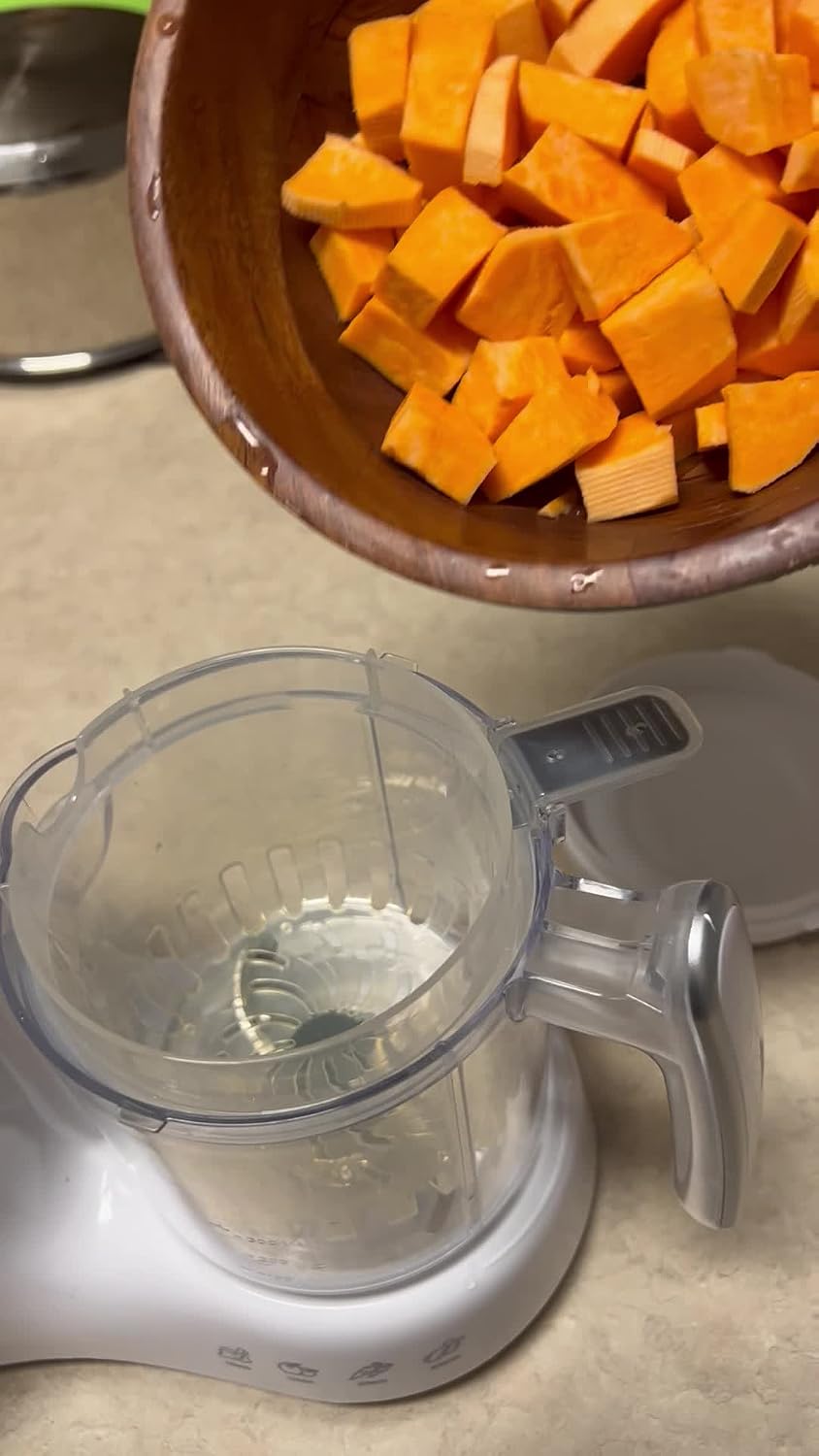
The listing’s own preparation guidance is sensible and worth taking seriously: cut ingredients into small pieces, adjust water amounts by ingredient type, select a suitable blending time, and follow the recommended water level in the manual. Small pieces matter more in a steam basket than in a pot — steam conduction is slower than conduction through a submerged vegetable, so a large cube steams unevenly while a small one cooks through.
The recipe book included in the box is a small but real part of the value, because the published research’s own conclusion was that parents need clear preparation guidance. A book of stage-appropriate recipes addresses exactly the gap the literature identifies.
Pros and cons
Pros
- ✔ Steams and blends in one vessel, removing a transfer step and a second appliance
- ✔ Elevated steaming basket cooks in vapour rather than boiling water
- ✔ Automatic and manual mixing modes for stage-appropriate texture control
- ✔ 300 ml Tritan bowl described as free of BPA, lead, phthalates, odours and latex
- ✔ Built-in sterilizer mode cleans up the same way it cooks
- ✔ Compact footprint — blender container is 4.13 inches high and 4.17 inches in diameter
- ✔ Recipe book included, plus 1-year warranty, 24/7 customer service and lifetime technical support
- ✔ Backed by its own 2,908-rating buyer pool, larger than the pool the two bottle washers share
Cons
- ✘ A 300 ml bowl means single-portion cooking rather than batch prep
- ✘ 1-year warranty, against 3 years on the bottle washers in the same range
- ✘ Nutrient-retention and freshness claims are unmeasured manufacturer claims
- ✘ Crevice-rich assembly — jug, blade, basket, seal — that needs proper washing
- ✘ Small bowl capacity means an older or hungrier baby may need two rounds
Who should buy it
Buy it if you are past the first month of solids and want variety rather than a faster way to make the same three purées. The machine’s real contribution is that it makes a ten-minute, one-vegetable meal possible on a weekday, and texture control means the same ingredients can follow a baby from smooth purée to granular texture without changing tools.
Buy it if counter space is tight and you would rather not give up a pot, a steamer and a blender. One compact appliance doing all three is the honest value proposition here.
Buy it if the recipe book is part of what you are paying for. The published research says parents need exactly this guidance, and a machine that ships with it is better equipped than a bare blender.
Who should skip it
Skip it if you are planning to batch a week of food on a Sunday. A 300 ml bowl is the wrong shape for that, and a larger blender plus a steamer on the stove will serve that job better.
Skip it if you have not yet reached solids. WHO and UNICEF recommend introducing complementary foods from six months, and this machine is specified for 6 months and up.
Skip it if you want independent performance data. No laboratory evaluation of this machine has been published that we could find, and the nutrient-retention and freshness claims on the listing are not measured against a control.
Frequently Asked Questions
When should I start using a baby food maker?
The listing specifies this machine for babies from 6 months old, which matches the WHO and UNICEF recommendation to introduce nutritionally adequate, safe complementary foods from six months while continuing to breastfeed.
Is steam cooking better than boiling for baby food?
The published evidence supports the direction of the argument without settling it for this product. A 2024 review in Foods notes that conventional thermal processing of infant foods can reduce thermosensitive nutrients and generate process-induced chemical contaminants, and catalogues non-thermal methods being developed to reduce that damage while keeping the safety benefit. Steaming above the water line is a reasonable way to cook with less thermal abuse. The specific retention figures in this listing are manufacturer claims.
Does the 300 ml bowl make enough food for a whole meal?
For a baby starting solids, one 300 ml portion is a full meal. For an older baby, a bigger appetite, or batch cooking, it is a single-portion tool and you would run two rounds or use a larger blender. This is the most important limitation of the product.
Is Tritan a safe material for a baby bowl?
The listing describes the bowl as high-grade, heat-resistant Tritan free from BPA, lead, phthalates, odours and latex. Tritan is a copolyester used widely for food-contact applications, and avoiding BPA is the point of choosing it over older polycarbonate. We did not independently verify the material composition of the bowl.
Can I sterilize bottles in this machine as well?
The listing describes a built-in sterilizer mode, and the jug and accessories are the intended load. It is not presented as a bottle steriliser, and the separate EaseClean and EaseClean Pro washers cover that job.
Is homemade baby food actually better for my baby?
The evidence is genuinely mixed, and the honest version is more useful than the marketing version. A Spanish analysis of homemade versus commercial infant foods found homemade meals provided significantly higher protein and fibre and a greater variety of vegetables (3.7 versus 3.3 different vegetables), but lower energy for infants, and no consistent overall evidence that homemade is nutritionally superior. Its conclusion was that clear preparation guidelines and attention to taste and texture variety are what matter — which is what this machine’s recipe book and texture controls are aimed at.
View the Grownsy Baby Food Maker on Amazon
Prices and availability change daily on Amazon — check the listing for the current offer.
Browse the full GROWNSY range on Amazon
The GROWNSY store page groups the brand's range by category — bottle washers, baby food makers, warmers and sterilizers among them — so you can see what else GROWNSY sells.
The bottom line
The Grownsy baby food maker is a small, focused answer to one question: how do you cook and blend a six-month-old’s dinner in one vessel without boiling the nutrients out of it and without a second appliance to wash? The elevated steam basket and the two mixing modes are the parts that answer it well, and the research backdrop on thermal damage to thermosensitive nutrients and on process-induced chemical contaminants makes the steam-over-boil argument more than a marketing flourish. The recipe book fills the exact gap the homemade-food literature identifies.
Its limits are equally clear and equally honest. A 300 ml bowl is a single-portion tool, not a batch tool. A 1-year warranty is short for a heating appliance. And the freshness and nutrient-retention claims are unmeasured claims from the manufacturer, with no independent test of this machine that we could find.
If you have reached the solids stage and want a weekday variety of textures from one compact appliance, this is a well-built tool for it. If you want to cook in bulk on a weekend, buy a bigger blender and keep the pot.
View the Grownsy Baby Food Maker on Amazon
Prices and availability change daily on Amazon — check the listing for the current offer.
Sources cited in this article
- World Health Organization — “Infant and young child feeding” fact sheet (exclusive breastfeeding recommended for the first 6 months, with nutritionally adequate and safe complementary foods introduced from 6 months while breastfeeding continues to 2 years of age or beyond; globally 30.8% of children aged 6 to 23 months met minimum dietary diversity between 2018 and 2024, and only half were given as many meals as they need each day)
- Centers for Disease Control and Prevention — “How to Clean, Sanitize, and Store Infant Feeding Items,” archived copy of the CDC WASH guidance page (the safest method of mixing formula is by shaking or swirling in the feeding bottle; blenders can be difficult to clean and blenders used to prepare infant formula have been linked to illnesses among babies; wash feeding items with soap and a brush, rinse, and air-dry without rubbing with a towel)
- Pasdar N, Mostashari P, Greiner R, Khelfa A, Rashidinejad A, Eshpari H, Vale JM, Gharibzahedi SMT, Roohinejad S. “Advancements in Non-Thermal Processing Technologies for Enhancing Safety and Quality of Infant and Baby Food Products: A Review.” Foods, 2024;13(17):2659 — thermal treatments are commonly used to ensure microbiological safety in infant and baby foods, but can reduce sensory quality, reduce thermosensitive nutrients and lead to chemical contaminant formation, with furan and 5-hydroxymethyl-2-furfural identified among process-induced toxicants; non-thermal technologies offer comparable pathogen destruction with reduced toxicant formation
- Bernal MJ, Roman S, Klerks M, Haro-Vicente JF, Sanchez-Siles LM. “Are Homemade and Commercial Infant Foods Different? A Nutritional Profile and Food Variety Analysis in Spain.” Nutrients, 2021;13(3):777 — 30 mothers of children aged 6 to 18 months, 3-day weighed food diaries with chemical analysis; homemade meals provided significantly higher protein and fibre and a significantly greater number of different vegetables than commercial meals (3.7 vs 3.3), homemade meals for infants provided significantly lower energy, homemade and commercial meals were equally characterised by soft texture, and the authors call for clear homemade-preparation guidelines and promotion of food variety in taste and texture
- Amazon — manufacturer listing for the Grownsy Baby Food Maker, Steamer and Blender (B0DGL879NT), including the model number BFP-5800E, the 300 ml Tritan bowl specification, blender container dimensions, mixing-mode options, recipe book and warranty terms, and the aggregated 4.6-star rating from 2,908 ratings (accessed November 2026)
This article contains affiliate links. When you buy through them, we may receive a commission from the brand or platform at no additional cost to you. Our editorial process is independent of affiliate relationships — see our Affiliate Disclosure and Our Method.