Ulike ReGlow Lite LED Mask Review: Red, Blue and Near-Infrared Light at Home
The Ulike ReGlow Lite is a 0.4 lb wearable LED mask with three modes built on 630 nm red, 415 nm blue and 830 nm near-infrared light, a sealed eye shield and a wireless controller. We check the dermatology literature for home light therapy for acne and anti-aging, and where the evidence stops.
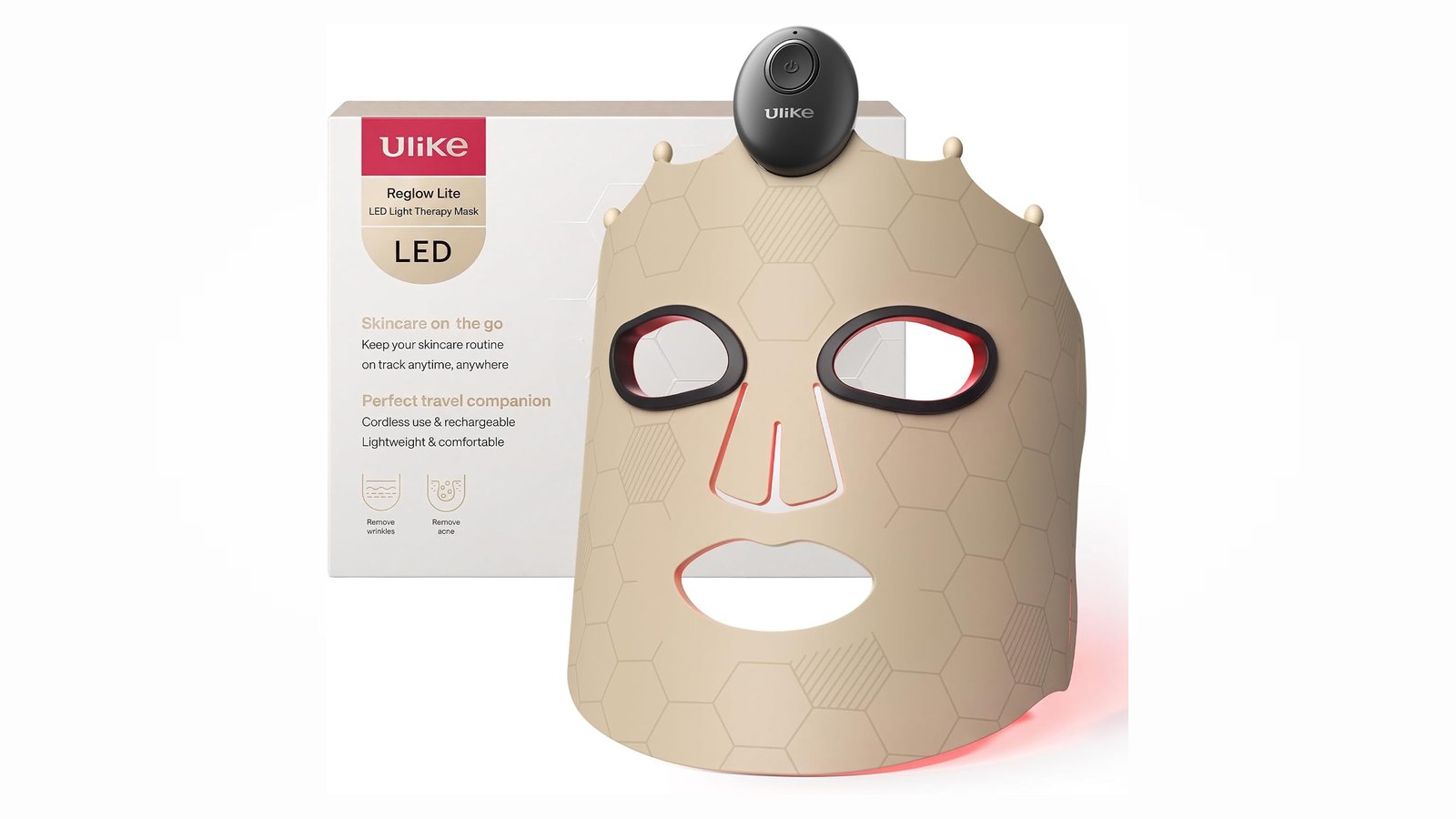
At 0.4 pounds, the Ulike ReGlow Lite is the lightest piece of hardware in this category by a wide margin, and that is not a small thing for something you are supposed to wear on your face for eight minutes a day. It is a flexible silicone mask with a wireless controller that clips to the forehead, a sealed eye shield, and three modes mixing red, blue and near-infrared light. It is also a device whose clinical evidence is much thinner than the marketing around it.
This is a single-product review, not a roundup. We base it on manufacturer specifications, published hands-on testing, and aggregated verified-buyer feedback rather than our own trials. Our full method is on the Our Method page, and every source we relied on is listed at the bottom. We did not perform hands-on testing of this product.
What the ReGlow Lite actually is
The ReGlow Lite is a home LED phototherapy mask. It is moulded from medical-grade silicone with a honeycomb surface of LED beads, worn over the eyes and cheeks with an adjustable strap, and powered by a rechargeable round controller that attaches to the forehead. The controller is the detachable piece — the soft silicone shell and the powered unit are separate parts.
- Type: Wearable home LED light therapy mask
- Model: E100B, UPC 850067658863
- Manufacturer: Shenzhen Eyco Technology Co., Ltd
- Package dimensions: 12.32 × 10.04 × 1.93 inches, 1.52 lb
- Mask weight: 0.4 lb
- Wavelengths: 630 nm red light, 415 nm blue light, 830 nm near-infrared light; yellow light not included
- Modes: Mode 1 red plus infrared for anti-aging, Mode 2 blue for mild to moderate acne, Mode 3 mixed light for skin rejuvenation
- Routine: 8-minute daily session
- Controls: Single power button — long press to power on, short press to switch modes
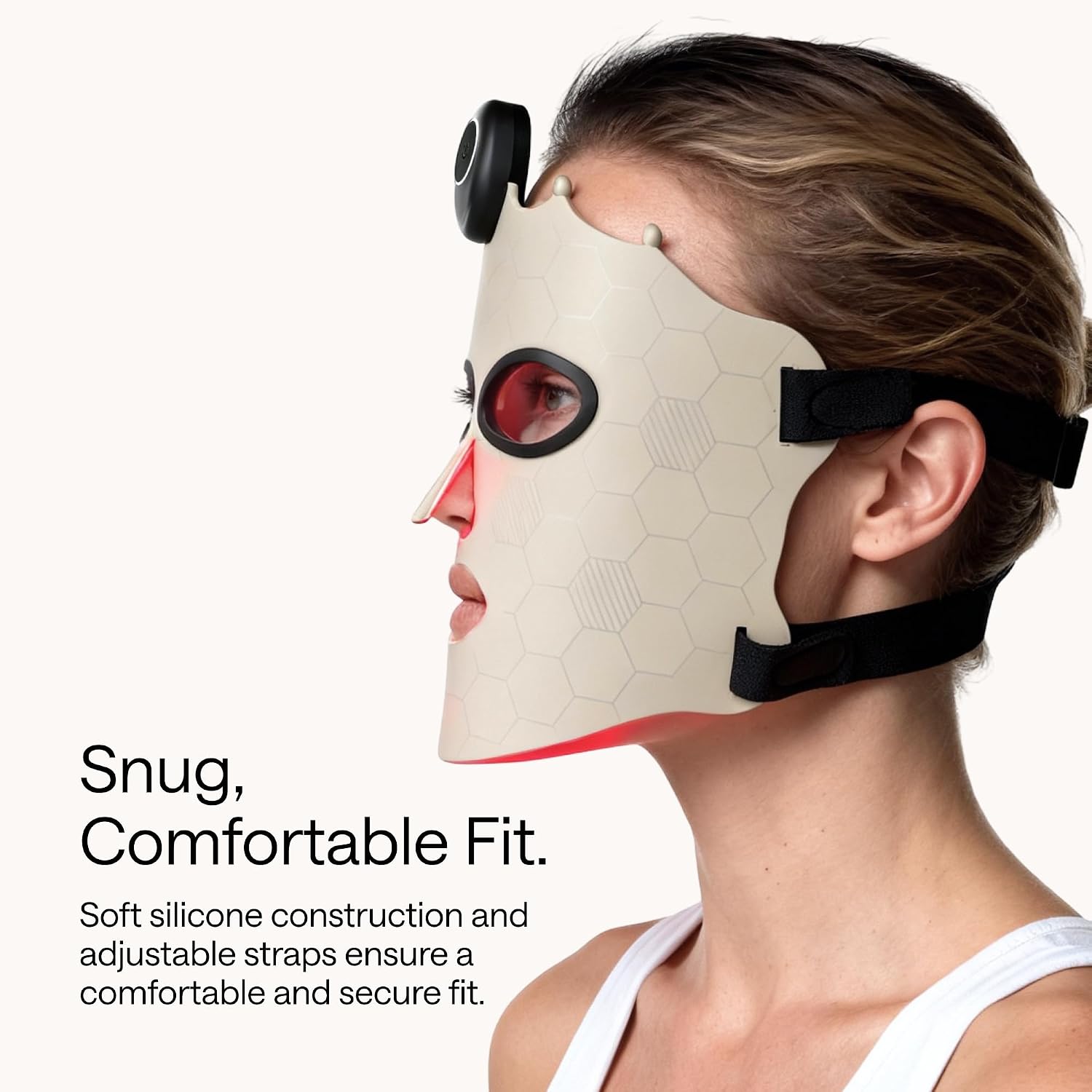
- Fit: Flexible medical-grade silicone, adjustable strap, sealed eye shield
- Power: Wireless and rechargeable, cord-free
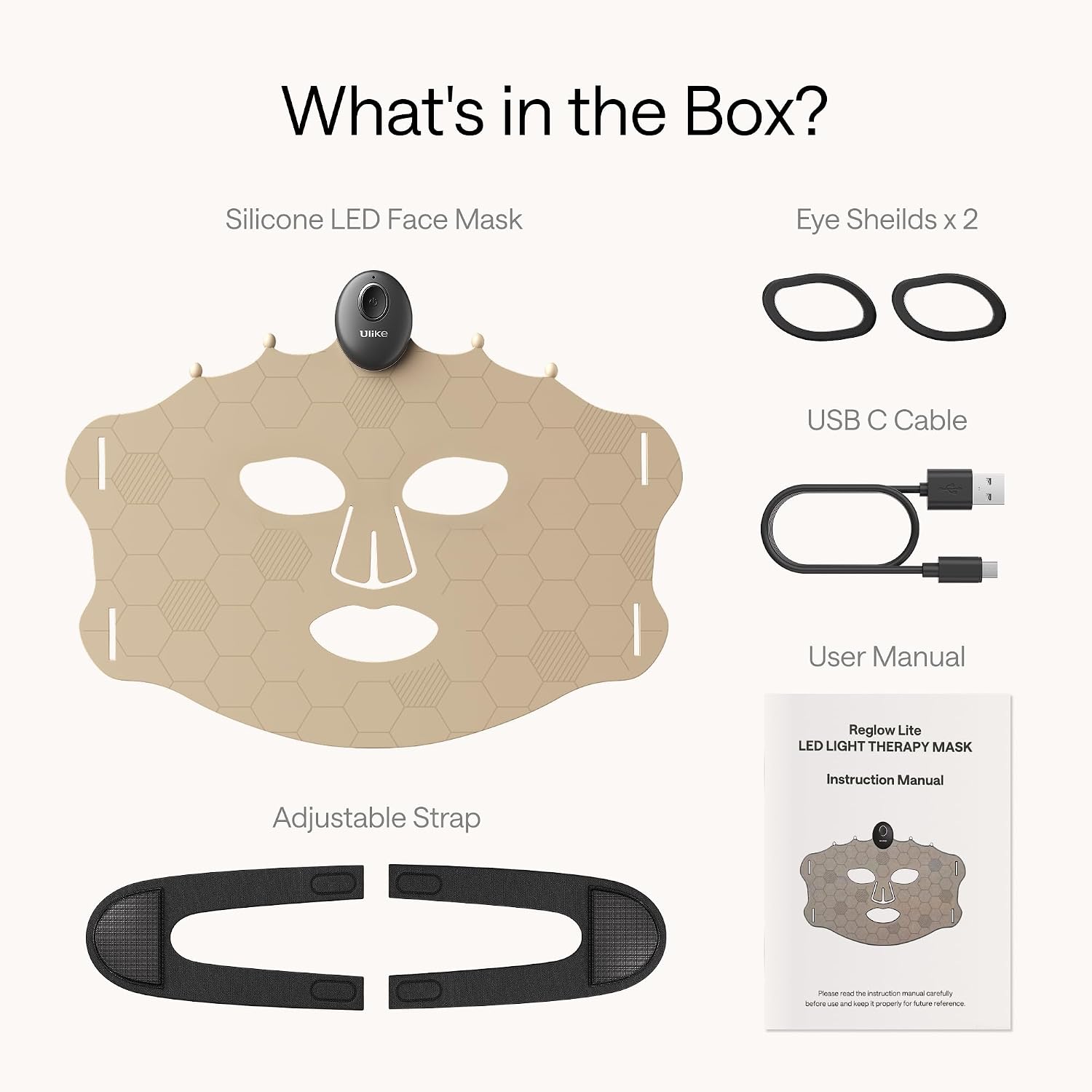
- In the box: Silicone LED face mask with the controller attached, eye shields ×2, USB-C cable, adjustable strap, user manual
- Rating: 4.2 out of 5 stars from 106 Amazon ratings
- Our score: 7.4/10
The wavelengths determine what this device can and cannot do, so they are worth reading carefully. 415 nm is blue-violet light sitting at the peak of porphyrin absorption, which is why it appears in acne devices at all. 630 nm is red light, which reaches deeper and is used for fine-line work. 830 nm is near-infrared, included in Mode 1 alongside red. Yellow light is explicitly not included, ruling out the amber wavelength many competing masks use for pigmentation work.
The three modes, and what each one is for
Mode 1 — red plus near-infrared. The listing describes this as reducing fine lines and wrinkles for firmer, smoother skin. Red light sits in the 600 to 650 nm band and penetrates deeper into the dermis than blue, and near-infrared at 830 nm goes deeper still. This is the anti-aging mode, and it has the longest clinical history of the three.
Mode 2 — blue. The listing describes this as fighting mild to moderate acne by calming inflammation and reducing breakouts. This is the mode with the most interesting mechanism. Blue light at 415 nm corresponds closely to the absorption peak of porphyrins, the pigmented compounds acne-associated bacteria produce, which is why blue-violet light appears in acne devices in the first place.
Mode 3 — mixed. Red and blue together, positioned for comprehensive acne work plus skin renewal. The combination is not only a marketing idea: the dermatology reference material on light and acne notes that combining blue and red generally outperforms blue alone, because the two wavelengths act on different targets and penetrate to different depths.
What the published research actually supports
This is where most LED mask reviews get loose, so we looked closely at what has been studied rather than at what is claimed.
Home LED masks for acne have been tested — on a different device. The best-known randomised controlled trial in this space studied an over-the-counter mask combining 445 nm blue light with 630 nm red light, run for 12 weeks against benzoyl peroxide with evaluator-blinded assessment across Fitzpatrick types I to VI. Inflammatory lesions improved 24.4% on the mask alone, 17.2% on mask plus salicylic acid, and 22.7% on benzoyl peroxide; non-inflammatory lesions improved 19.5%, 6.3% and 4.8% respectively. That is a real signal for the general approach, and it is the strongest evidence available for home light therapy for acne.
But it is not this device. The trial mask ran 445 nm blue and 630 nm red. The ReGlow Lite runs 415 nm blue, 630 nm red and 830 nm near-infrared. The red wavelength matches; the blue is 30 nm shorter; and the near-infrared has no counterpart in the trial at all. So the trial supports the general premise that a home red-and-blue mask can help mild acne. It does not validate these specific wavelengths, and no trial we found has tested this mask.
The evidence certainty is genuinely low. A 2024 Cochrane review of interventions for acne found no high-certainty evidence for most of them, with light-based therapies among those rated low or very low certainty. That is not a dismissal of the approach; it is an honest description of how thin the trial base for at-home phototherapy remains.
The mechanism is real. The dermatology reference on lasers, lights and acne explains that blue light in the 415 to 545 nm band penetrates only about 0.3 mm into skin, while red light at 600 to 650 nm penetrates 1 to 2 mm deeper, and that porphyrins absorb blue light most strongly at 415 nm. Those numbers are the reason blue light appears in acne devices at all — and they are also the reason the ReGlow Lite’s 415 nm sits right at the target peak.
Effectiveness depends on matching the parameters. A 2025 review of domestic devices in dermatology notes that home devices now replicate clinic tools, but that efficacy depends on whether the home device actually reproduces the wavelength, fluence and duration of the validated treatment. It is a real risk with an eight-minute consumer session: the dose is lower than a clinical protocol, and nobody is measuring it.
Methodological quality in LED research is mixed. A 2025 analysis of visible LED therapy studies found 27 papers with heterogeneous outcomes, sample sizes from 14 to 105 patients, treatment parameters differing by three orders of magnitude, no dose validation in most cases, more than a third manufacturer sponsored, and only a third with both a control group and blinded outcome assessment.
Safety data is reassuring for a light-based device generally. A 2023 systematic review of ocular damage from light-based home devices found no reported eye injuries from home use, though it did record 20 office-device cases at 20 to 24 J/cm2, 40% of them without protective eyewear, and recommended clearer packaging warnings about ocular hazards, protective goggles, and never defeating contact sensors. The ReGlow Lite ships with a sealed eye shield and two additional eye shields, which addresses the first two of those three points directly. A separate review of more than 25 years of laser and IPL use concluded there is no evidence of a credible cancer risk from light-based hair removal and light therapy devices.
A home-device survey gives a useful calibration point. In a cross-sectional survey of light-based home hair removal devices, home users rated satisfaction at 6.07 out of 10 against 7.15 for clinic laser, and only 4 of 39 reported side effects such as redness, bumps, burns or discolouration. LED masks sit outside that study’s scope, but the pattern — real but modest results, low side-effect rates — is the reasonable expectation to carry over.
What the design gets right
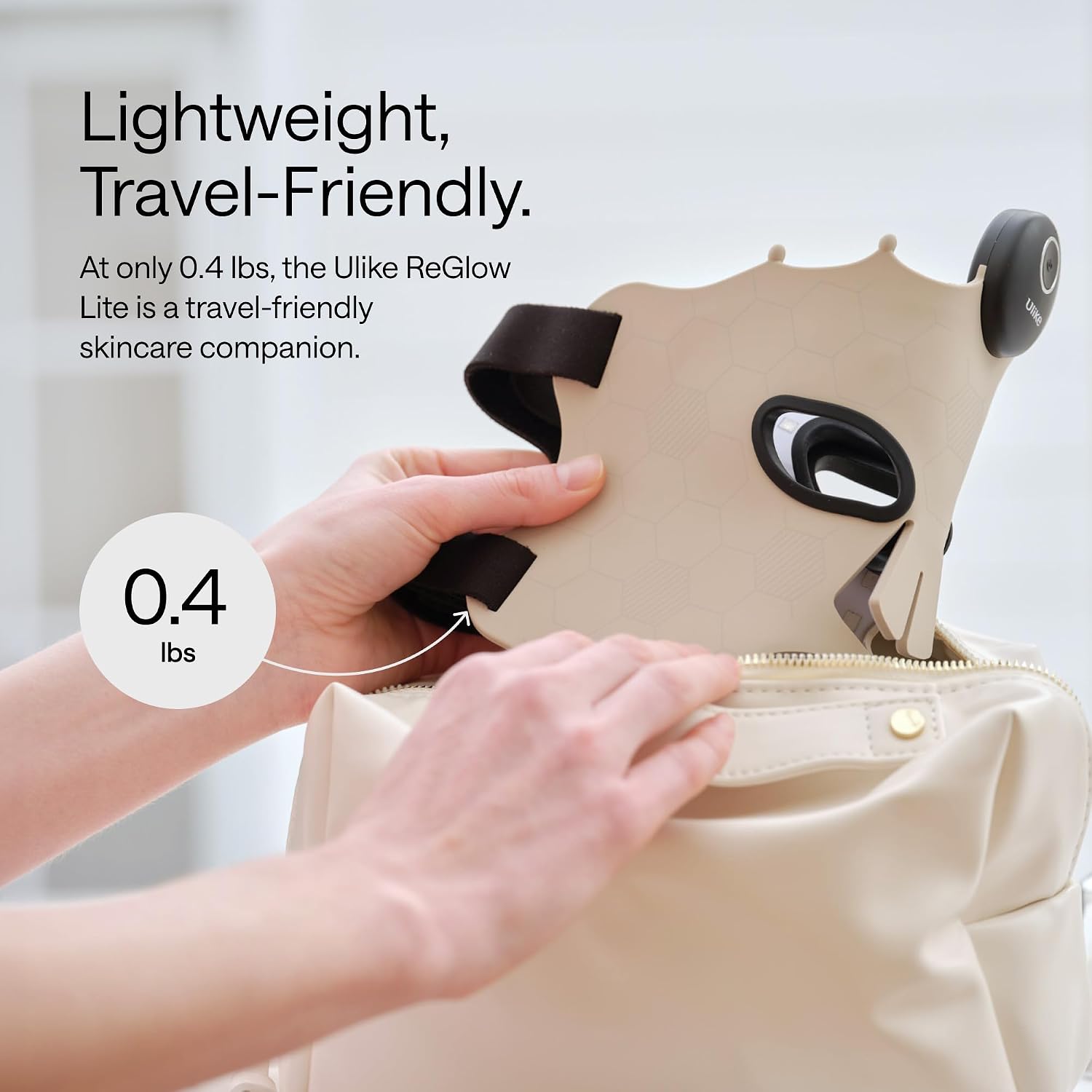
It is genuinely light. At 0.4 pounds the mask weighs about as much as a paperback. For a device worn on your face for a daily session, that is the difference between a routine and a chore, and it is the single most consequential specification on the page.
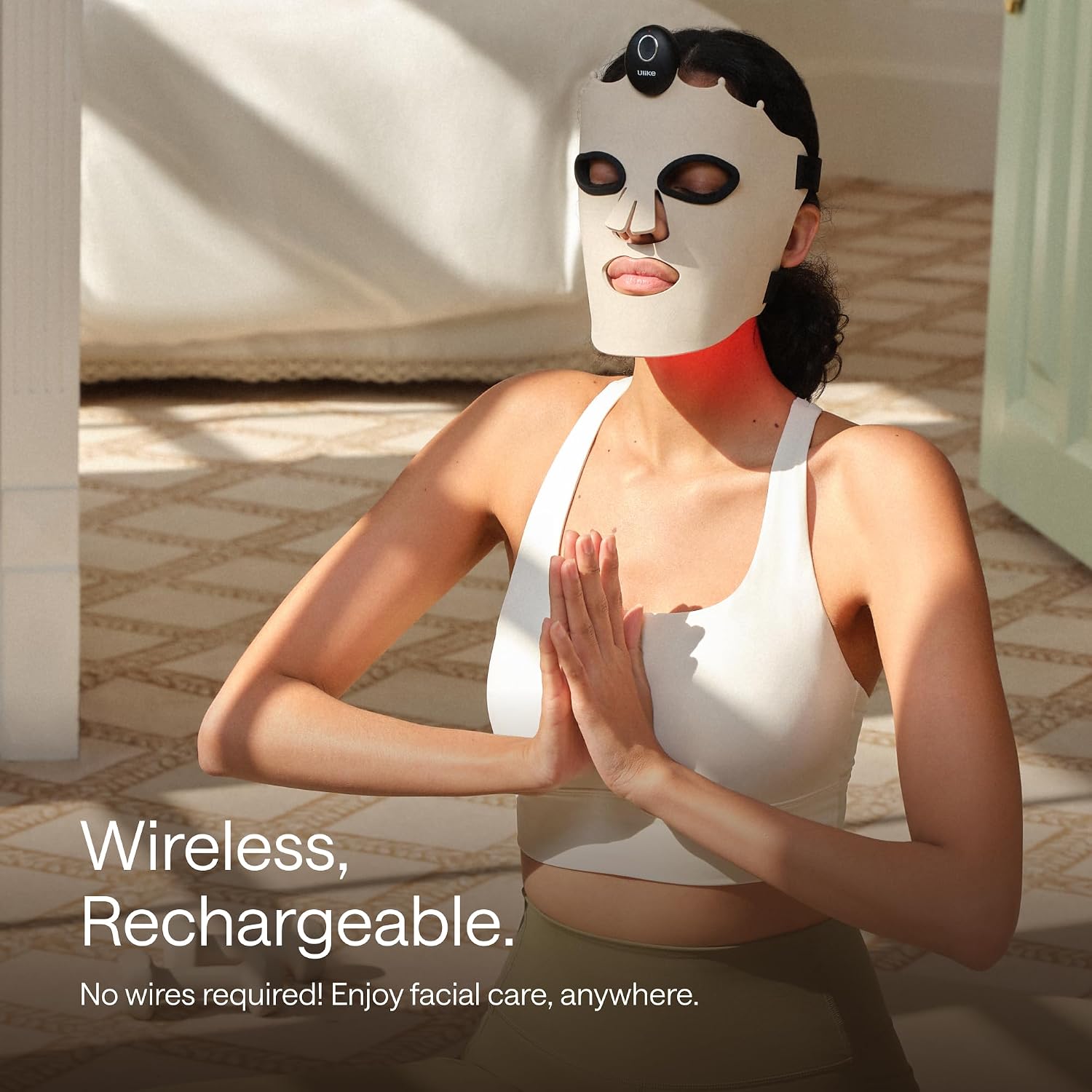
It is wireless and rechargeable. The controller detaches and charges over USB-C, so there is no tether to a socket and no battery built into the silicone. It also means you can use it somewhere other than the bathroom, which matters if you travel.
The fit is the product. Silicone is forgiving in a way plastic never is: the honeycomb surface sits at varying distances from your cheekbones and forehead without pressing hard anywhere, and the adjustable strap takes up the slack. It is also why the mask is specified as 3D in the listing title — the curvature follows a face rather than a flat plane.
One button. Long press to power on, short press to change mode. No app, no account, no firmware update. For a device whose entire job is to be used for eight minutes a day, having nothing between you and it is a real design choice.
Where the marketing overreaches
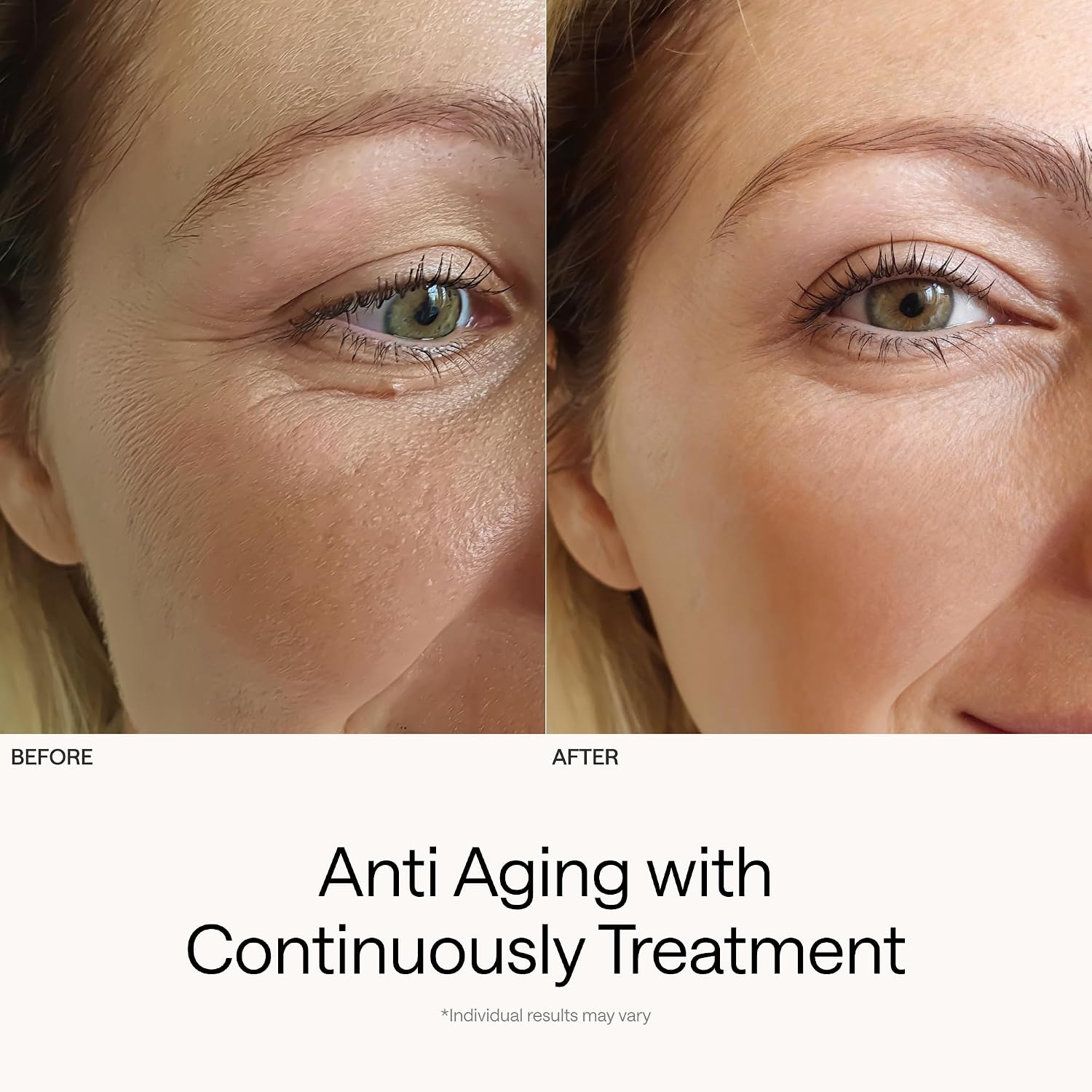
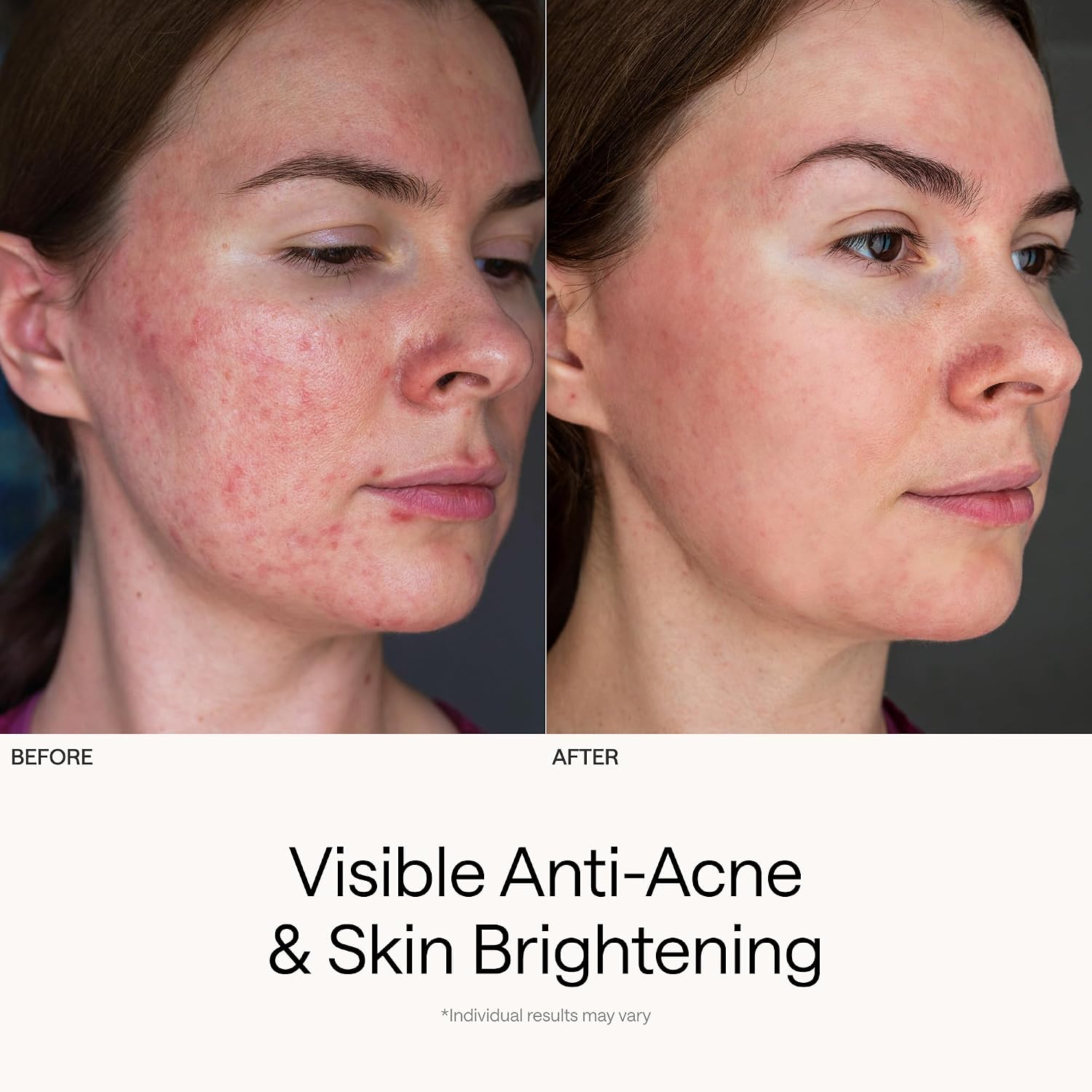
The before-and-after photographs. Both comparison graphics on the listing carry individual-results disclaimers, which is the bare minimum. They show one person’s face, not a controlled comparison, and photographs of skin under cosmetic lighting are the least reliable evidence in this entire category. We would not use them to justify the price.
“Anti-acne” as a claim. The device’s Mode 2 targets mild to moderate acne, and the only randomised trial of a comparable mask produced a 24.4% improvement in inflammatory lesions over 12 weeks. That is a real but moderate effect, and it took three months of twice-daily use to get there. If your acne is significant, this is an adjunct, not a treatment, and it does not replace dermatologist-prescribed therapy.
Three modes does not mean three proven outcomes. Mode 1’s red and infrared content has the deepest general literature behind it. Mode 2’s blue at 415 nm is mechanistically sound. Mode 3 is a combination of the two. What none of them have is a trial of this device at these settings.
Pros and cons
Pros
- ✔ 0.4 lb mask, light enough for a daily session and small enough to travel with
- ✔ 630 nm red, 415 nm blue and 830 nm near-infrared, with 415 nm sitting exactly at the porphyrin absorption peak
- ✔ Three distinct modes rather than one dim setting
- ✔ Wireless and rechargeable, with no battery built into the silicone
- ✔ Sealed eye shield plus two spare eye shields included
- ✔ Adjustable strap and forgiving silicone fit, with no app required
Cons
- ✘ No published trial of this device at these wavelengths
- ✘ The Cochrane review rates light-based acne therapies as low or very low certainty
- ✘ 106 ratings is a thin sample for a 4.2-star average
- ✘ An 8-minute session is well short of the 12-week, twice-daily protocols used in trials
- ✘ Before-and-after photography on the listing is marketing material, not evidence
- ✘ No yellow or amber light, so it cannot address pigmentation the way amber-wavelength competitors can
Who should buy it
Buy the ReGlow Lite if you want a low-effort, low-weight daily LED routine and you have mild acne or early fine lines you want to work on gradually. The 415 nm blue sits at the exact porphyrin absorption peak, the fit is genuinely comfortable, and nothing about the design gets in the way of using it consistently — which is the variable that actually determines results.
Buy it if you travel or split your time between homes. 0.4 pounds and a wireless controller is a package that fits in a drawer rather than on a counter.
Who should skip it
Skip it if you have moderate or severe acne. The one randomised trial of a comparable device produced a 24.4% improvement in inflammatory lesions over 12 weeks, and this device’s session length is shorter than that trial’s protocol.
Skip it if you expect a clinical result in a week. Every credible dataset in this category runs for 12 weeks, and the effect sizes are moderate.
Skip it if you want to address pigmentation. There is no yellow or amber wavelength in this mask, and that is the wavelength used for that job.
Skip it if you would rather read the evidence than trust the photographs. The rating pool is small, there is no device-specific trial, and the category’s research base is rated low certainty.
View the Ulike ReGlow Lite on Amazon
Prices and availability change daily on Amazon — check the listing for the current offer.
Frequently Asked Questions
What wavelengths does the Ulike ReGlow Lite use?
Three: 630 nm red light, 415 nm blue light and 830 nm near-infrared light. Yellow light is explicitly not included. The 415 nm blue is worth noting because it sits at the peak of porphyrin absorption, which is why blue-violet light appears in acne devices at all.
Does the ReGlow Lite work for acne?
Possibly, and the evidence for the approach is real but modest. A randomised trial of an over-the-counter mask using 445 nm blue plus 630 nm red found a 24.4% improvement in inflammatory lesions over 12 weeks against benzoyl peroxide’s 22.7%. That is a comparable device with a slightly different blue wavelength and no near-infrared, so it supports the general approach rather than this mask in particular.
How long does a session take?
Eight minutes a day, per the listing. That is considerably shorter than the twice-daily 12-week protocols used in the published trials, which is the single biggest gap between the marketing and the evidence.
Is it safe to wear over the eyes?
The mask has a sealed eye shield, and two spare eye shields are included in the box. The ocular-safety literature for light-based home devices found no reported eye injuries from home use, though it did record 20 office-device cases and recommended protective eyewear as a standard practice. We would still keep the mask closed and avoid looking straight into the LEDs.
Does it need an app or a subscription?
No. There is a single power button — long press to turn on, short press to change modes. No app, no account, no firmware.
Is it worth it compared with the larger LED masks?
If you want a mask you will actually wear daily, the 0.4 lb weight and wireless controller are the case for it. If you want maximum surface coverage in one session, a larger rigid mask covers more face in a shorter time. Note also that the mask we have checked against published research here is this Lite model specifically.
Browse the full Ulike range on Amazon
The Ulike store page lists every current device and bundle from the brand.
The bottom line
The ReGlow Lite is a well-made, unusually light piece of hardware with a sensible wavelength set. Blue at 415 nm is not a random number — it is the porphyrin absorption peak that the acne literature points at, red at 630 nm is the better-established anti-aging wavelength, and near-infrared at 830 nm is a sensible addition to Mode 1. The sealed eye shield, the spare shields, the adjustable strap and the single-button interface are all evidence of someone who has actually worn the thing.
What it does not have is a trial. The one randomised study of a comparable home mask produced a 24.4% improvement in inflammatory lesions over 12 weeks, on a device with a slightly different blue wavelength and no near-infrared. The Cochrane review rates light-based acne therapies as low or very low certainty, and the methodological analysis of LED research found heterogeneous doses, small samples and a third of studies unblinded. So the honest framing is: plausible mechanism, real supporting evidence for the category, no device-specific proof, and effects that are moderate rather than dramatic.
At 0.4 pounds, with an eight-minute session and no app between you and it, this is the kind of device people will actually use for the twelve weeks the evidence requires. That is not a small thing, and it is the reason we rate it as highly as we do.
View the Ulike ReGlow Lite on Amazon
Prices and availability change daily on Amazon — check the listing for the current offer.
Sources cited in this article
- Nestor MS, et al. “Efficacy of an over-the-counter intense pulsed light mask device for the treatment of mild to moderate acne vulgaris.” Journal of Clinical and Aesthetic Dermatology, 2016 — 12-week evaluator-blinded randomised controlled trial of a 445 nm blue plus 630 nm red over-the-counter mask against benzoyl peroxide, inflammatory lesion improvement 24.4% for the mask against 22.7% for benzoyl peroxide
- Cochrane systematic review of acne interventions, 2024 — no high-certainty evidence for most interventions, with light-based therapies rated low or very low certainty
- DermNet, “Lasers, lights and acne” — blue light 415 to 545 nm penetrating about 0.3 mm, porphyrin absorption peak at 415 nm, red light 600 to 650 nm penetrating 1 to 2 mm deeper, blue and red combined outperforming blue alone, home wearable masks for mild to moderate acne, side effects including dryness, itch, rash and headache
- Haykal D, et al. “Bridging clinic to home: domestic devices in dermatological diagnostics and treatments.” Frontiers in Digital Health, 2025 — home devices replicate clinic tools, but efficacy depends on matching wavelength, fluence and duration
- Kololgi SP, et al. “Unlocking the Secrets of Home-Based Dermatology Devices: A Comprehensive Guide to Home-Based Dermatology Devices.” Indian Journal of Dermatology, 2026
- Grimes DR, et al. “Methodological issues in visible LED therapy dermatological research and reporting.” PLOS ONE, 2025 — 27 studies with inconsistent outcomes, small samples, wide dose variation and little blinding
- Al Muqarrab FJ, et al. “Is It Possible for Light-Based Hair Removal Home Devices to Induce Ocular Damage? Systematic Review.” Clinical, Cosmetic and Investigitational Dermatology, 2023 — no reported ocular damage from home devices, 20 office-device cases, recommendations on protective eyewear and packaging warnings
- Ash C, Town G, Whittall R, Tooze L, Phillips J. “Lasers and intense pulsed light (IPL) association with cancerous lesions.” Lasers in Medical Science, 2017 — 25 years of use without evidence of a credible cancer risk
- Kaliyadan F, et al. “Light-Based Home-Use Hair Removal Devices: A Cross-Sectional Survey.” International Journal of Trichology, 2022 — home-device satisfaction 6.07/10 against 7.15/10 for clinic laser, 4 of 39 reporting side effects
- Amazon manufacturer listing for the Ulike ReGlow Lite LED Mask, including the wavelength detail table, the three-mode descriptions, the box contents and the aggregated verified-buyer ratings (accessed November 2026)
This article contains affiliate links. When you buy through them, we may receive a commission from the brand or platform at no additional cost to you. Our editorial process is independent of affiliate relationships — see our Affiliate Disclosure and Our Method.