Ulike Air 10 IPL Hair Removal Review: Dual Lights, SHR Mode and the Numbers Behind the Claims
The Ulike Air 10 is Ulike's mainstream home IPL device: 6.6 J/cm2 energy density, a 26 J SHR burst, a sapphire cooling window and a SkinSensor that reads your skin tone before it flashes. We checked the manufacturer claims against published home-IPL clinical research, the safety literature and aggregated buyer feedback.
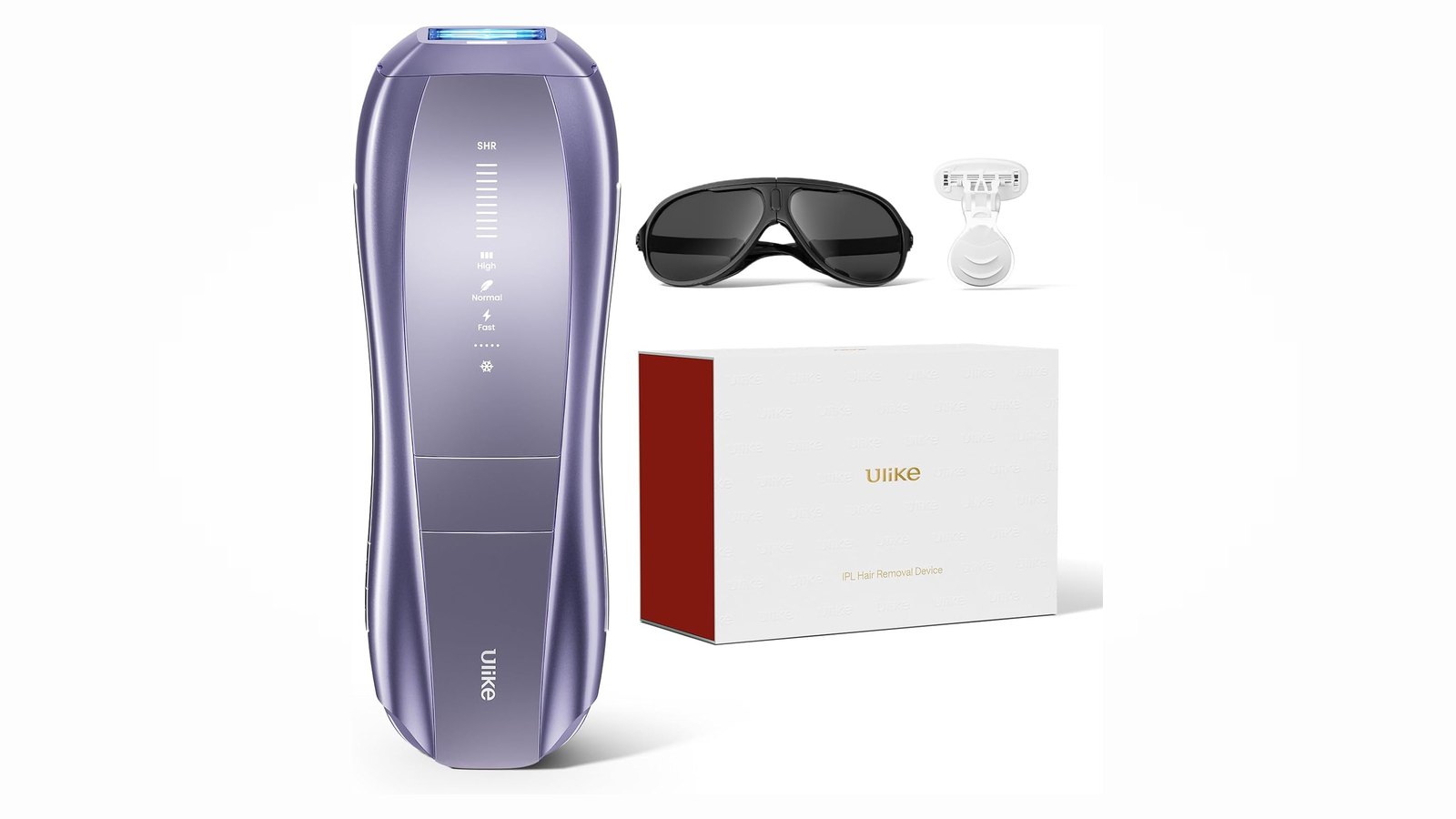
Home IPL has settled into a strange place. The device is a flash lamp pressed against your skin, the box promises enormous percentages, and the clinical literature says the results are real but slower and less dramatic than the photography implies. The Ulike Air 10 is the version of that idea most people end up holding, largely because it is the one that gets discounted and reviewed most heavily. It is also the model with the most published clinical work behind the general approach, which makes it the easiest one in the category to judge honestly.
This is a single-product review, not a roundup. We base it on manufacturer specifications, published hands-on testing, and aggregated verified-buyer feedback rather than our own trials. Our full method is on the Our Method page, and every source we relied on is listed at the bottom. We did not perform hands-on testing of this product.
What the Air 10 actually is
The Air 10 is a corded home IPL handset built around two lamps rather than one. It is a substantial piece of hardware for the category: 8.2 by 2.2 by 2.8 inches and 14.4 ounces, with a treatment window the manufacturer measures at 0.6 square inches and an energy density of 6.6 J/cm2. It is sold in what the listing calls Roland Purple, has been on sale since February 2024, and is manufactured by Shenzhen Ulike Smart Electronics.
- Type: Home IPL (intense pulsed light) hair removal device
- Model: UI20 DB, manufacturer part number UI20 DB-US
- Size and weight: 8.2 x 2.2 x 2.8 inches, 14.4 oz
- Light source: Dual lamps, 0.6 in² treatment window, 6.6 J/cm² energy density
- SHR mode: Up to 26 J per session, delivered as a 4-pulse burst
- Cooling: Sapphire ice-cooling window, contact temperature held below 65 °F after 30 minutes
- Modes: Fast, Normal, High and SHR, across 10 intensity levels
- Skin sensing: SkinSensor reads skin tone, adjusts power automatically, and stops flashing if the treated area reads too dark
- In the box: The listing photographs show the handset with safety glasses, a razor and the retail box; this listing does not publish a written itemised box list
- Rating: 4.4 out of 5 stars from more than 3,500 Amazon ratings
- Our score: 8.0/10
Two things about those numbers deserve a caveat before anything else. The 6.6 J/cm2 energy density is a manufacturer figure for the flash, not a single-pulse fluence, so it cannot be read directly against the 5 J/cm2 ceiling that the earlier clinical home-IPL studies operated under. And the rating is aggregated buyer feedback on a single retail listing, which is a much softer signal than a controlled trial.
The three technologies that actually do something
Dual Lights. The Air 10 fires two lamps rather than one, and Ulike’s own comparison graphic puts the practical effect at an 18% wider treatment area and double flashes, which is how a full-body session fits into roughly ten minutes. The dual-lamp design is the reason the handset is physically larger than most competitors, and it is the reason the device covers a body in one sitting rather than three.
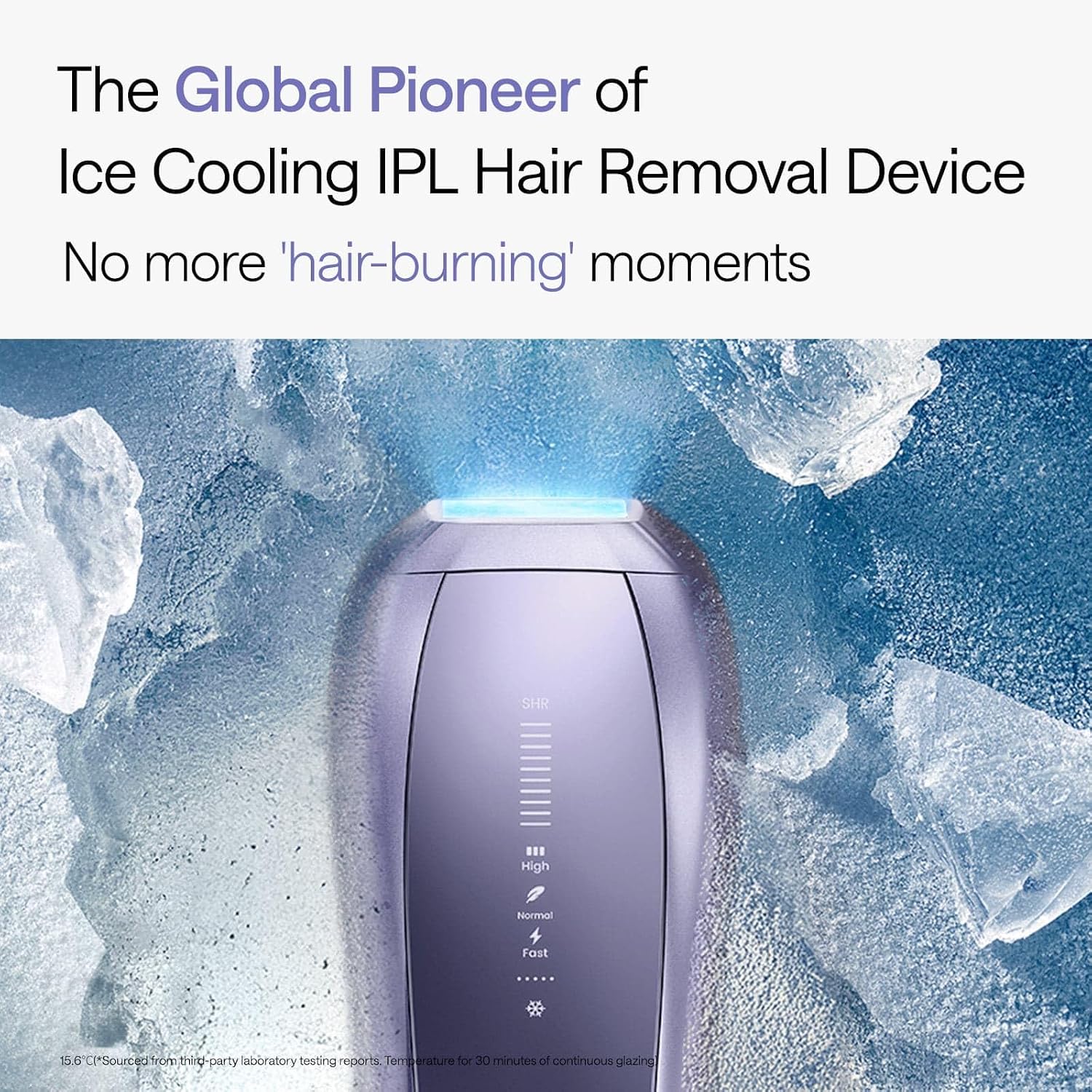
Ice cooling. The treatment window is sapphire, and the marketing claim is that it holds contact temperature below 65 °F even after 30 minutes of use. That is a claim about the surface you press against your skin rather than about the light itself, and it is the difference between a device you can use on a sensitive bikini line and one you cannot.
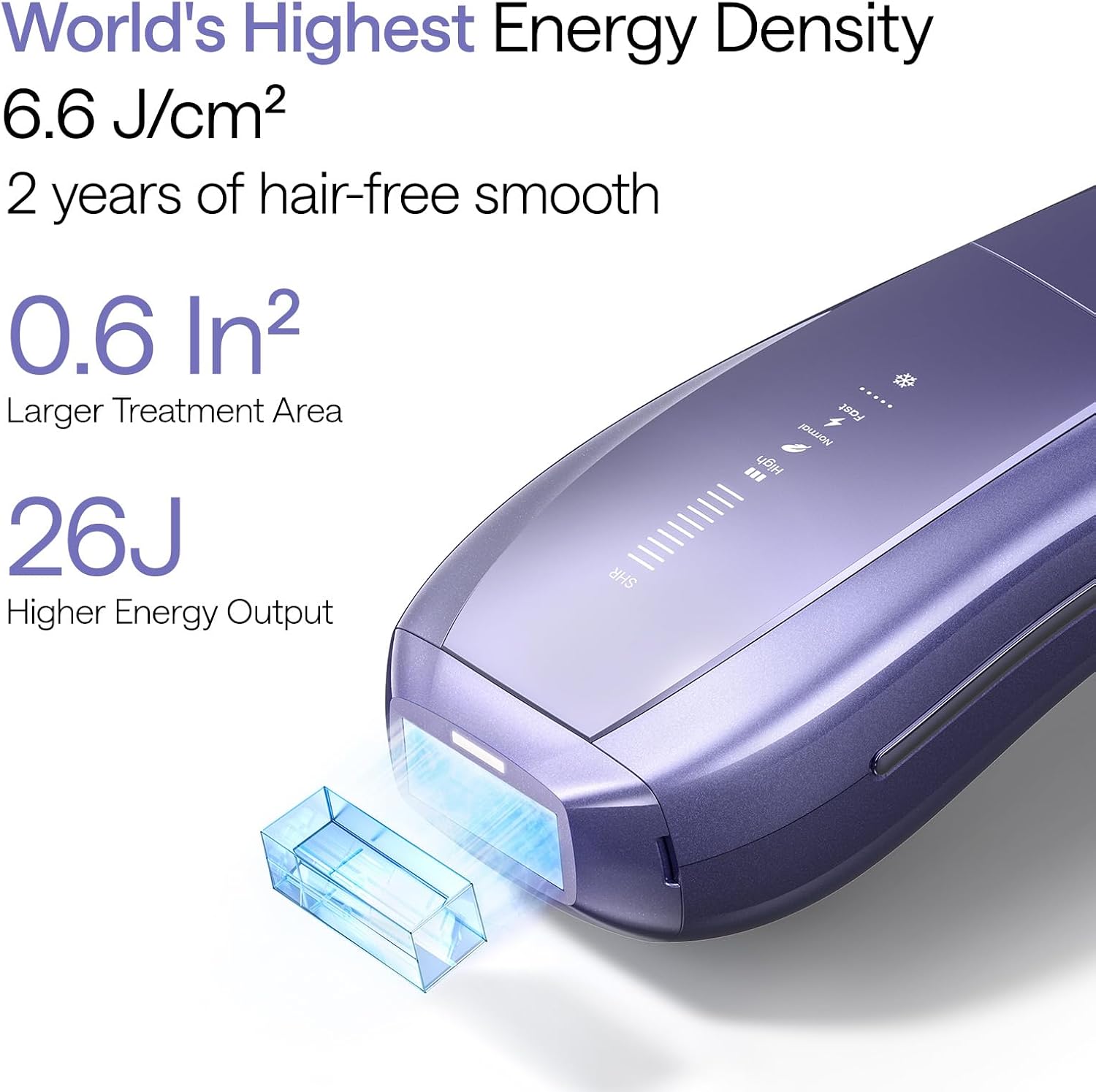
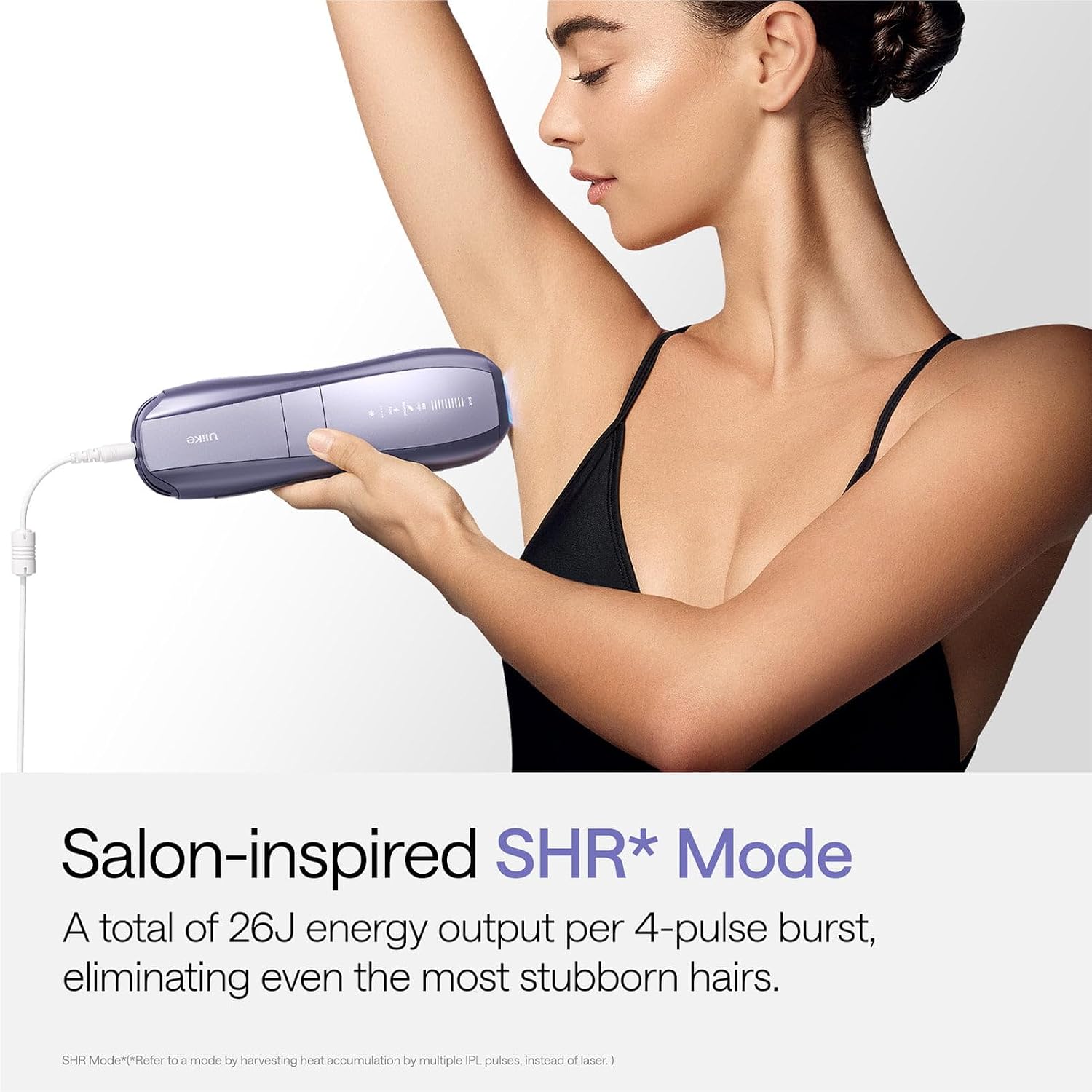
SHR mode. This is the one that gets the marketing attention. SHR mode fires a 4-pulse burst carrying a total of 26 J, aimed at coarse hair rather than the fine, low-pigment hair that IPL handles easily. In practice it is the setting you would use on a beard line, underarms or a bikini line, and it is the reason the device carries the energy figures it does.
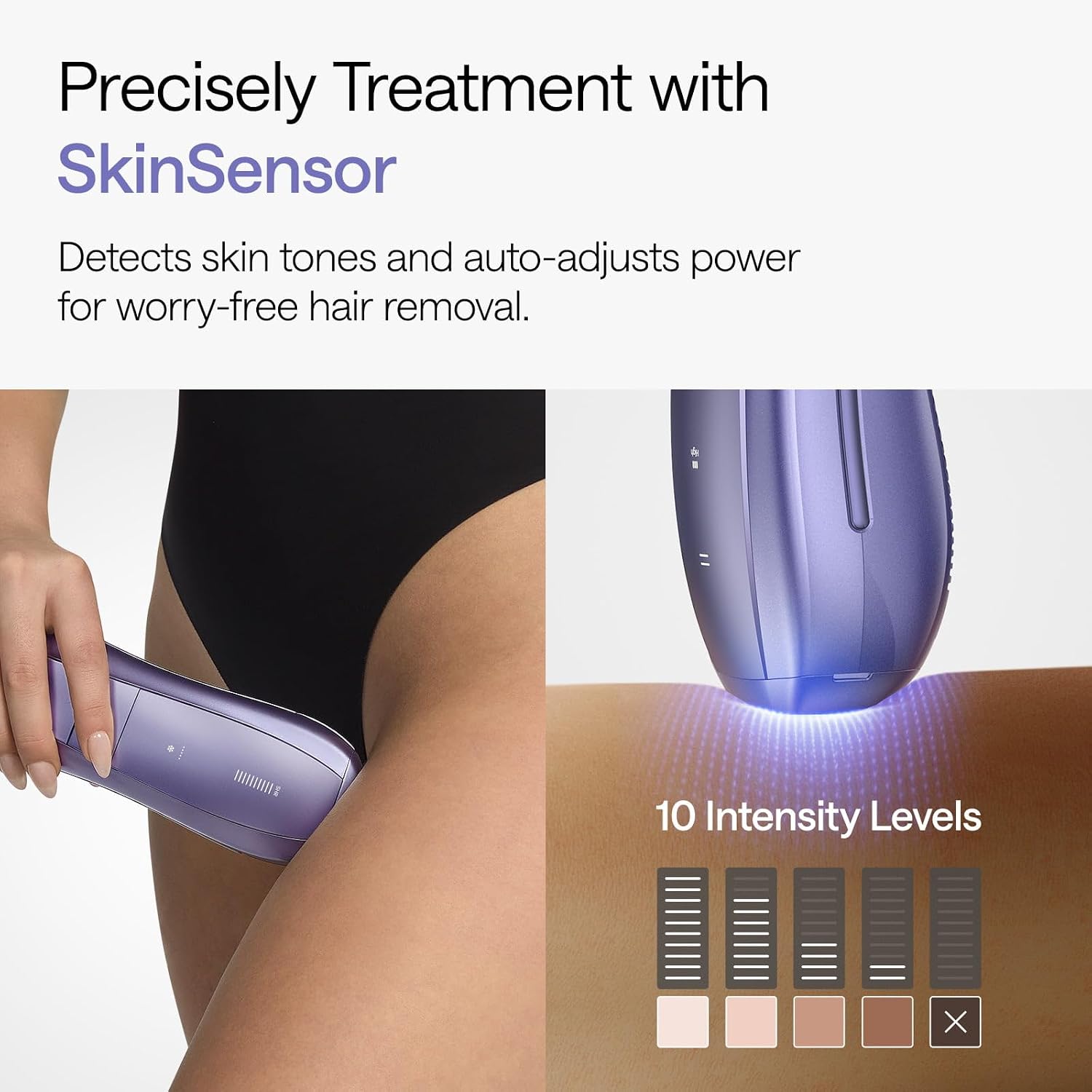
SkinSensor. The Air 10 reads skin tone before it fires and adjusts output to match, and it will stop flashing if the area under the window reads too dark for the light to be safe. The device offers 10 intensity levels, with the sensor selecting among them. This is the single most important safety feature on the unit, and it is also the feature with the least independent verification.
The skin and hair colours this device actually works on
Ulike publishes an applicability chart, and it is worth reading carefully rather than skimming, because it rules out more people than the product photography implies. Supported skin tones are Very Fair, Fair, Medium and Olive to Light Brown. Brown and Dark Brown skin are not applicable. Supported hair colours are Black, Dark Brown, Brown and Light Brown. Red, Light Blonde and White to Grey hair are not applicable.
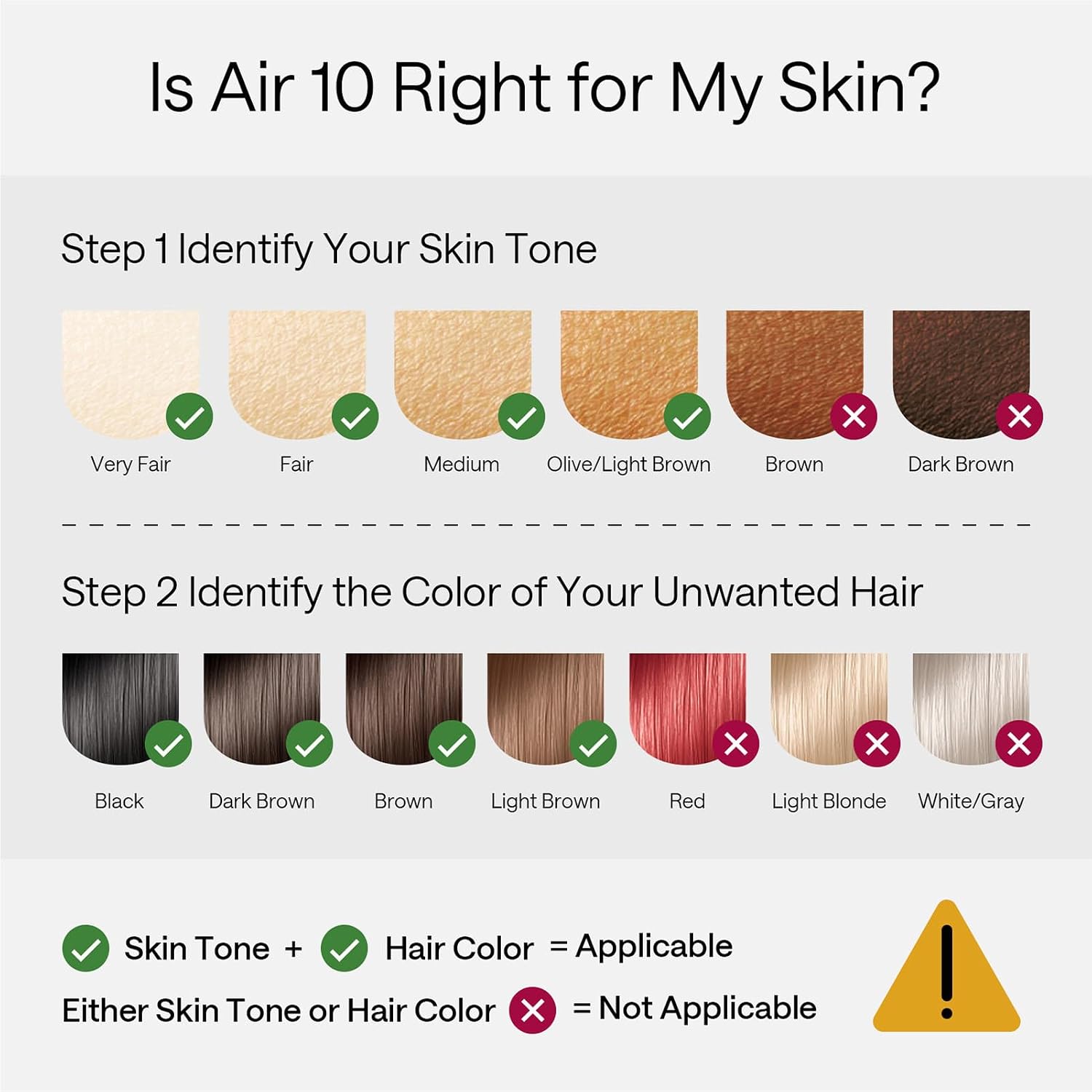
The same information appears in the other Air 10 listings under a Good Fit versus Not Recommend heading, with the same four supported skin tones and the same four supported hair colours, and with an explicit instruction to complete a skin safety test before treatment. The chart is consistent across the range, which is a small point in the manufacturer’s favour.
The practical read is that this is a device for dark hair on light to medium skin. That covers a large share of people, but it excludes red, blonde and grey hair entirely, and it excludes the deepest skin tones. If you fall into either group, no setting on this device will change the physics: IPL works by targeting melanin in the hair, so it needs contrast between hair and skin and a pigmented follicle to aim at.
The marketing claims, and what the published evidence supports
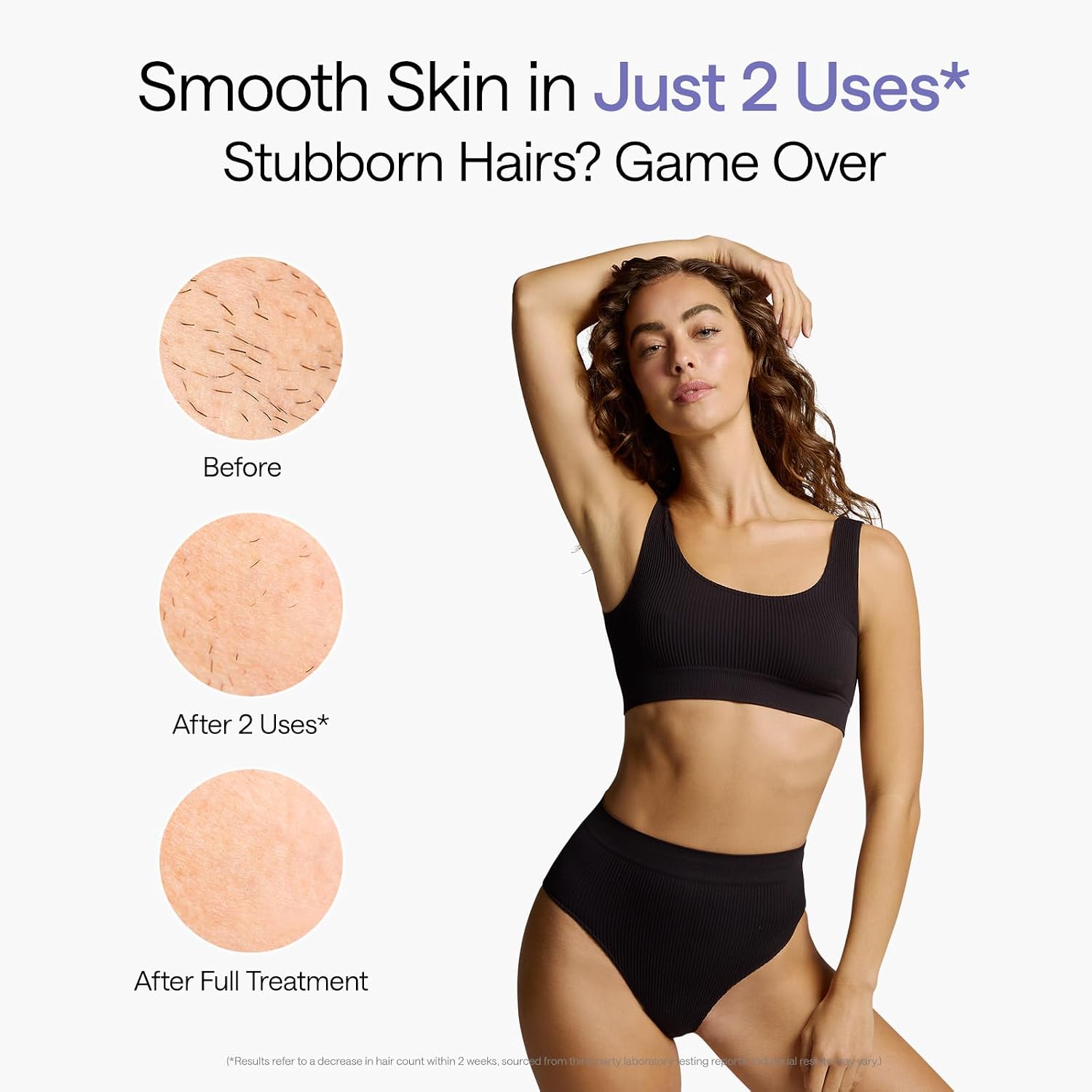
The headline claim on the listing is 96.52% hair reduction in the bikini area, measured by using the device every two days for the first two weeks, with visible reduction in about four weeks. The Deluxe listing phrases the same hardware as 96% hair density reduction in four weeks and visible results in two weeks. Those are three different timelines attached to one device, which is a reasonable signal to treat any single number with care.
What the clinical literature actually found is more modest and more useful.
Home IPL does work, over months rather than weeks. A 2010 study of 22 female patients using a home IPL device six times at two-week intervals found that 95% of them noticed a reduction in hair count, with an overall hair reduction of 78% at one month and 72% at three months. No serious adverse events were reported. A 2015 follow-up on facial hair below the cheekbone, with 15 patients completing six biweekly treatments, found hair counts falling from 22.7 at baseline to 4.4 at one month and 7.0 at three months, which is an 83.3% reduction at one month and 78.1% at three months, again with no adverse events.
Home devices land roughly half way between a clinic and nothing. A 2023 study that put a home light device head to head against a professional diode laser on the underarms recorded 85% and 88% hair reduction for the professional laser across two sides, against 52% and 46.3% for the home device. Mild side effects appeared with both. The conclusion the authors drew was that a home device can reduce hair effectively, just more slowly.
The realistic satisfaction picture is around 6 out of 10. A cross-sectional survey of light-based home hair removal devices found 111 valid responses from 39 home-device users, all of whom were using a device on their face. Average satisfaction was 6.07 out of 10 for home devices against 7.15 for clinic laser, a difference that was statistically significant. Only 4 of the 39 reported any side effect at all, and the most common were redness, bumps, burns and discolouration.
The safety record on eyes is reassuring but not empty. A 2023 systematic review of ocular damage from light-based home hair removal devices found no reported cases of eye damage following exposure to a home device. It did find 20 patients with iris atrophy, anterior-chamber inflammation or retinal pigment epithelium damage, all of them following office IPL or diode laser treatments at reported fluences of 20 to 24 J/cm2, and 40% of those patients had been wearing no protective eyewear at all. The authors recommend clearer packaging warnings about ocular hazards, an emphasis on protective goggles, and an explicit warning not to defeat the device contact sensors. The Air 10 ships with safety glasses in the box and uses a skin-contact sensor, which addresses two of those three points directly.
Nothing in 25 years of use points to a cancer risk. A review of the long-term safety record for lasers and IPL concluded that the evidence base across more than 25 years of use has not raised concerns about long-term safety, with only a few anecdotal melanoma cases reported post-treatment. It also notes that home-use devices now have parameters comparable to salon-based equipment, which is the same point that makes the professional-versus-home effectiveness gap worth understanding rather than ignoring.
Real-world case series are encouraging but tiny. A 2026 case series followed four patients with pilonidal disease who switched to a home IPL device after clinic laser. No IPL injury was reported and no recurrence occurred over one to three years. It is an informal series of four people, so it is a signal rather than evidence.
There is also a broader methodological caveat that applies to the whole category. A 2025 analysis of visible LED therapy research found 27 studies with wildly inconsistent outcome measures, sample sizes from 14 to 105 patients, and treatment parameters differing by three orders of magnitude. Only a third of the studies had both a control group and blinded outcome assessment, and more than a third were manufacturer sponsored. That is why we treat marketing percentages as claims and the trial data as findings.
View the Ulike Air 10 on Amazon
Prices and availability change daily on Amazon — check the listing for the current offer.
Pros and cons
Pros
- ✔ Dual lamps and a 26 J SHR burst cover a full body in about ten minutes
- ✔ Sapphire cooling window makes the device usable on sensitive areas
- ✔ SkinSensor adjusts output automatically and refuses to flash over unsuitable skin
- ✔ Safety glasses included, which the ocular-damage review specifically recommends
- ✔ Best-supported specification in the mainstream home IPL category
- ✔ Corded electric, so a ten-minute full-body session is never cut short by a flat battery
Cons
- ✘ Does not work on red, blonde or grey hair, or on deep skin tones
- ✘ Three different timelines for the same reduction claim across the Air 10 listings
- ✘ A 96% figure is a marketing number measured on a bikini area, not a general promise
- ✘ 14.4 oz is heavy enough that a full body session needs a break partway through
- ✘ The skin safety test is on you to remember and complete
Who should buy it
Buy the Air 10 if you have dark hair on light to medium skin and you want to stop paying for regular salon visits. It is the most defensible home IPL device on the market, because the underlying approach has the deepest clinical support of anything in this category and the safety engineering is more careful than most.
Buy it if you can commit to the schedule the manufacturer describes. The clinical studies that produced good results all used treatments every two weeks for six sessions. A device used twice in three months will not reproduce those results.
Who should skip it
Skip it if your hair is red, blonde, white or grey, or if your skin is in the deepest tone range. The device’s own chart rules you out, and no intensity setting changes that.
Skip it if you want a permanent answer. Every clinical study of home IPL describes hair reduction that requires maintenance, and the buyer survey found monthly upkeep to be the most common pattern among people who kept using their devices. Anything described as permanent hair removal is describing the underlying mechanism rather than the outcome.
Skip it if you only need to treat a small area once. The Air 10 is built for full-body work, and smaller-area devices cost less and store more easily.
Frequently Asked Questions
Does the Ulike Air 10 actually work?
Yes, and the evidence for home IPL as a category is reasonable. The 2010 and 2015 clinical studies found hair-count reductions of 78% to 83% at one month and 72% to 78% at three months after six biweekly treatments, with no adverse events. Treat the 96% figure on the listing as a marketing claim rather than an expectation.
How long before I see results?
The listing claims visible reduction in about four weeks if you use the device every two days for the first two weeks. The clinical studies that produced good results ran six treatments at two-week intervals, which puts meaningful change somewhere around month two. Anyone promising faster is selling you something.
Is it safe on darker skin?
The device uses SkinSensor to read skin tone and adjust or stop, and Ulike’s own chart limits the supported range to Very Fair through Olive to Light Brown skin. The ocular-damage review found no reported cases of eye damage from home devices, but it recommends protective eyewear and not defeating contact sensors, so use the safety glasses and treat the sensor as a real limit.
Can I use it on my face?
The Air 10 listing claims face use, and one of the clinical studies we cite specifically studied home pulsed light for facial hair below the cheekbone with good results and no adverse events. Note that the earlier 2010 study excluded the face entirely, so treat face use as newer and less well established.
Is the Air 10 still the current model?
The Air 10 listing now carries a newer-version panel pointing to the Ulike Air 4, so this is no longer the newest device in Ulike’s range. The Air 10 remains the better-reviewed and better-documented of the two on this page, and it is usually the cheaper route into the same basic dual-lamp approach.
Should I buy the Air 10 or one of the bundles?
We review all three packages separately. The plain Air 10 covered here is the strongest value. If you need a razor for preparation, see our Air 10 with Long Handle Razor review. If you want the full gift kit with the storage case, glasses and adapter, see the Air 10 Deluxe review.
Browse the full Ulike range on Amazon
The Ulike store page lists every current device and bundle from the brand.
The bottom line
The Air 10 is the best-specified home IPL device you can buy at this price point, and the reasons are specific rather than marketing-shaped. Two lamps and a 26 J SHR burst mean a ten-minute full body session. A sapphire cooling window means the device is usable on the areas people usually avoid. SkinSensor means the device reads your skin before it fires, and the safety glasses in the box answer the single clearest safety recommendation in the published ocular-damage review.
What it will not do is work on red, blonde or grey hair, on deep skin tones, or without a schedule. The clinical results on the table came from six treatments at two-week intervals, and the buyer data shows that maintenance is part of the deal. Read those two facts next to a listing that promises 96% and you have the honest version of this product: it is a genuinely good device that pays off on a timeline measured in months.
View the Ulike Air 10 on Amazon
Prices and availability change daily on Amazon — check the listing for the current offer.
Sources cited in this article
- Gold MH, Biron JA, Fertig B, Kolli A. “Low-energy intense pulsed light for hair removal at home.” Journal of Clinical and Aesthetic Dermatology, 2010 — 22 patients, six biweekly treatments, 78% hair reduction at one month and 72% at three months, no serious adverse events
- Gold MH, Biron JA, Thompson B. “Clinical Evaluation of a Novel Intense Pulsed Light Source for Facial Skin Hair Removal for Home Use.” Journal of Clinical and Aesthetic Dermatology, 2015 — 15 patients completing six biweekly treatments, 83.3% reduction at one month and 78.1% at three months
- Hendricks K, et al. “Evaluating the effectiveness of laser hair reduction using a home use laser in comparison to a Diode laser.” PLOS ONE, 2023 — professional laser 85% and 88% axilla reduction against 52% and 46.3% for a home device
- Kaliyadan F, et al. “Light-Based Home-Use Hair Removal Devices: A Cross-Sectional Survey.” International Journal of Trichology, 2022 — 39 home-device users, satisfaction 6.07/10 against 7.15/10 for clinic laser, 4 of 39 reporting side effects
- Al Muqarrab FJ, et al. “Is It Possible for Light-Based Hair Removal Home Devices to Induce Ocular Damage? Systematic Review.” Clinical, Cosmetic and Investigational Dermatology, 2023 — no reported ocular damage from home devices; 20 office-device cases at 20 to 24 J/cm², 40% without protective eyewear
- Ash C, Town G, Whittall R, Tooze L, Phillips J. “Lasers and intense pulsed light (IPL) association with cancerous lesions.” Lasers in Medical Science, 2017 — 25 years of use without evidence of a credible cancer risk
- Jo S, Abrajano, Chiu. “Home intense pulsed light (IPL) device is a useful tool to decrease hair burden in pilonidal patients — a case series.” International Journal of Surgery Case Reports, 2026 — four patients, no IPL injury and no recurrence over one to three years
- Haykal D, et al. “Bridging clinic to home: domestic devices in dermatological diagnostics and treatments.” Frontiers in Digital Health, 2025 — home devices replicate clinic tools, but efficacy depends on matching the treatment parameters
- Grimes DR, et al. “Methodological issues in visible LED therapy dermatological research and reporting.” PLOS ONE, 2025 — 27 studies with inconsistent outcomes, small samples and little blinding
- Kololgi SP, et al. “Unlocking the Secrets of Home-Based Dermatology Devices: A Comprehensive Guide to Home-Based Dermatology Devices.” Indian Journal of Dermatology, 2026
- Amazon manufacturer listing and aggregated verified-buyer ratings for the Ulike Air 10, including the SkinSensor, energy density, SHR and skin and hair colour applicability graphics (accessed November 2026)
This article contains affiliate links. When you buy through them, we may receive a commission from the brand or platform at no additional cost to you. Our editorial process is independent of affiliate relationships — see our Affiliate Disclosure and Our Method.