Resilia Ceylon Cinnamon and Berberine HCl Review: 1,000 mg Cinnamon Bark and 500 mg Berberine per Two-Capsule Serving
Resilia's cinnamon and berberine capsules pair 1,000 mg of Ceylon cinnamon bark extract with 500 mg of berberine HCl in a 60-vegetable-capsule pack. We read the panel line by line, check what the published research actually supports for each ingredient, and explain where a berberine label like this one sits against that evidence.
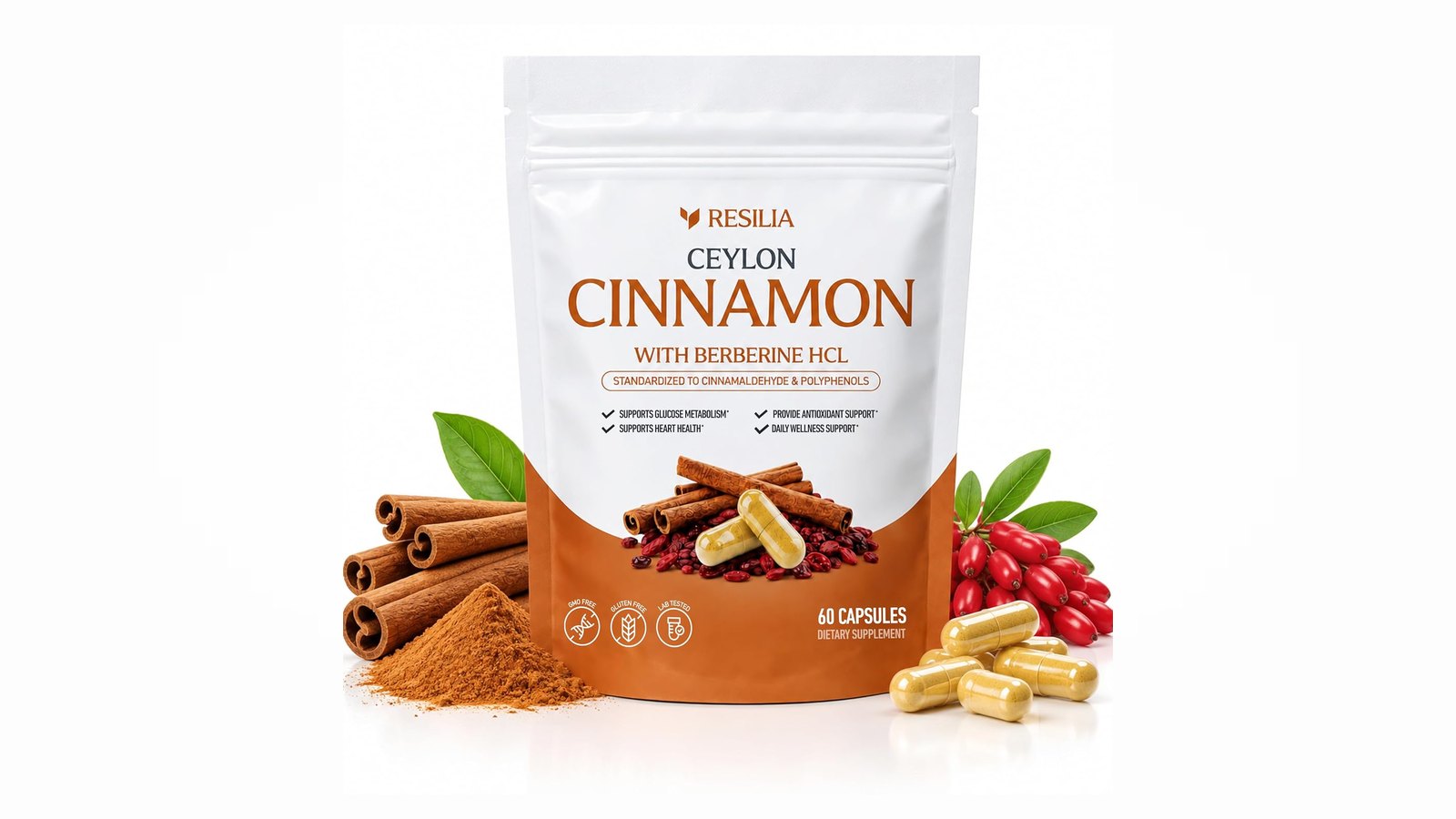
Cinnamon and berberine is an unusual pairing to find on a shelf, because the two ingredients are usually sold as separate products aimed at separate goals: cinnamon for the flavor and the compounds it contains, berberine as a plant alkaloid sold on its own. Resilia combines them in a single capsule and frames it as a daily metabolic formula, with the two active amounts printed on the front of the pack.
That combination is the reason to read this label carefully rather than skim it. Berberine in particular is an ingredient where the gap between what is claimed on a supplement panel and what is established in the clinical literature is wide enough that the label deserves a second look.
We base this review on the Supplement Facts panel of the exact pouch sold in this listing, the manufacturer’s own product graphics, the Amazon listing record for this ASIN, and the published position of the National Center for Complementary and Integrative Health on cinnamon and on berberine. We did not perform hands-on testing of this product.
An honest note on the evidence behind this review
This is the part of the review where the caveats matter most, so we are putting it early.
For cinnamon, the National Center for Complementary and Integrative Health states plainly that the research does not clearly support using cinnamon for any health condition, and that whether cinnamon is helpful for diabetes or for weight loss remains unclear. It also notes that many studies of cinnamon do not specify which species of cinnamon was tested, which makes the evidence harder to apply to a specific product.
For berberine, the same agency’s position is more encouraging but still qualified. Its summary of a 2021 review covering 46 studies and 4,158 participants reports that berberine may have beneficial effects on blood glucose, insulin resistance, and lipid metabolism in people with type 2 diabetes — while noting that the studies were mostly conducted among patients in China, that the study designs varied widely, and that some were of poor quality.
We could not find product-specific clinical research for this capsule combination at these doses that we could read directly. The claims on the front of the pouch — “supports glucose metabolism,” “supports heart health” — carry the FDA disclaimer that they have not been evaluated by the Food and Drug Administration, and the product is explicitly not intended to diagnose, treat, cure, or prevent any disease.
We also could not extract individual buyer review text from the listing, so we are not going to quote buyers or characterize a consensus. The aggregate rating shown on the listing at the time of writing was 4.3 out of 5 stars across 419 global ratings.
One number deserves attention, and we will come back to it: the Supplement Facts panel lists 500 mg of berberine per two-capsule serving, and the suggested use is two capsules daily with food. That works out to 500 mg of berberine per day. NCCIH describes berberine as considered safe at the doses used in clinical situations — 200 to 1,000 mg, taken two to three times a day. So this product delivers a single daily dose at the lower end of the studied range, taken once rather than two or three times. That is a real difference from the clinical literature and worth understanding before you buy.
What this supplement actually is
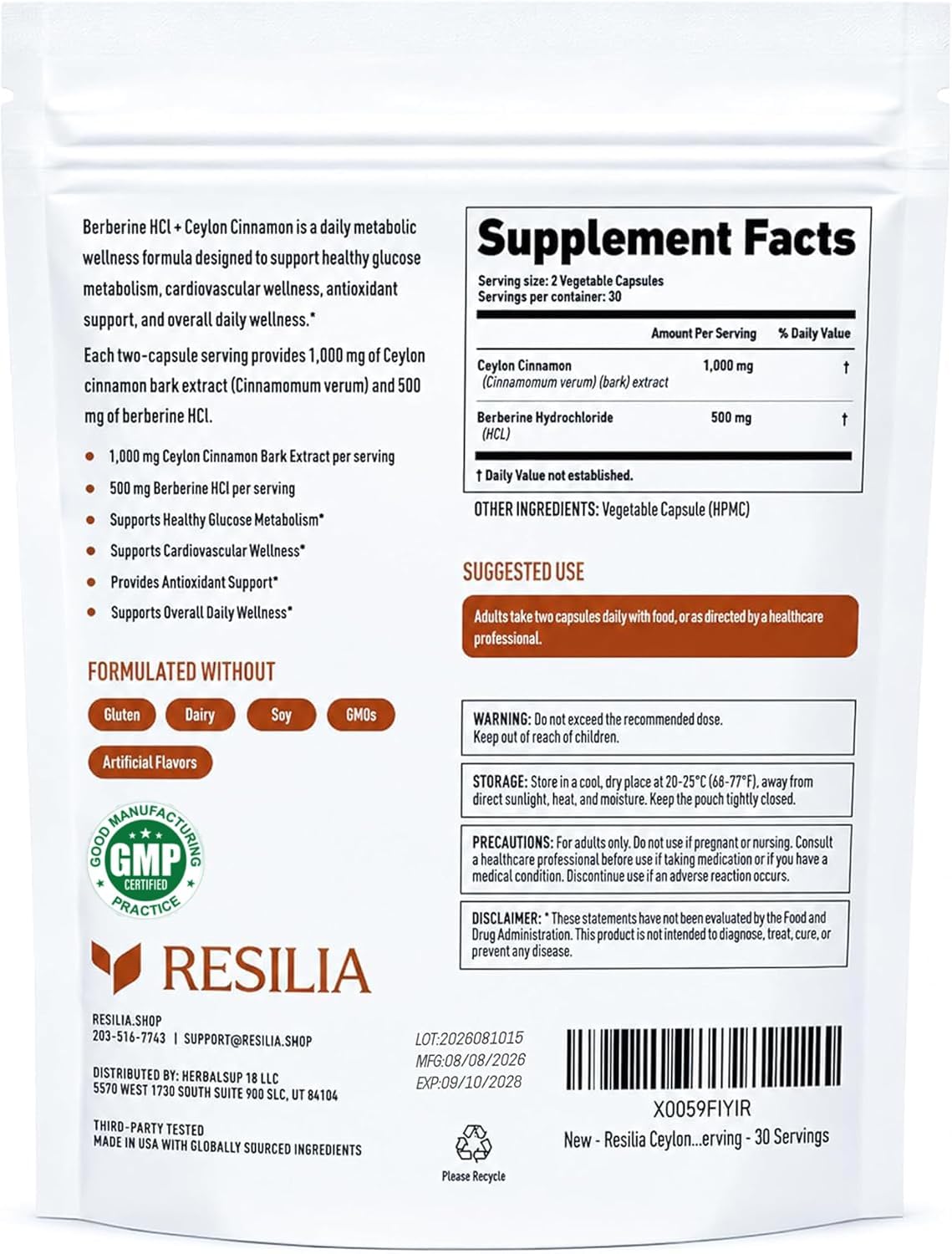
- Serving size: 2 vegetable capsules
- Servings per container: 30
- Ceylon Cinnamon: 1,000 mg per serving — (Cinnamomum verum) bark extract
- Berberine Hydrochloride (HCl): 500 mg per serving
- Combined actives per serving: 1,500 mg
- Capsule shell: HPMC vegetable capsule
- Formulated without: Gluten, Dairy, Soy, GMOs, Artificial Flavors
- Suggested use: Adults take two capsules daily with food, or as directed by a healthcare professional
- Declared origin: the back label states “Made in USA with globally sourced ingredients,” and carries a “Third-Party Tested” statement and a GMP Certified Practice mark
- Lot and dates on the pouch we examined: LOT 2026081015, MFG 08/08/2026, EXP 09/10/2028
- Rating: 4.3 out of 5 stars from 419 global ratings
Two details in that list are worth pulling out. First, the capsule is HPMC, a plant-derived vegetarian capsule — this is genuinely a vegetable capsule product, not a gelatin one, and the front of the pouch says so. Second, this is the one of the three Resilia products in this range made in the USA, with the other two declaring China.
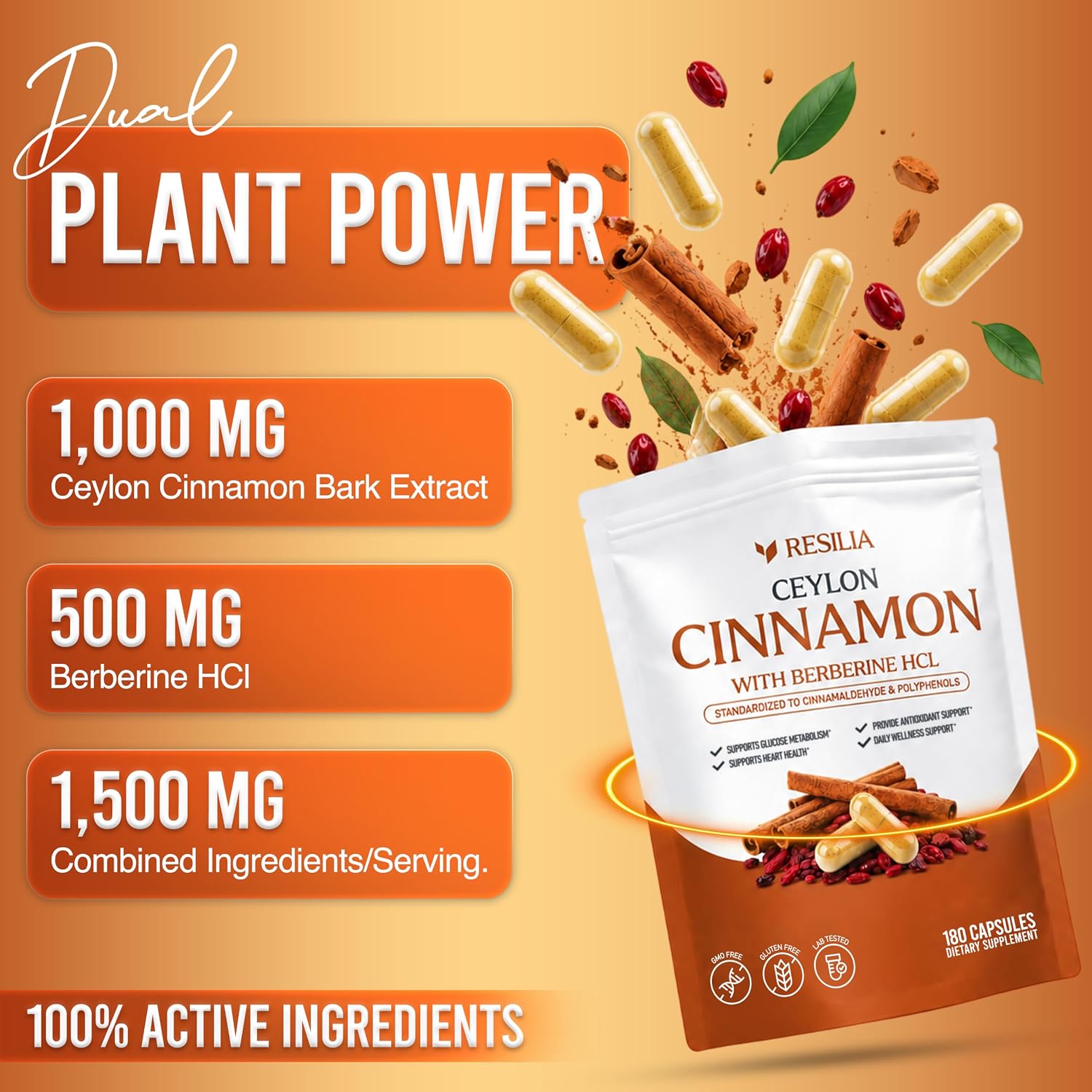
The “100% active ingredients” line in the graphic above means there is no proprietary blend — every milligram in the capsule is one of the two named actives, with no filler taking up space in the dose. For a product combining two actives, that is the right way to do it, and the 1,000 + 500 = 1,500 mg figure adds up correctly against the panel.
Why “Ceylon” is the word that matters here
Cinnamon species is not a marketing detail here, and it is worth explaining why.
Most of the cinnamon sold worldwide is Cinnamomum cassia, which contains substantially more coumarin than Cinnamomum verum — the species known as Ceylon or true cinnamon. NCCIH notes that Ceylon cinnamon may still contain trace amounts of coumarin, and that coumarin at high enough intake can damage the liver. The same page points out that many cinnamon studies fail to specify the species tested, which is precisely the problem a label naming Cinnamomum verum solves.
This pouch does name the species, in full, in the Supplement Facts panel: “Ceylon Cinnamon (Cinnamomum verum) (bark) extract.” That is a meaningful disclosure for a product that also contains an alkaloid with its own drug-interaction profile.
What the berberine evidence actually says
We want to be precise here, because berberine supplements have attracted a lot of confident claim-making.
The NCCIH position is that a 2021 review of 46 studies involving 4,158 participants suggests berberine may have beneficial effects on lowering blood glucose, reducing insulin resistance, and improving lipid metabolism in people with type 2 diabetes. The agency’s own qualifiers are significant: the studies were mostly among patients in China, there was wide variability in how they were conducted, and some were of poor quality.
On safety, NCCIH describes berberine as generally considered safe at the doses used in clinical settings — 200 to 1,000 mg, two to three times daily. Reported side effects include nausea, diarrhea, bloating, and constipation. It also states that berberine may interact with some medications, and that it should not be used during pregnancy or breastfeeding, and should not be given to infants.
That last set of points lines up with what this label says. The precautions on the pouch read: “For adults only. Do not use if pregnant or nursing. Consult a healthcare professional before use if taking medication or if you have a medical condition. Discontinue use if an adverse reaction occurs.”
This is also where the dosage gap becomes concrete. If you are comparing this to the clinical literature, the comparison is 500 mg once daily here against 200 to 1,000 mg two to three times daily in the studies NCCIH describes. The label’s own warnings are appropriate for the ingredient it contains, and so is its instruction to take it with food.
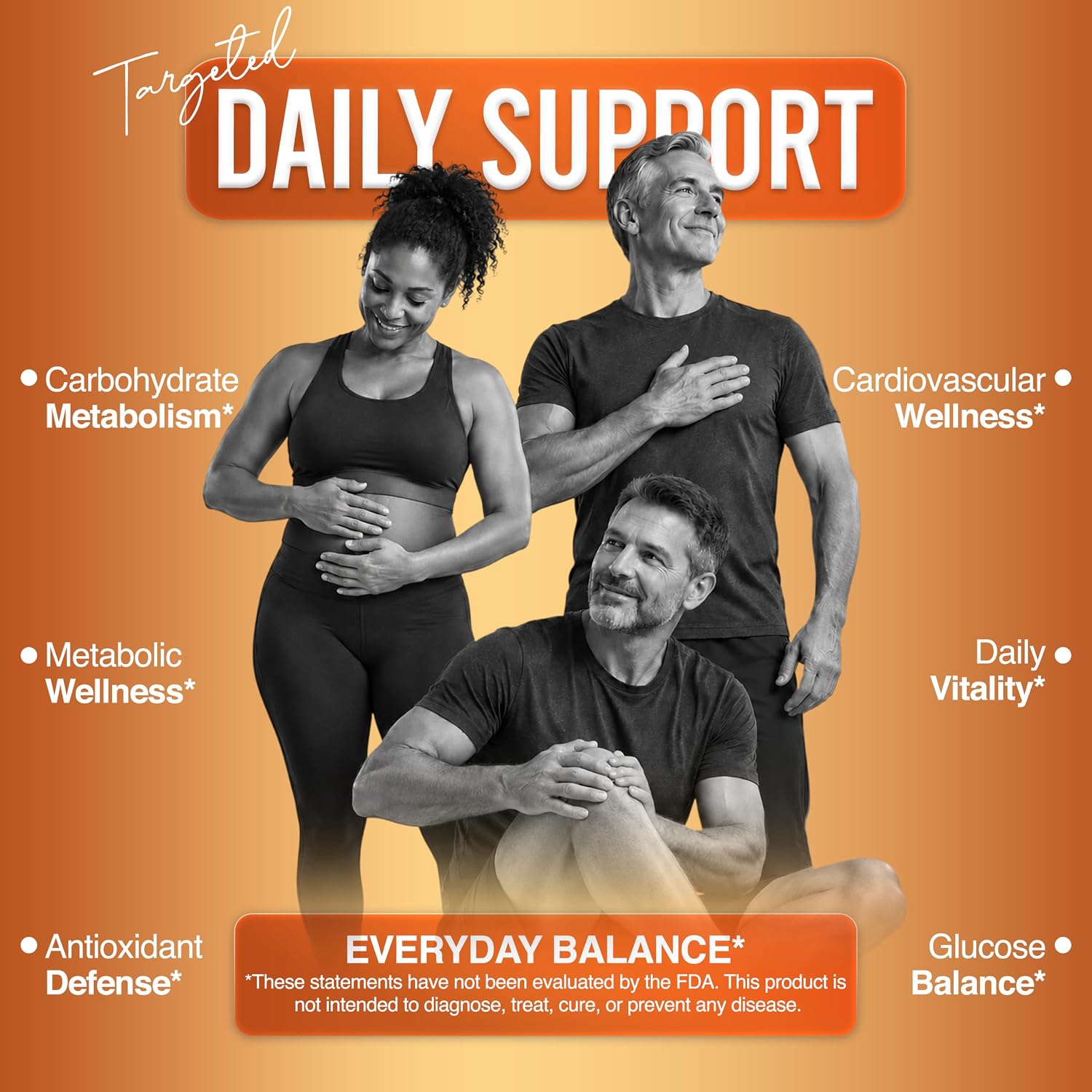
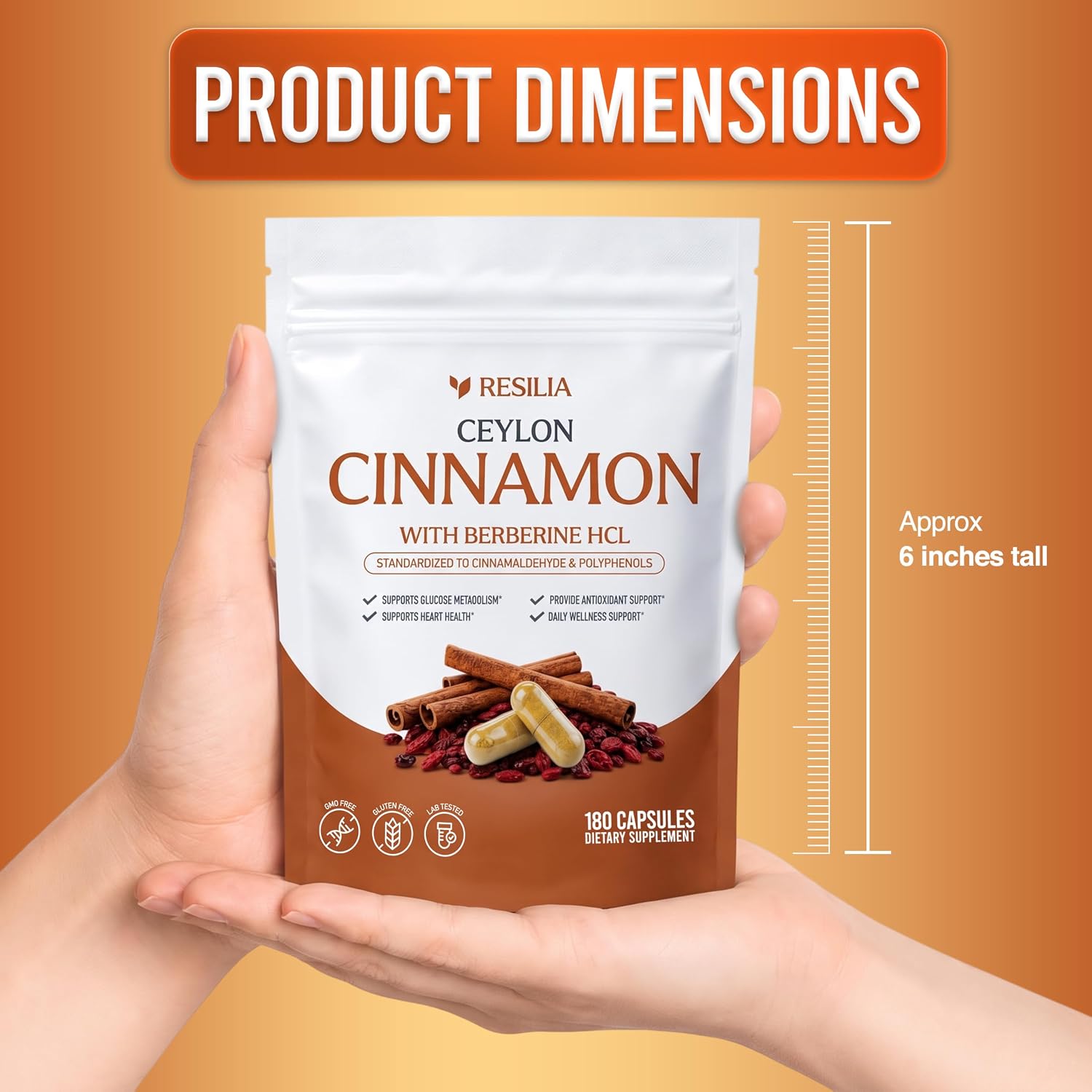
Every claim in that graphic is a structure/function claim, not a disease claim, and the disclaimer at the bottom says so in full. We are not going to restate them as established effects. NCCIH’s diabetes and dietary supplements guidance is explicit that most supplements have not been shown to provide clear benefits and that people should not use any supplement in place of prescribed medication for diabetes management.
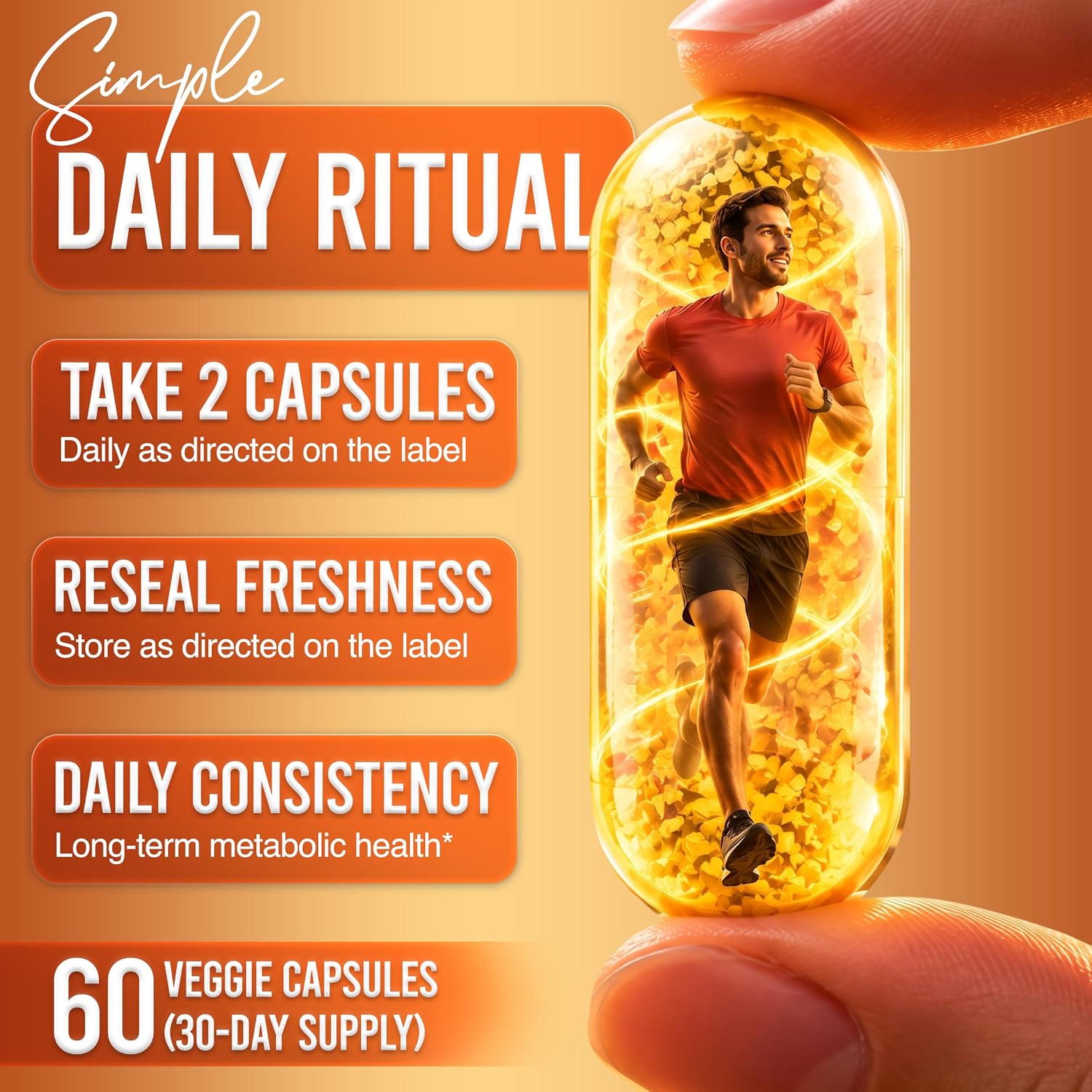
The pack and the routine
Sixty vegetable capsules at two per day is a 30-day supply, and the pouch is resealable with a tight-seal closure the label tells you to keep closed. Storage is a cool, dry place at 20–25°C (68–77°F), away from direct sunlight, heat, and moisture.
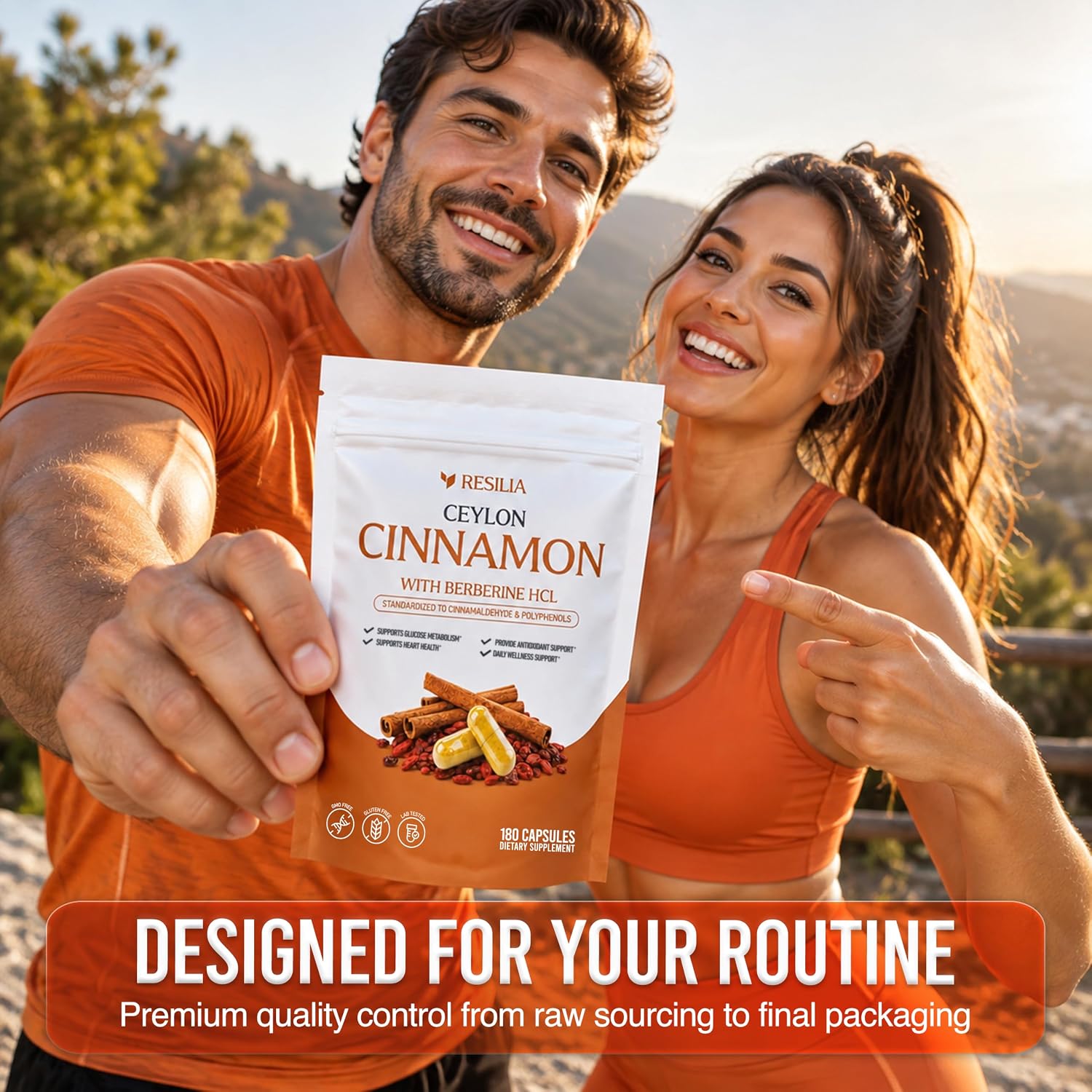
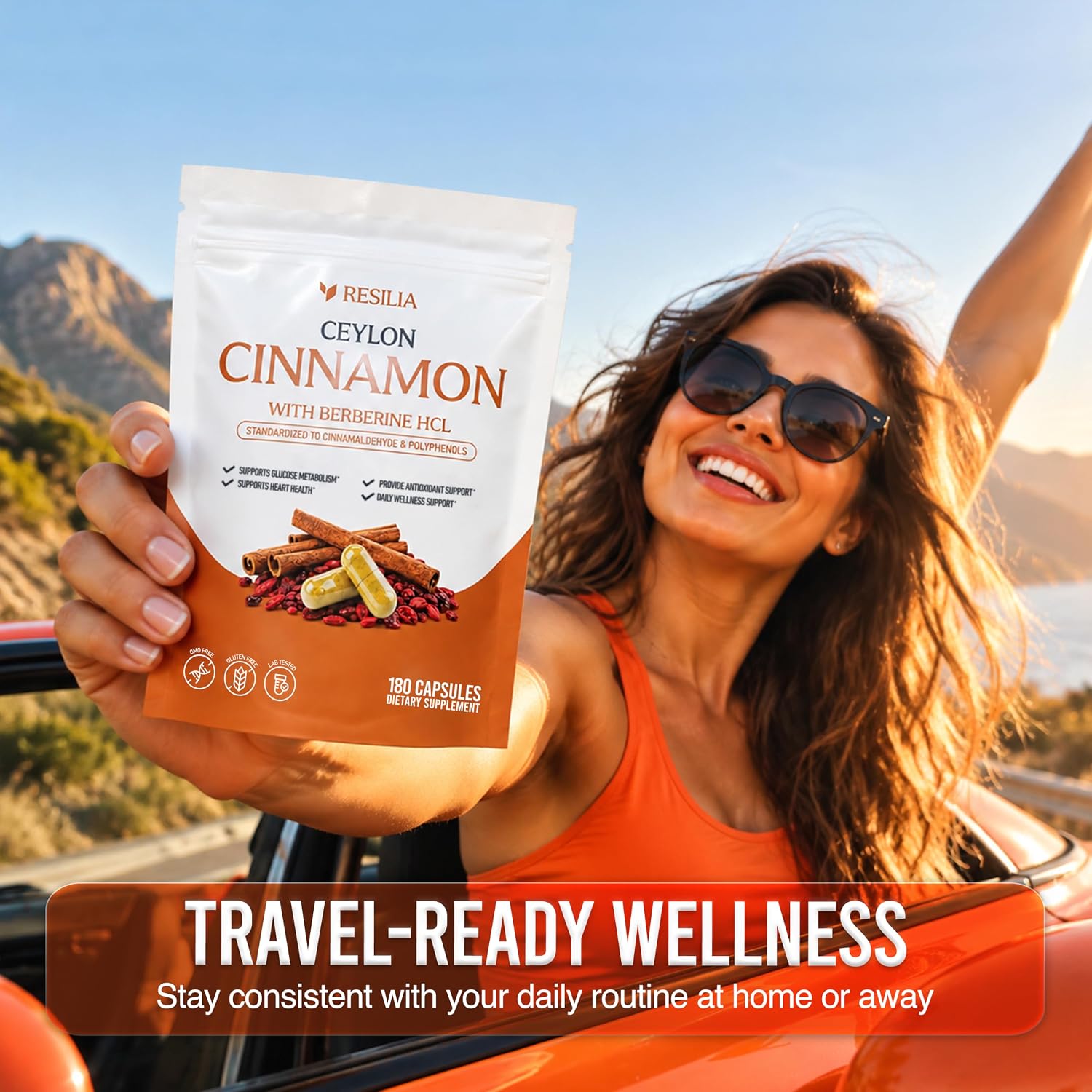
One caveat on the quality-control language: the pouch carries a “Third-Party Tested” statement and a GMP Certified Practice mark, but it does not name the testing laboratory, the panel used, or the results. That is common across the category, and it is not evidence of a problem — it is simply less than the label could tell you.
Pros and cons
Pros
- ✔ No proprietary blend: 1,000 mg of Cinnamomum verum bark extract and 500 mg of berberine HCl per two-capsule serving, and the 1,500 mg combined total adds up exactly
- ✔ Plant-based HPMC capsule, and the front of the pack states “vegetarian capsules”
- ✔ Species named in full on the Supplement Facts panel, which matters for a cinnamon product because coumarin content varies by species
- ✔ Label directions are specific and match the evidence boundaries: two capsules daily with food, with a pregnancy, nursing and medication-interaction precaution
- ✔ Made in USA, resealable pouch, 60 capsules covering 30 days
- ✔ Formulated without gluten, dairy, soy, GMOs and artificial flavors
Cons
- ✘ 500 mg of berberine once a day, where the clinical literature NCCIH describes uses 200 to 1,000 mg two to three times daily
- ✘ Berberine is an alkaloid with its own drug-interaction profile, and the label says only to “consult a healthcare professional” without naming the classes of medication involved
- ✘ No named third-party testing laboratory, panel, or published certificate of analysis on the pouch
- ✘ No product-specific clinical research we could verify for this two-ingredient combination at these doses
- ✘ Front-of-pouch wellness claims carry an FDA disclaimer and are not supported by any trial data on the packaging
- ✘ Capsules are large and the pouch is 60 capsules rather than 30, so it is a bigger commitment to try before deciding
View the Resilia Ceylon Cinnamon and Berberine HCl Capsules on Amazon
Prices and availability change daily on Amazon — check the listing for the current offer.
Who should buy it
Buy it if you specifically want Ceylon cinnamon and berberine together in one capsule rather than managing two separate bottles. The formula is transparent, the amounts are printed, and the shell is plant-based.
Buy it if you have been comparing berberine products and want one where the species and the milligram amounts are unambiguous on the panel.
Buy it if a vegetarian capsule and a soy-free formulation are hard requirements. This product meets both and says so on the front.
Who should skip it
Skip it if you are pregnant, nursing, or considering this for anyone in those groups. Both the label and the NCCIH guidance say the same thing, and both are unambiguous.
Skip it if you take any prescription medication. The label says to consult a healthcare professional first, and berberine is known to interact with a meaningful number of drug classes. “Consult a professional” is not a formality here.
Skip it if you want to treat diabetes or a cholesterol condition with it. NCCIH is direct that supplements should not replace prescribed medication for diabetes management, and the evidence for berberine on its own is qualified rather than conclusive.
And skip it if you are looking for a berberine product dosed the way the clinical studies dose it. This one is a single daily serving, and that is a real difference you should weigh rather than overlook.
Frequently Asked Questions
How much cinnamon and berberine is in each capsule?
Half a serving. At two capsules per serving you get 1,000 mg of Ceylon cinnamon bark extract and 500 mg of berberine HCl, so one capsule contains 500 mg of cinnamon extract and 250 mg of berberine.
Is this a vegetarian capsule?
Yes. The Supplement Facts panel lists the other ingredient as “Vegetable Capsule (HPMC),” and the front of the pack states 60 vegetable capsules. It is not a gelatin capsule, and it contains no soy.
Is it made in the USA?
The back label states “Made in USA with globally sourced ingredients.” That is the manufacturer’s own label declaration — we did not independently verify the manufacturing site.
How many capsules are in the pack and how long does it last?
Sixty capsules. The serving size is two capsules and the suggested use is two daily with food, so the pack is a 30-day supply.
Can I take this if I am pregnant or nursing?
No. The label states “For adults only. Do not use if pregnant or nursing,” and the NCCIH guidance on berberine says it should not be used during pregnancy or breastfeeding. Both point the same direction.
Does berberine interact with medication?
The label says to consult a healthcare professional before use if you are taking medication or have a medical condition, and NCCIH states that berberine may interact with some medications. Given that berberine is a pharmacologically active alkaloid, treat that as a real precaution rather than a formality.
Is the cinnamon in this “true” Ceylon cinnamon?
The Supplement Facts panel names the species as Cinnamomum verum, which is Ceylon or true cinnamon, as opposed to the cassia species that contains more coumarin. NCCIH notes that Ceylon cinnamon can still contain trace amounts of coumarin.
Does it work?
We cannot tell you that, and neither can the packaging. NCCIH says the research does not clearly support cinnamon for any health condition, and describes berberine evidence as promising but qualified by study quality and population. The front-of-pouch claims are FDA-disclaimed structure/function statements.
The bottom line
This is one of the more honestly constructed supplement labels we have looked at. It names the cinnamon species in full, prints both actives without a proprietary blend, adds up to the 1,500 mg it advertises, uses a plant-based capsule, and its precautions align with the published guidance for berberine. Made in USA, resealable pouch, dated lot.
The complication is the dosage, not the transparency. NCCIH describes clinical use of berberine at 200 to 1,000 mg taken two to three times daily; this product delivers 500 mg once a day. If you are buying because you want to follow what the research used, you are not getting that here, and you should not assume otherwise. And because berberine interacts with medications and should not be used in pregnancy, this is a product to run past a pharmacist before starting, not after.
Browse the Resilia brand store on Amazon
Prices and availability change daily on Amazon — check the listing for the current offer.
Sources cited in this article
- National Center for Complementary and Integrative Health — “Cinnamon” at nccih.nih.gov (research not clearly supporting cinnamon for any health condition, species and coumarin differences between cassia and Ceylon cinnamon, pregnancy and safety cautions)
- National Center for Complementary and Integrative Health — “Diabetes and Dietary Supplements: What You Need to Know” at nccih.nih.gov (the 2021 review of 46 studies and 4,158 participants on berberine, clinical dose range of 200 to 1,000 mg two to three times daily, side effects, drug interactions, and pregnancy, breastfeeding and infant cautions)
- Amazon — manufacturer listing for Resilia Ceylon Cinnamon Capsules with Berberine HCl, 60 Vegetable Capsules, including the full feature-bullet set and the aggregate verified-buyer rating (accessed November 2026)
- Product packaging — the Supplement Facts panel, suggested use, warning, storage and precautions text, lot number, manufacture and expiry dates, and the “Made in USA with globally sourced ingredients” declaration read directly from the pouch sold in this listing
- The manufacturer’s own product graphics for this listing, including the dimensions, dual-plant-power, daily-support, daily-ritual, routine and travel-readiness images reproduced in this article
This article contains affiliate links. When you buy through them, we may receive a commission from the brand or platform at no additional cost to you. Our editorial process is independent of affiliate relationships — see our Affiliate Disclosure and Our Method.