Resilia Odorless Aged Garlic Softgels Review: Aged Garlic, CoQ10 and K2 with 180 mcg Vitamin K2 per Serving
Resilia's odorless aged garlic softgels pair 600 mg of aged garlic blend with 50 mg of ubiquinol CoQ10 and 180 mcg of vitamin K2 per two-softgel serving. We read the label line by line, and we explain why the vitamin K2 line is the first thing to look at if you take any blood-thinning medication.
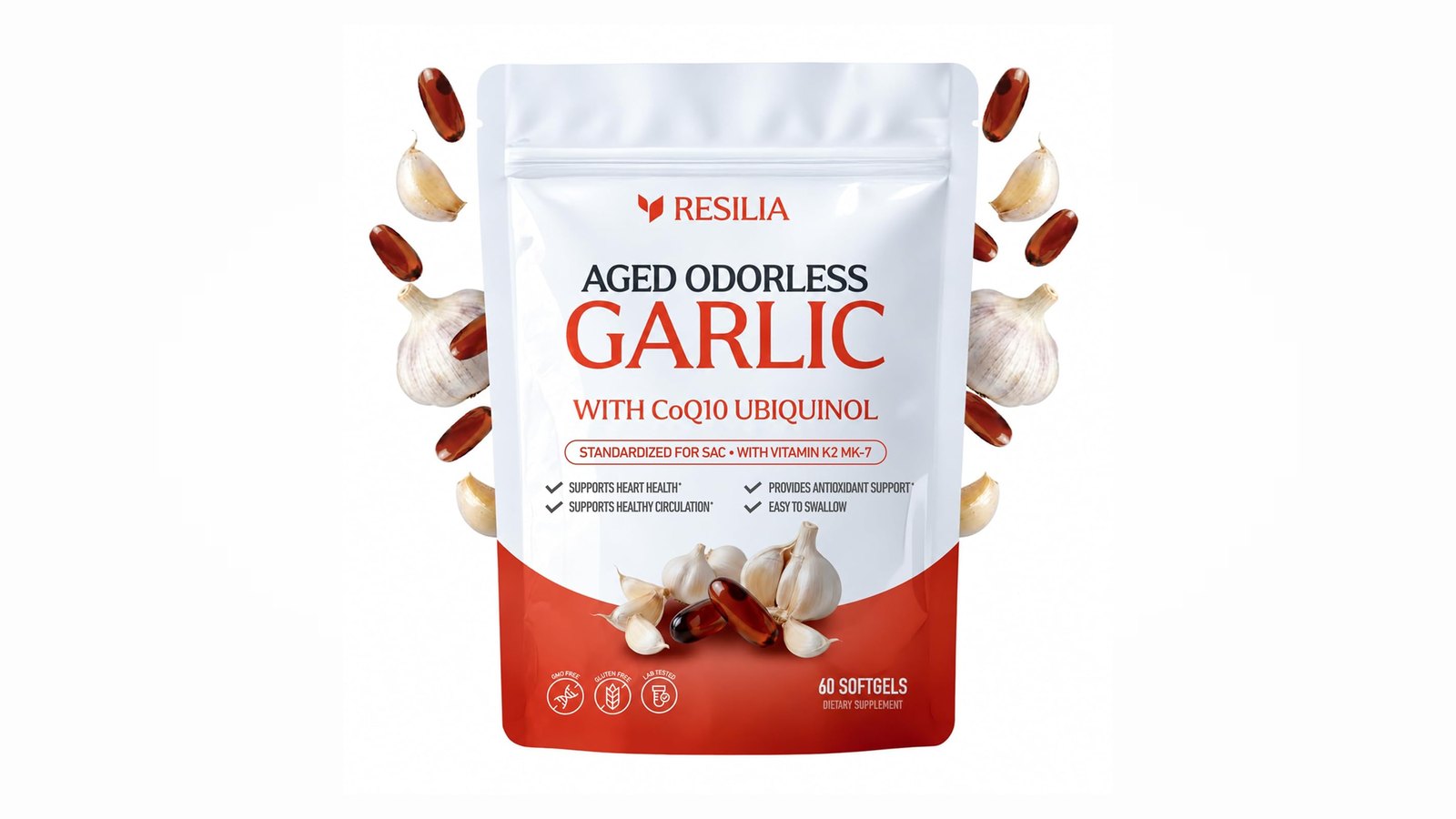
This is the most interesting of the three Resilia supplements to read a label for, because it is a three-ingredient formula rather than a two-ingredient one — aged garlic, CoQ10, and vitamin K2 — and one of those three sits in the middle of the most consequential supplement interaction there is.
The product itself is straightforward: a resealable pouch of 60 odorless aged garlic softgels, two a day, a 30-day supply. The softgel format is the point, since aged garlic in whole-bulb or powder form is one of the most pungent ingredients in the supplement aisle. What deserves attention is the vitamin K2 line, and we will spend real space on it below rather than burying it.
We base this review on the Supplement Facts panel of the exact pouch sold in this listing, the manufacturer’s own product graphics, the Amazon listing record for this ASIN, and the published positions of the National Center for Complementary and Integrative Health on garlic and on dietary supplements for diabetes, plus MedlinePlus’s warfarin drug information. We did not perform hands-on testing of this product.
An honest note on the evidence behind this review
We could not find published, independently verifiable clinical research on this specific three-ingredient combination that we were able to read directly. The claims on the front of the pouch — “supports heart health,” “provides antioxidant support,” “supports immune health” — carry the FDA disclaimer that they have not been evaluated by the Food and Drug Administration, and the label states the product is not intended to diagnose, treat, cure, or prevent any disease.
For garlic on its own, the evidence base is thinner and more modest than the marketing on this category usually suggests. The National Center for Complementary and Integrative Health states that garlic supplements may produce only a small effect on total and LDL cholesterol in people with high cholesterol, that evidence for effects on blood pressure and blood sugar is limited, and that the immune-support claims have very weak research behind them. That is the honest ceiling on what the garlic ingredient in this product has going for it.
The other two actives have a better position. CoQ10 is a compound the body makes and that is present in foods, and NCCIH’s diabetes guidance describes evidence for CoQ10 in improving blood sugar control as mixed and unconvincing. Vitamin K2 is a vitamin with a defined recommended intake, which is why its presence at a specified percentage of the Daily Value is actually the most concrete thing on this label.
We could not extract individual buyer review text from the listing, so we are not going to quote buyers or characterize a consensus. The aggregate rating shown on the listing at the time of writing was 4.4 out of 5 stars across 6,524 global ratings.
What this supplement actually is
- Serving size: 2 softgels
- Servings per container: 30
- Aged Garlic Blend: 600 mg per serving — deodorized garlic oil and garlic extract
- Coenzyme Q10: 50 mg per serving, in the ubiquinol form
- Vitamin K2: 180 mcg per serving as MK-7, listed at 150% of the Daily Value
- Capsule shell: gelatin, glycerin, purified water, beeswax — the label specifies bovine gelatin
- Carrier: sunflower oil
- Formulated without: Gluten, Dairy, GMOs, Artificial Flavors
- Suggested use: Take two softgels daily, preferably with a meal
- Declared origin: the back label states “Made in China with globally sourced ingredients,” and carries a “Third-Party Tested” statement and a GMP Certified Practice mark
- Lot and dates on the pouch we examined: LOT 2026051615, MFG 05/16/2026, EXP 05/15/2028
- Rating: 4.4 out of 5 stars from 6,524 global ratings
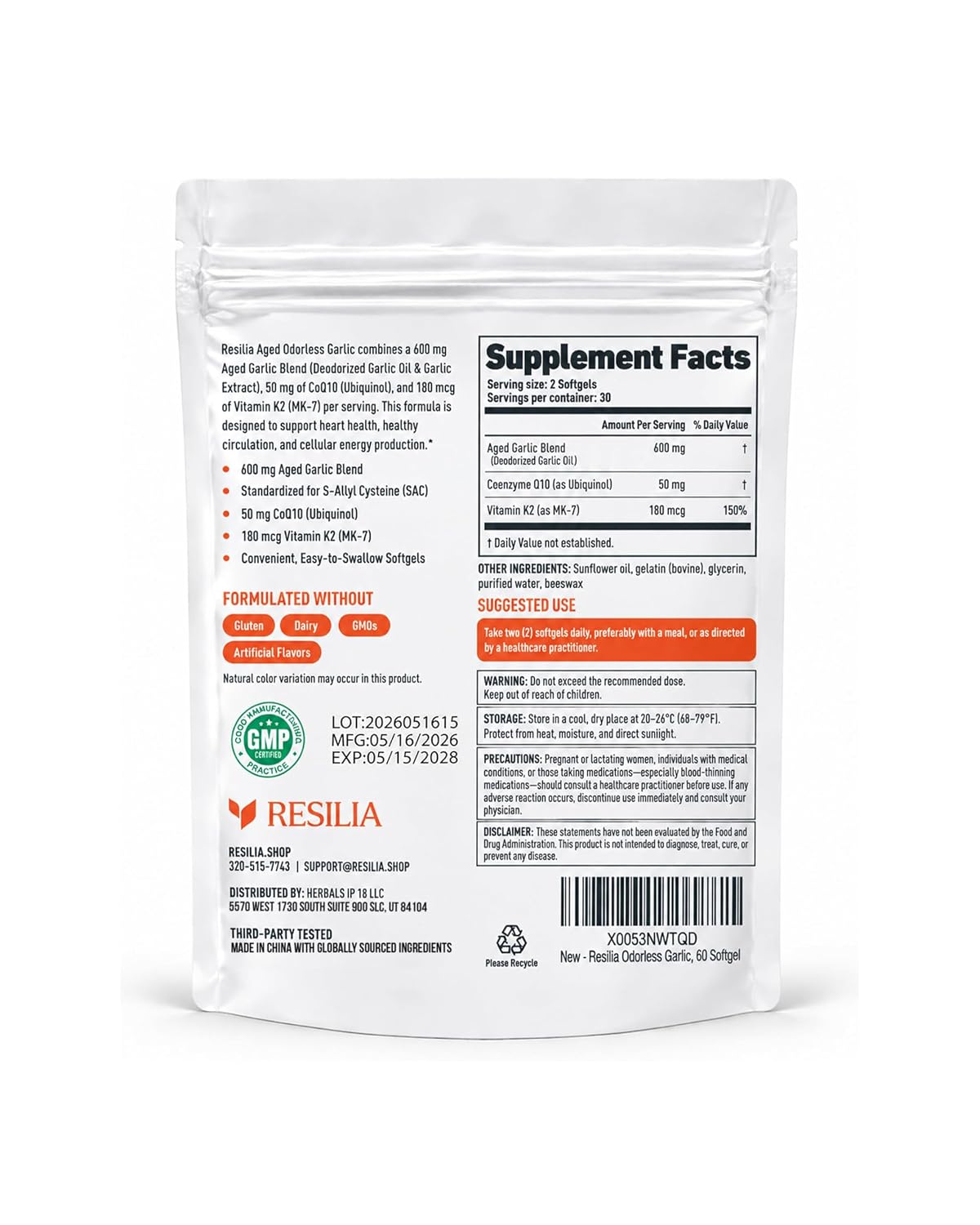
Two facts on that panel need to be stated without softening. The capsule is bovine gelatin, so this is not a vegetarian product despite everything else about the formula. And the vitamin K2 line is the only ingredient on the entire panel with a Daily Value assigned, which makes it the one number on the label that another product can be directly compared against.
The vitamin K2 line is the one to read first
We want to be direct about this, because the packaging treats it as a feature and it is more reasonably treated as a caution for some people.
MedlinePlus’s drug information for warfarin states that people taking warfarin should tell their doctor and pharmacist if they are taking or plan to take any prescription or nonprescription medications, vitamins, nutritional supplements, and herbal or botanical products, because some of these products may increase the risk of bleeding while on warfarin. It goes further and names specific products: the list of nonprescription or herbal products that may interact with warfarin includes coenzyme Q10, Echinacea, garlic, Ginkgo biloba, ginseng, goldenseal, and St. John’s wort.
This product contains two of the named items — garlic and coenzyme Q10 — in meaningful amounts, at 600 mg and 50 mg per serving respectively. That is not a reason to panic; it is a reason to read the rest.
MedlinePlus also notes that foods and beverages containing vitamin K can affect how warfarin works, advises patients to ask their doctor or pharmacist for a list of vitamin K-containing foods, and instructs them to keep vitamin K intake consistent week to week rather than varying it. This softgel delivers 180 mcg of vitamin K2 per serving, which the label lists at 150% of the Daily Value. That is a substantial single-serving contribution of exactly the nutrient the reference guidance identifies as the one that changes warfarin’s effect.
The label’s own precautions point the same direction, and we would rather quote them than paraphrase: pregnant or lactating women, individuals with medical conditions, or those taking medications — especially blood-thinning medications — should consult a healthcare practitioner before use, and if any adverse reaction occurs, the user should discontinue use immediately and consult their physician.
So the practical position is this. If you take warfarin or another vitamin-K-antagonist anticoagulant, this is a product to raise with the prescriber before you start, and to raise again if you change how often you take it. If you do not take a blood thinner, the 150% DV figure is simply information.
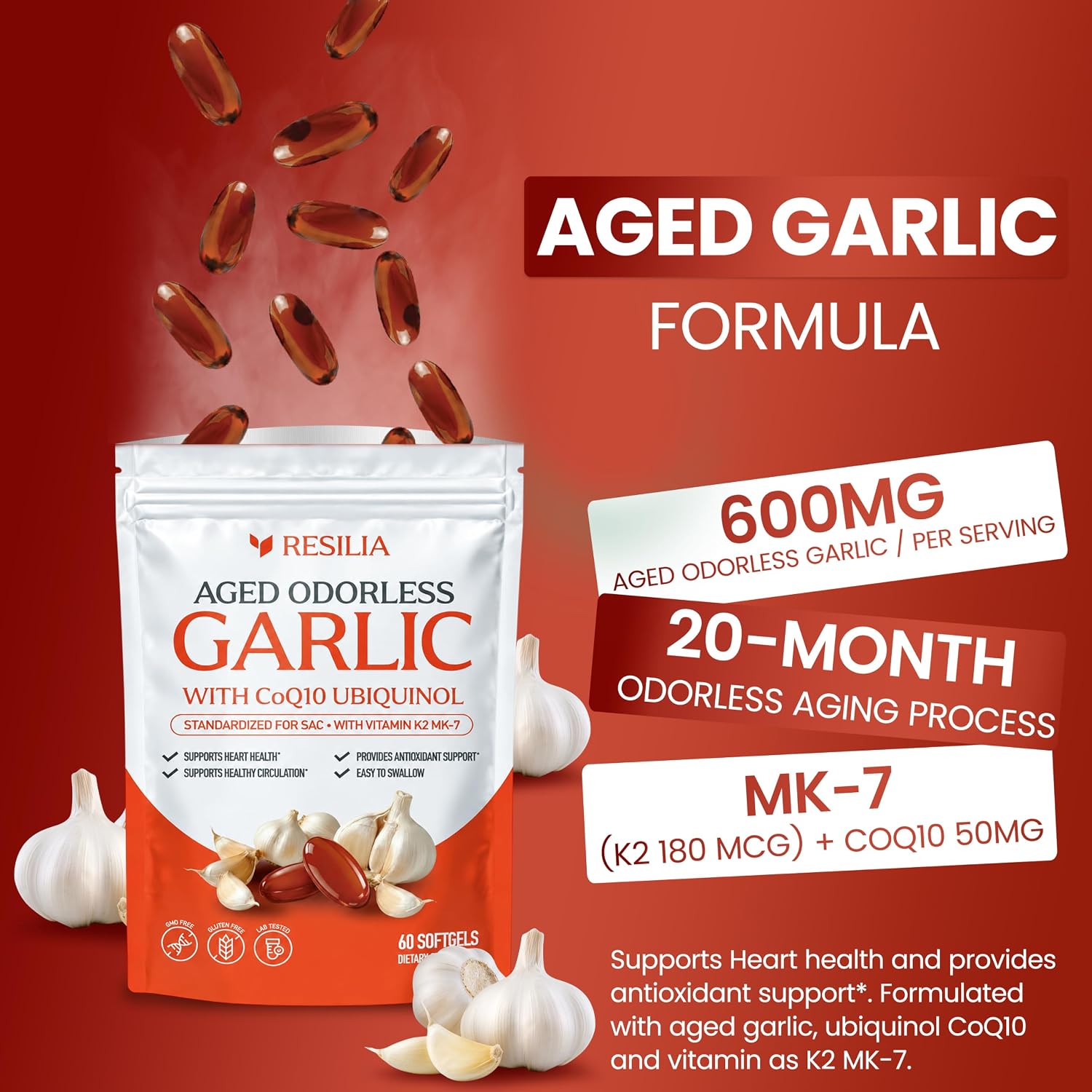
The aging process is worth a sentence because it is the mechanism behind the word “aged.” The manufacturer states a 20-month odorless aging process and standardization for S-Allyl Cysteine, the compound that accumulates in aged garlic extract. Both are manufacturer claims printed on the packaging, and we could not independently verify either the duration or the resulting SAC content.
What the odorless format does and does not fix
The reason this product exists in softgel form is that raw and aged garlic preparations are genuinely unpleasant to take, and the odor carries through. The softgel is a reasonable engineering answer.
What it does not do is change the pharmacology. Deodorized garlic oil is what the Supplement Facts panel lists as the garlic ingredient, and that is the active fraction — the part that carries the allicin-related compounds. Removing the smell does not remove the ingredient, and any effect that the aged garlic blend might have is a property of the compound, not of its odor.
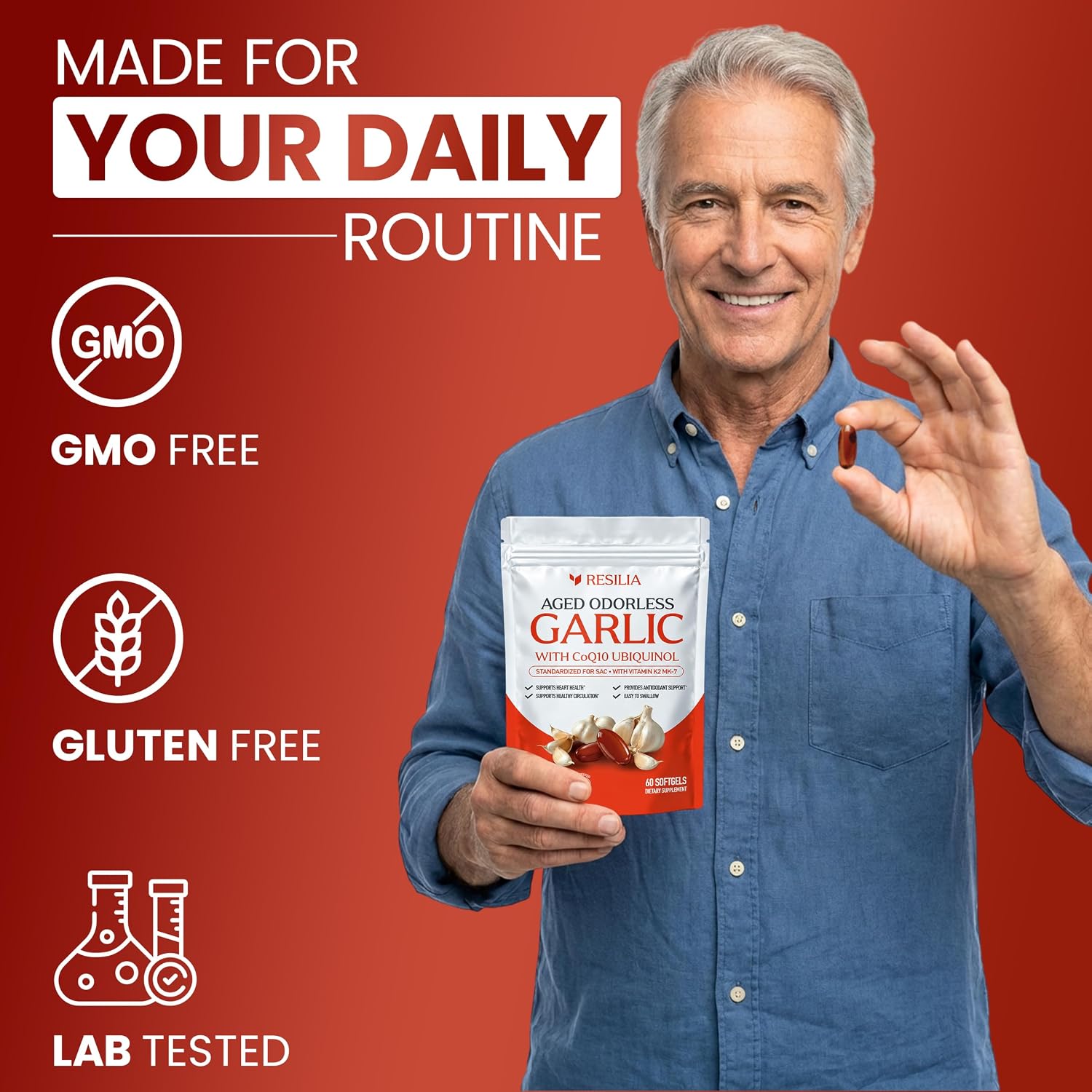
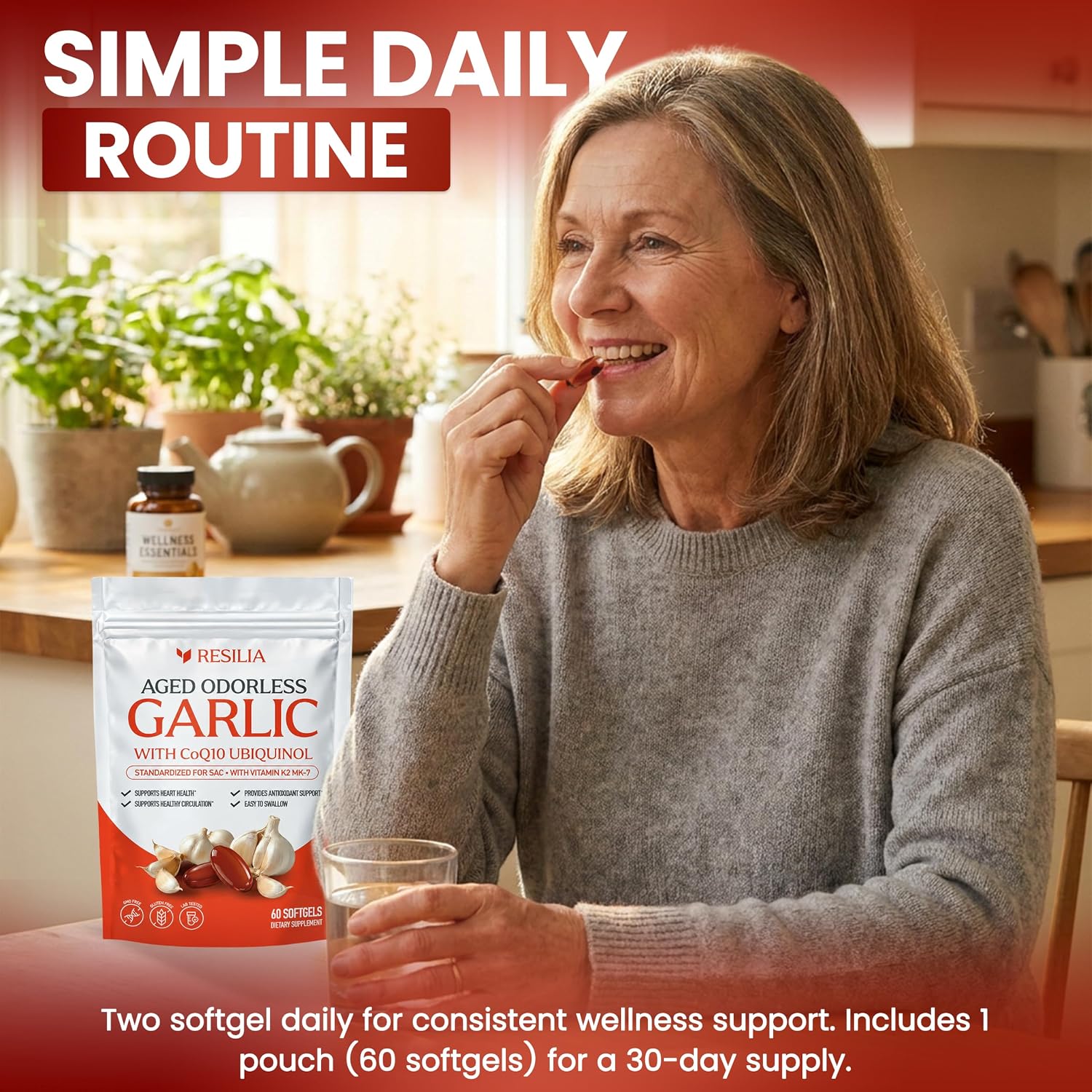
The pack and the daily routine
Sixty softgels at two per day is a 30-day supply in one resealable pouch. The suggested use is two softgels daily, preferably with a meal, and storage is a cool, dry place at 20–26°C (68–79°F) protected from heat, moisture and direct sunlight.
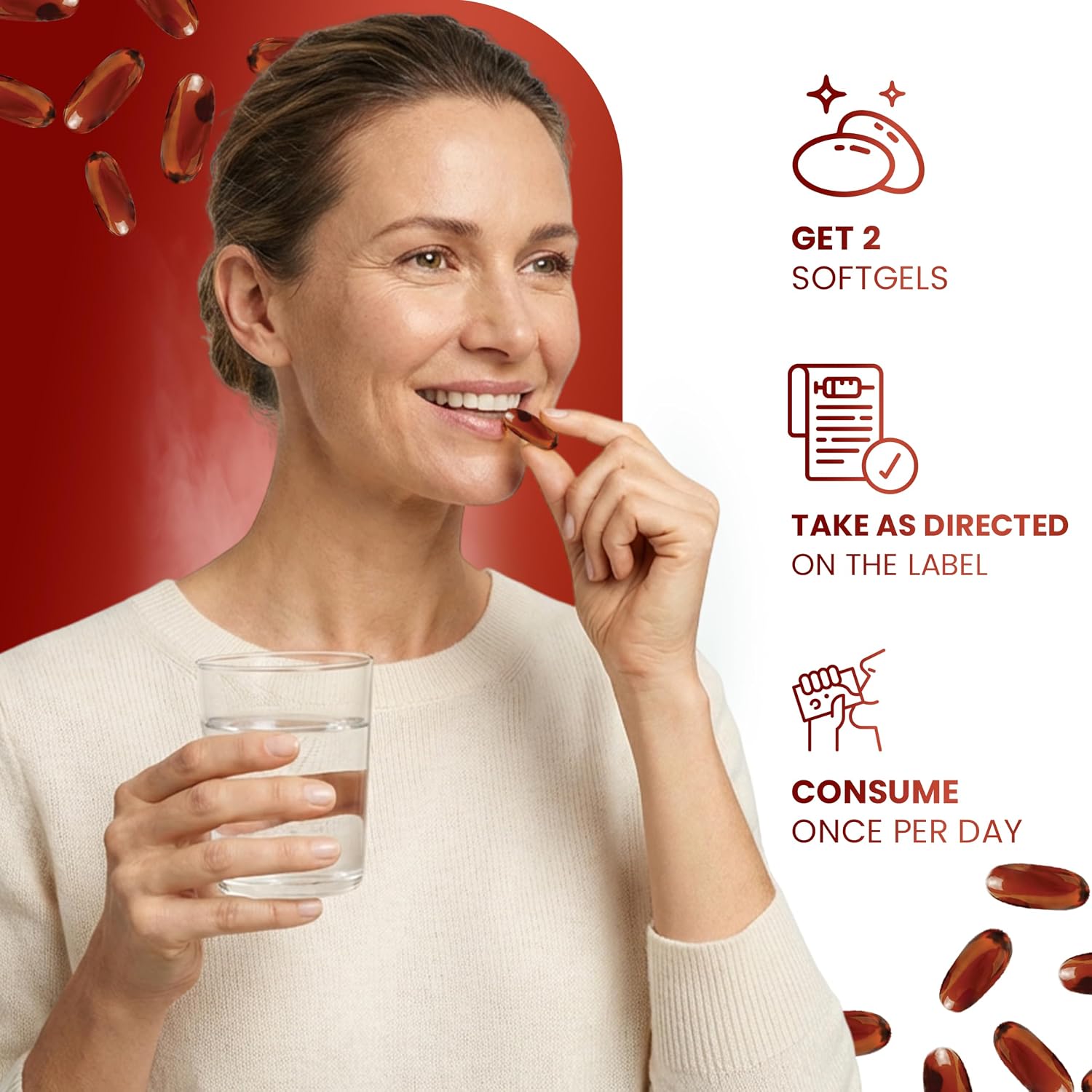
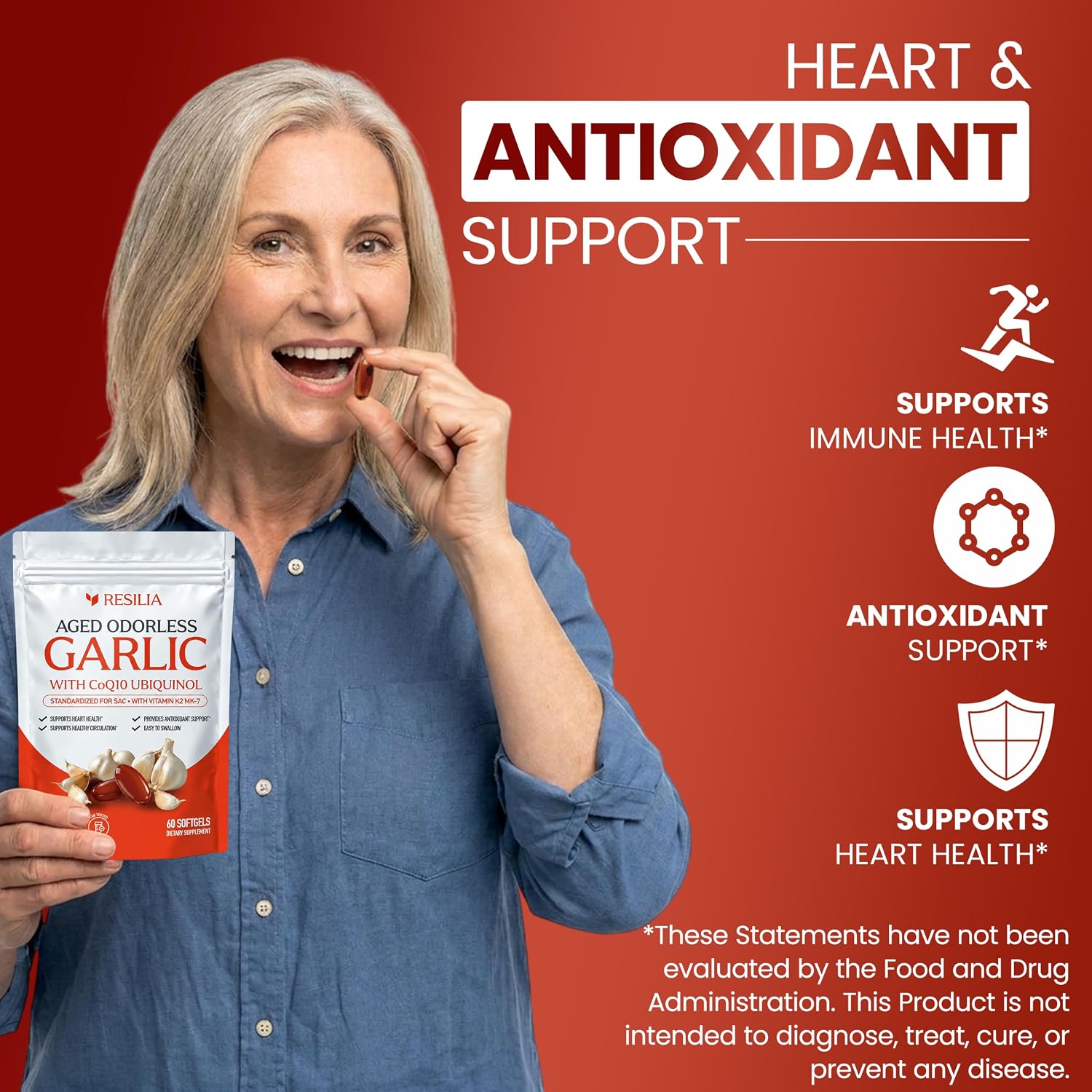
Every one of the claims in that last graphic is a structure/function claim carrying the FDA disclaimer, and we are not going to restate them as established effects. NCCIH’s assessment of garlic is the appropriate ceiling: at most a small effect on total and LDL cholesterol, limited evidence on blood pressure and blood sugar, and weak evidence for the immune claims.
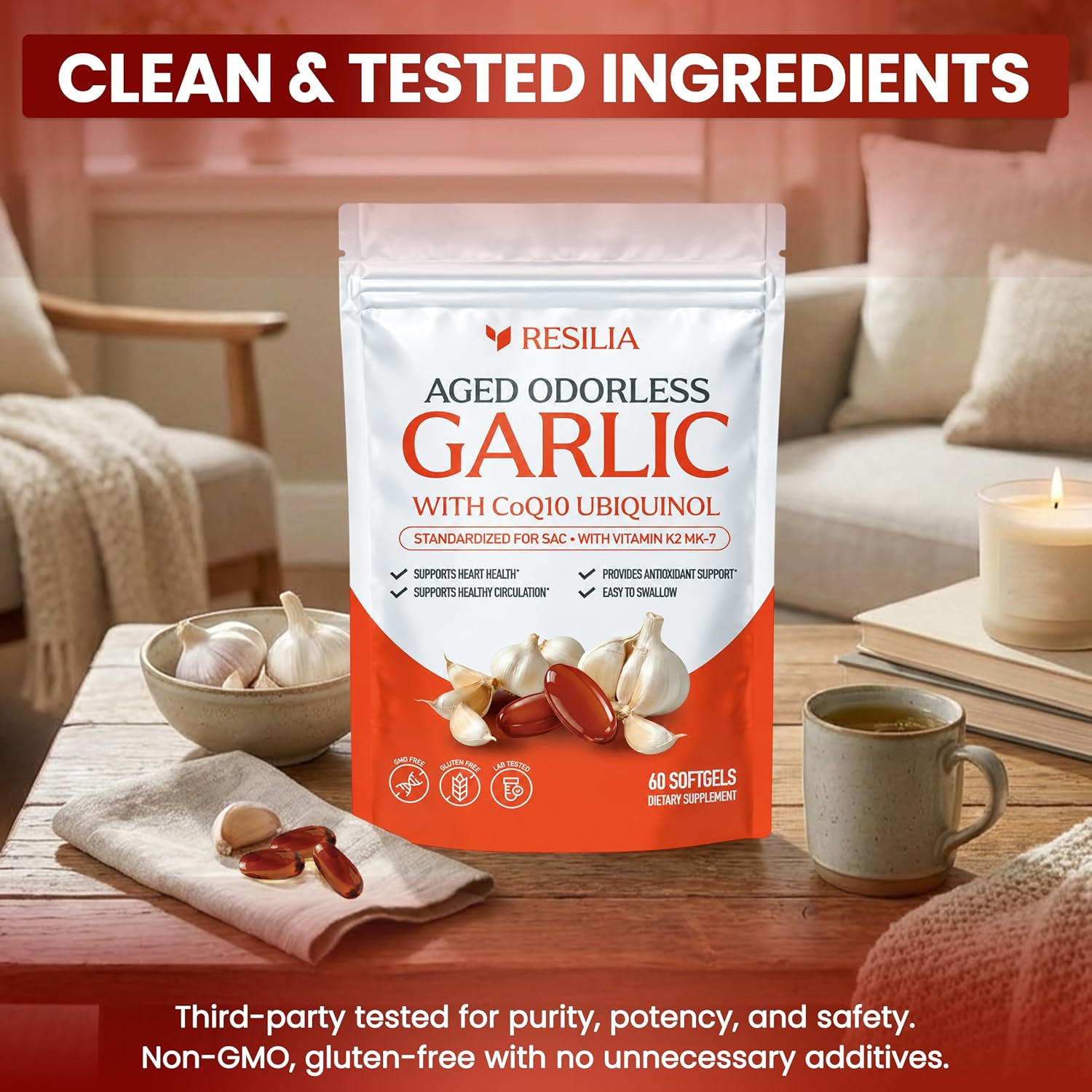
One note on the quality-control language: the pouch carries a “Third-Party Tested” statement and a GMP Certified Practice mark, but names no testing laboratory, no panel, and no published certificate of analysis. The pick-7 graphic makes the claim in general terms — tested for purity, potency, and safety — which is a manufacturer statement rather than something a reader can verify from the packaging.
Pros and cons
Pros
- ✔ Complete three-ingredient panel with real amounts: 600 mg aged garlic blend, 50 mg CoQ10 as ubiquinol, 180 mcg vitamin K2 as MK-7
- ✔ Vitamin K2 is the only ingredient with a Daily Value, so it is directly comparable against other products
- ✔ Odorless softgel format, which removes the single biggest practical objection to taking aged garlic
- ✔ Label names the capsule as bovine gelatin rather than leaving it vague
- ✔ Dated lot with manufacture and expiry dates, and a stated storage range of 20–26°C (68–79°F)
- ✔ Resealable 60-softgel pouch covering a 30-day supply at two a day
Cons
- ✘ Contains 180 mcg of vitamin K2 per serving, or 150% of the Daily Value, which matters if you take warfarin or a similar anticoagulant
- ✘ Contains both garlic and CoQ10, two of the products MedlinePlus names as possible warfarin interactors
- ✘ Capsule is bovine gelatin, so this is not a vegetarian or vegan product
- ✘ No named third-party testing laboratory, panel, or certificate of analysis on the pouch
- ✘ No product-specific clinical research we could verify for this three-ingredient combination
- ✘ Garlic’s own evidence base is modest: NCCIH describes at most a small effect on total and LDL cholesterol, with limited evidence elsewhere
View the Resilia Odorless Aged Garlic Softgels on Amazon
Prices and availability change daily on Amazon — check the listing for the current offer.
Who should buy it
Buy it if you specifically want aged garlic in a form you can take without the taste and smell, in a capsule where the daily dose is two and not a dropper or a tablespoon of powder.
Buy it if you want CoQ10 in the ubiquinol form rather than ubiquinone, and you want both in one capsule instead of two bottles. The 50 mg ubiquinol figure is a reasonable mid-range dose for that ingredient.
Buy it if a 30-day resealable pouch that fits in a drawer or a travel kit suits your routine better than a bottle.
Who should skip it
Skip it if you take warfarin or another vitamin-K-antagonist anticoagulant unless your prescriber has looked at it. This product supplies 150% of the Daily Value of vitamin K2 in a single serving and contains garlic and CoQ10, both of which MedlinePlus flags for that interaction. Do not start it on your own, and tell your doctor about it.
Skip it if you are pregnant or breastfeeding. The label directs those groups to a healthcare practitioner first.
Skip it if you need a vegetarian or vegan product. The shell is bovine gelatin and the label is straightforward about it.
Skip it if the immune and heart-health claims are what is drawing you in. They carry an FDA disclaimer, and the underlying evidence for garlic on those fronts is the weakest part of the formula.
And skip it if you want a garlic supplement with a single ingredient. This one adds CoQ10 and vitamin K2, which is a real benefit if you want them and a real complication if you do not.
Frequently Asked Questions
How much aged garlic is in each softgel?
Half a serving. At two softgels per serving you get 600 mg of aged garlic blend, so one softgel contains 300 mg of the deodorized garlic oil and garlic extract blend.
What does “odorless” actually mean?
It means the garlic is delivered as deodorized garlic oil rather than raw garlic or garlic powder — and that deodorized oil is exactly what the Supplement Facts panel lists as the aged garlic blend ingredient. The label also states a 20-month odorless aging process and standardization for S-Allyl Cysteine. All three are manufacturer statements on the packaging.
Is this product vegetarian?
No. The other ingredients line reads “Sunflower oil, gelatin (bovine), glycerin, purified water, beeswax.” The shell is bovine gelatin. The capsule is not a vegan or vegetarian capsule.
How much vitamin K2 is in a serving and why does it matter?
180 mcg of vitamin K2 as MK-7 per two-softgel serving, which the label lists at 150% of the Daily Value. It matters because vitamin K is the nutrient that determines how warfarin works. MedlinePlus advises patients on warfarin to tell their doctor and pharmacist about any vitamins, nutritional supplements, and herbal products they take, to keep dietary vitamin K intake consistent, and specifically names garlic and coenzyme Q10 among products that may interact with warfarin. This product contains both.
Can I take this with a blood thinner?
Talk to the prescriber who manages your anticoagulant before you start. The label’s own precautions say that people taking medications, especially blood-thinning medications, should consult a healthcare practitioner first. Given the 150% DV of vitamin K2 in each serving alongside garlic and CoQ10, we would treat that instruction as a requirement rather than a suggestion.
Does the odorless format change how the garlic works?
No. The deodorized garlic oil is the active ingredient in the panel, and removing the odor does not remove the compound. NCCIH’s assessment of garlic supplements — at most a small effect on total and LDL cholesterol, limited evidence on blood pressure and blood sugar, weak evidence for immune claims — is what the evidence supports.
How many softgels are in the pouch and how long do they last?
Sixty softgels. The serving size is two and the suggested use is two daily, so the pouch is a 30-day supply.
Where is it made?
The back label states “Made in China with globally sourced ingredients.” That is the manufacturer’s own label declaration — we did not independently verify the manufacturing site.
The bottom line
The label on this one is honest in a way that is worth noticing. It names bovine gelatin instead of hiding behind “gelatin,” it prints the vitamin K2 at 150% of the Daily Value rather than as a vague “with vitamin K,” and its precautions single out blood-thinning medications. For a product with three active ingredients, that transparency is a genuine plus, and the odorless softgel solves the most obvious practical objection to aged garlic.
The vitamin K2 line is also why we would not hand this to everyone. 180 mcg per serving, in a product that also contains two of the specific supplements MedlinePlus names as possible warfarin interactors, is a combination that needs a pharmacist’s eyes if you take an anticoagulant. The evidence for the garlic itself is modest by any honest standard — NCCIH would not put it much higher than a small effect on cholesterol.
If you are not on a blood thinner and you want aged garlic with ubiquinol CoQ10 in a capsule, this is a competently specified product with a clearly stated panel. If you are on an anticoagulant, take the label at its word and ask your prescriber first.
Browse the Resilia brand store on Amazon
Prices and availability change daily on Amazon — check the listing for the current offer.
Sources cited in this article
- National Center for Complementary and Integrative Health — “Garlic” at nccih.nih.gov (small effect on total and LDL cholesterol, limited evidence for blood pressure and blood sugar, weak evidence for immune-support claims, and safety cautions)
- National Center for Complementary and Integrative Health — “Diabetes and Dietary Supplements: What You Need to Know” at nccih.nih.gov (the mixed and unconvincing evidence for CoQ10 on blood sugar control, and the FDA position that supplements should not replace prescribed medication)
- MedlinePlus — “Warfarin: MedlinePlus Drug Information” at medlineplus.gov (the instruction to tell your doctor and pharmacist about vitamins, nutritional supplements and herbal products; the named list of products that may interact with warfarin, including garlic and coenzyme Q10; and the guidance on vitamin K in food affecting warfarin’s effect)
- Amazon — manufacturer listing for Resilia Odorless Aged Garlic Softgels (60 Count), including the full feature-bullet set and the aggregate verified-buyer rating (accessed November 2026)
- Product packaging — the Supplement Facts panel, suggested use, warning, storage and precautions text, lot number, manufacture and expiry dates, the bovine gelatin declaration, and the “Made in China with globally sourced ingredients” statement read directly from the pouch sold in this listing
- The manufacturer’s own product graphics for this listing, including the aged-garlic-formula, daily-routine, heart-and-antioxidant-support, get-two-softgels, made-for-your-routine and clean-and-tested-ingredients images reproduced in this article
This article contains affiliate links. When you buy through them, we may receive a commission from the brand or platform at no additional cost to you. Our editorial process is independent of affiliate relationships — see our Affiliate Disclosure and Our Method.