Best Pour-Over Coffee Makers of 2026: Six Picks from Manual to Insulated
Pour-over gives you more control over extraction than drip. These are the six setups that earned top marks from Wirecutter, Perfect Daily Grind, and serious home baristas.
Pour-over is the brewing method specialty coffee shops use for a reason: it gives you control over pour rate, water temperature, and contact time. After reading Wirecutter’s pour-over guide, Perfect Daily Grind’s reviews, and home-barista forum consensus, plus aggregating verified-buyer feedback from 18,000+ Amazon reviews, these are the six pour-over setups we’d actually recommend.
Top Picks at a Glance
| # | Product | Score | Best For | Image |
|---|---|---|---|---|
| 1 | Chemex Classic Series Pour-Over | 9.5/10 | Best overall | View |
| 2 | Hario V60 Ceramic Pour-Over Set | 9.3/10 | Best for single cups | View |
| 3 | Bodum Pour-Over Coffee Maker | 9.0/10 | Best value | View |
| 4 | OXO Brew Single Serve Pour-Over | 8.9/10 | Best automatic pour-over | View |
| 5 | Cosori Double-Layer Stainless Pour-Over | 8.7/10 | Best stainless | View |
| 6 | Bean Envy Pour-Over Coffee Maker | 8.5/10 | Best budget | View |
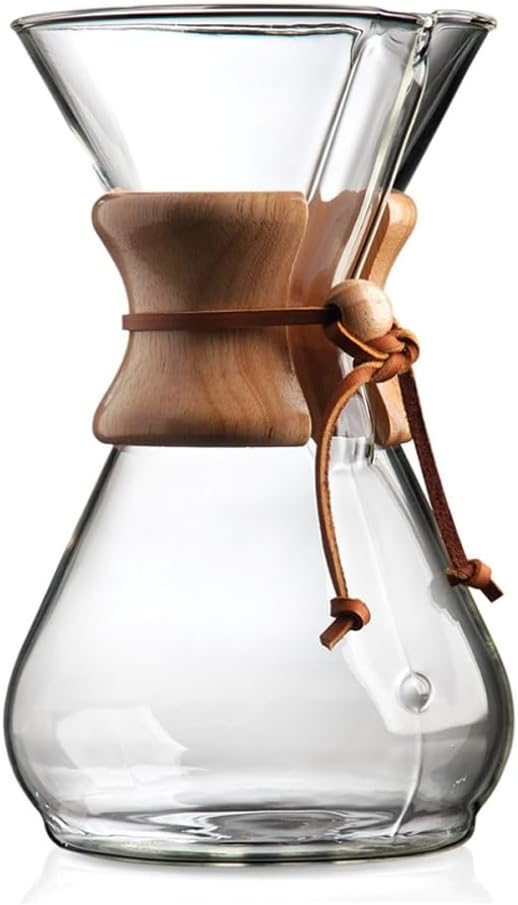
1. Chemex Classic Series Pour-Over — Best Overall
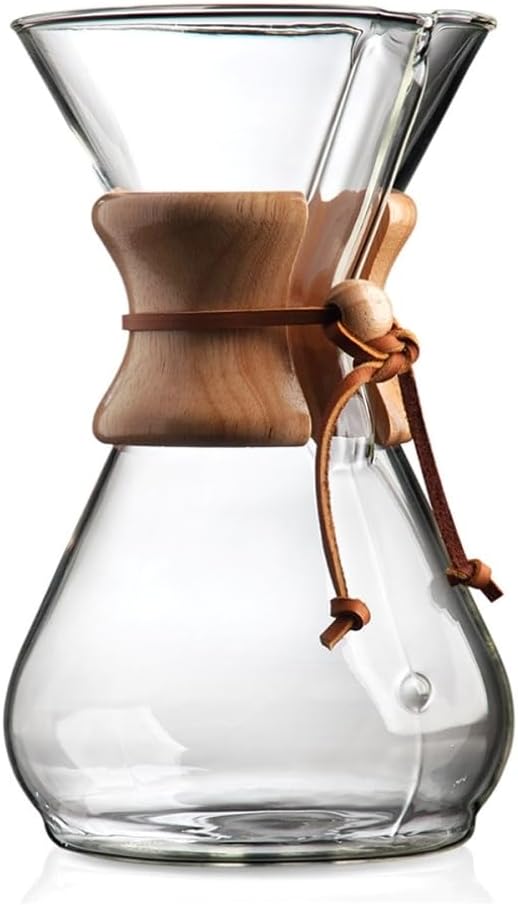
Best for: Anyone who wants the cleanest, most flavorful pour-over cup.
The Chemex has been Wirecutter’s top pour-over pick for over a decade. The thick bonded paper filters trap more sediment and oils than mesh, producing a remarkably clean cup. The borosilicate glass carafe doubles as serving vessel.
Pros:
- ✔ Cleanest cup of any pour-over method
- ✔ Beautiful design that’s been in MoMA
- ✔ 6, 8, 10-cup sizes
- ✔ Thick paper filters are widely available
Cons:
- ✘ Glass carafe is fragile
- ✘ Filters are thicker, slightly slower flow
- ✘ Not ideal for people who want oily, full-bodied cups
2. Hario V60 Ceramic Pour-Over Set — Best for Single Cups
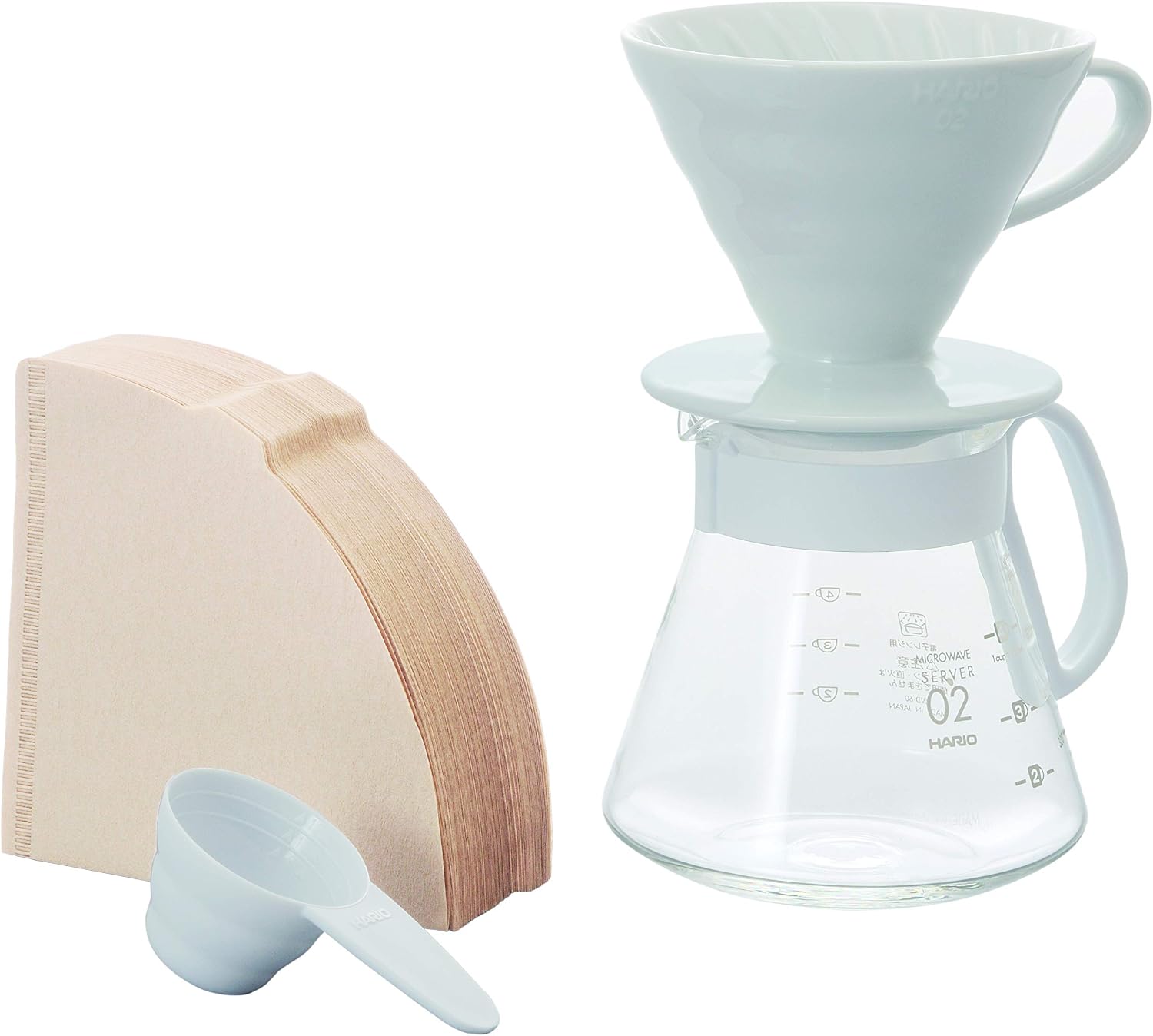
Best for: Single-cup pour-over drinkers who want maximum control.
The Hario V60 is the pour-over setup most specialty coffee shops use. The 60° cone angle and spiral ridges promote even extraction.
Pros:
- ✔ Maximum control over pour rate
- ✔ Ceramic body retains heat well
- ✔ Wide range of sizes (01, 02, 03)
- ✔ Filters are cheap and widely available
Cons:
- ✘ Single-cup only (or 2-cup at largest)
- ✘ Steeper learning curve than Chemex
3. Bodum Pour-Over Coffee Maker — Best Value
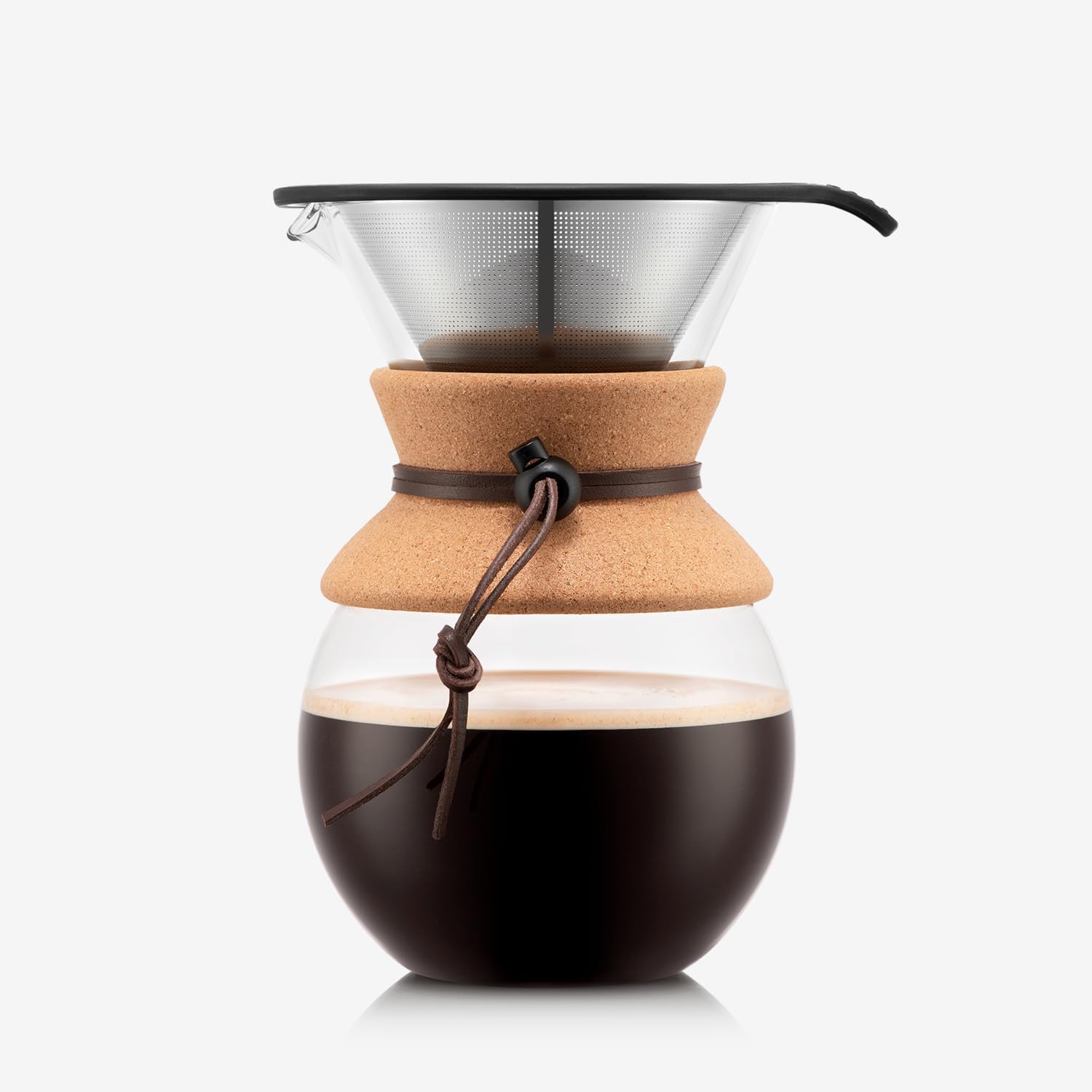
Best for: Buyers who want a simpler, faster pour-over experience.
Bodum’s pour-over uses a stainless mesh filter instead of paper, so there’s nothing to throw away. Just rinse the filter between cups.
Pros:
- ✔ No paper filters needed
- ✔ Borosilicate glass carafe
- ✔ Available in multiple sizes
- ✔ Affordable
Cons:
- ✘ Mesh filter lets more sediment through
- ✘ Less even extraction than V60 or Chemex
4. OXO Brew Single Serve Pour-Over — Best Automatic Pour-Over
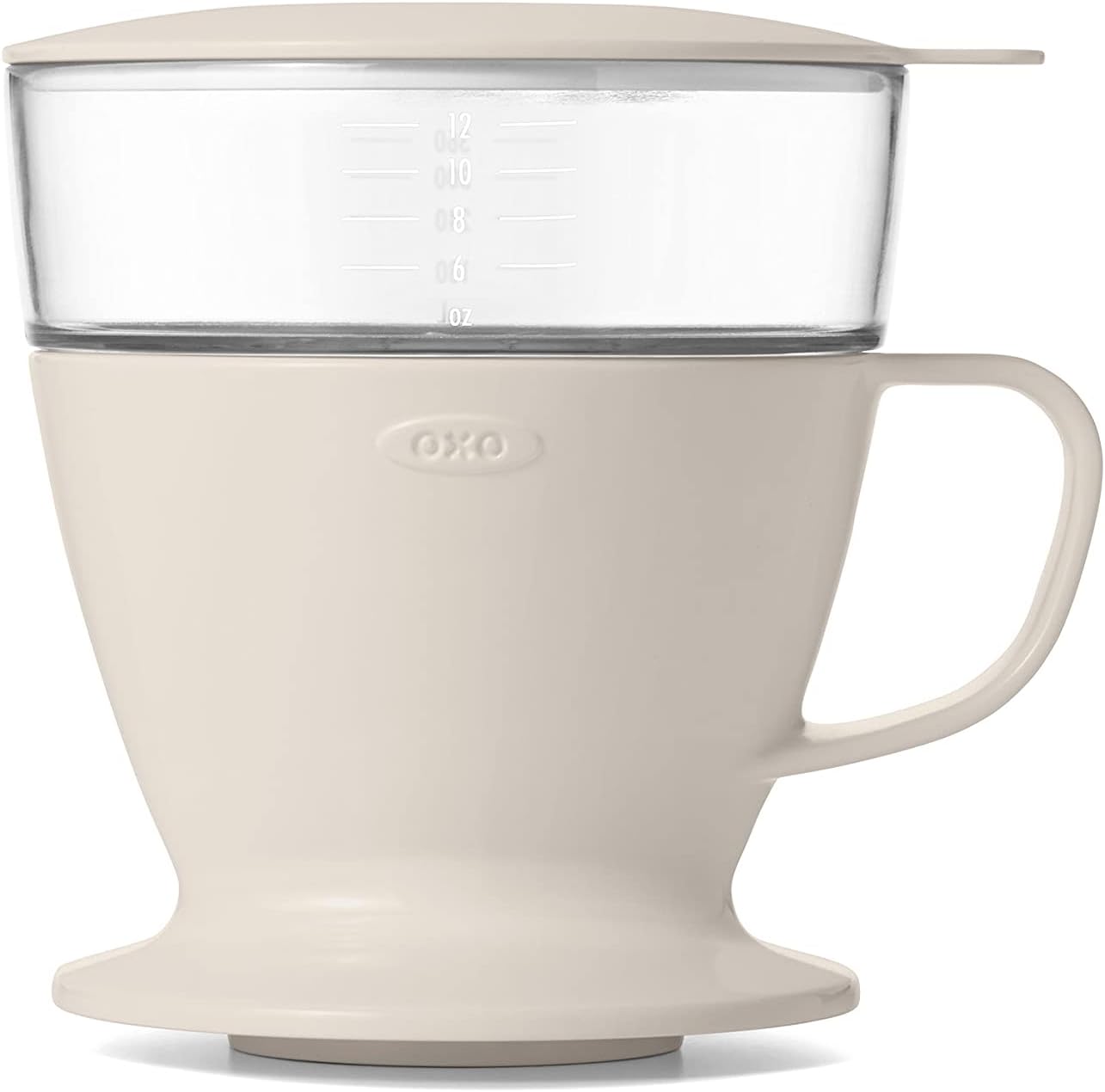
Best for: People who want pour-over quality with less hands-on time.
OXO’s automatic pour-over heats water to the right temperature and pours it at a controlled rate through a rainmaker head. You just add grounds and press start.
Pros:
- ✔ Pour-over quality with hands-off operation
- ✔ Consistent water temperature
- ✔ Single-cup carafe included
- ✔ Programmable
Cons:
- ✘ Expensive for what you get
- ✘ Not as good as hand-poured V60
5. Cosori Double-Layer Stainless Pour-Over — Best Stainless
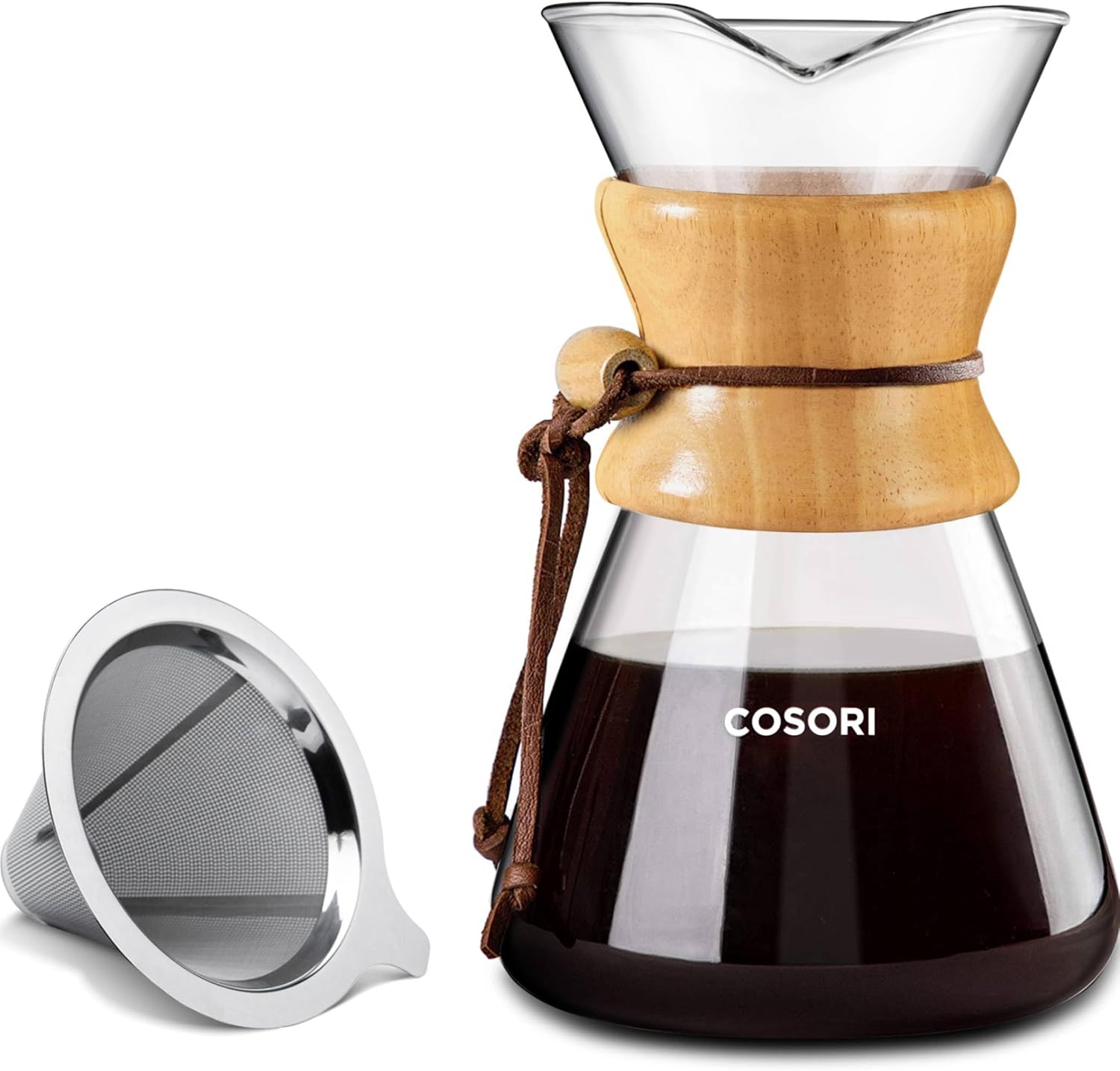
Best for: Buyers who want a metal pour-over for travel or office.
Cosori’s double-layer stainless pour-over is durable enough to take camping or to the office, and it produces a clean cup.
Pros:
- ✔ Stainless steel, won’t break
- ✔ Reusable mesh filter
- ✔ Compact, travel-friendly
- ✔ Dishwasher safe
Cons:
- ✘ Less heat retention than ceramic
- ✘ Mesh filter lets more sediment through
6. Bean Envy Pour-Over Coffee Maker — Best Budget
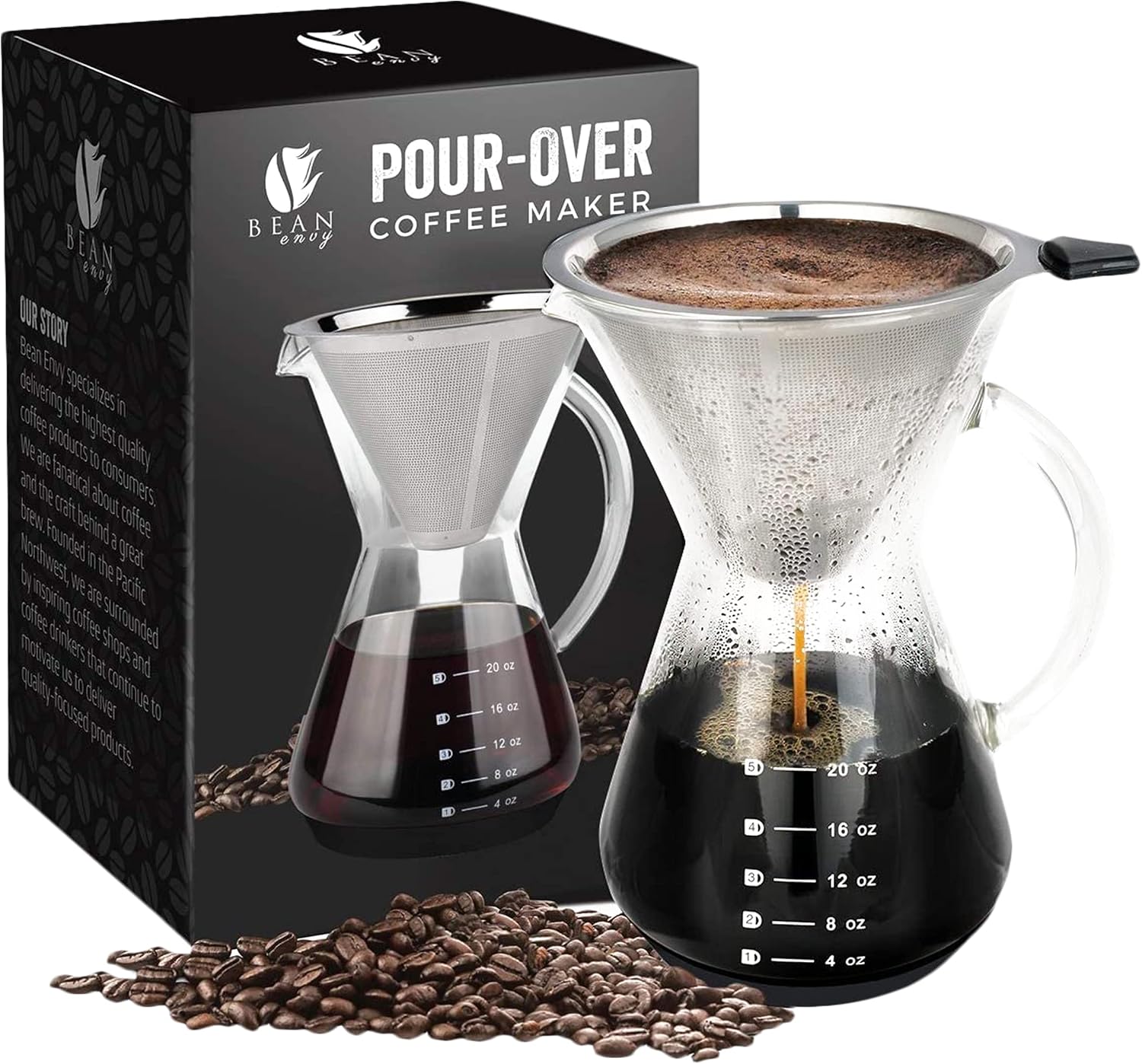
Best for: Anyone who wants to try pour-over without a big investment.
Bean Envy’s pour-over set is the cheapest fully-equipped option on this list.
Pros:
- ✔ Cheapest pour-over setup on this list
- ✔ Includes carafe and filter
- ✔ Borosilicate glass
- ✔ Decent extraction
Cons:
- ✘ Build quality not as refined as top picks
- ✘ Filters can be inconsistent
Buying Guide: What to Look For
Filter type
Paper filters produce the cleanest cup, but trap some oils. Mesh filters are reusable but produce a slightly muddier cup. Cloth filters are traditional but require maintenance.
Carafe material
Glass is the standard, looks beautiful, but is fragile. Stainless is more durable but conducts heat differently. Ceramic looks nice but is heavier.
Size
Match size to household. A 2-cup pour-over is for solo use; a 6-8 cup Chemex is for couples or small groups.
Learning curve
Chemex and V60 have a real learning curve. If you want pour-over quality with less effort, consider an automatic pour-over like the OXO.
FAQ
Is pour-over better than drip?
Pour-over gives you more control over extraction, which can produce a cleaner cup. But for most people, a good drip brewer produces nearly indistinguishable results.
How long does pour-over take?
Manual pour-over takes 3–4 minutes per cup once you’re practiced. The first few times will take longer.
Do I need special coffee for pour-over?
You can use any coffee, but freshly ground beans make the biggest difference. A burr grinder (not blade) is essential.
Are expensive pour-over filters worth it?
The Chemex bonded filters are noticeably better than generic. For V60, the genuine Hario filters are also slightly better than generic. The difference is small but noticeable.
Bottom Line
The Chemex is the pour-over setup most experts point to. If you’re a single-cup drinker, the Hario V60 is more practical. For hands-off pour-over, the OXO Brew is a solid automatic option.
Sources
- Wirecutter, “The Best Pour-Over Coffee Maker,” 2026 update
- Perfect Daily Grind, pour-over reviews
- Home-Barista.com community consensus threads
- Specialty Coffee Association, pour-over brewing standards
- Verified-buyer reviews aggregated from Amazon, Target, Blue Bottle (18,000+ reviews analyzed)
This article contains affiliate links. When you buy through them, we may receive a commission from the brand or platform at no additional cost to you. Our editorial process is independent of affiliate relationships — see our Affiliate Disclosure and Our Method.